
Gold prices recovered Thursday after suffering their steepest monthly decline in several months, as softer-than-expected U.S. inflation data reduced expectations for an immediate Federal Reserve rate increase. Spot gold rose about 0.7% to $4,184.68 an ounce, while gold futures advanced to around $4,214. The rebound followed a September decline of more than 6%, with higher Treasury yields and a stronger U.S. Dollar having weighed heavily on the metal.
Softer PCE Eases Fed Hike Expectations
The latest PCE inflation data provided some relief for gold investors. The U.S. Bureau of Economic Analysis reported that the PCE price index increased 0.3% in August, while the core measure excluding food and energy rose 0.2%. Core PCE increased 3.0% from a year earlier.
The data was softer than markets had expected and followed downward revisions to earlier readings. That helped reduce near-term expectations for another Federal Reserve rate increase.
Market pricing put the probability of an October hike at roughly the mid-30% range, down from substantially higher levels earlier in the week. However, expectations for another move later in the year remained elevated, highlighting the uncertainty surrounding the Fed’s policy path.
At the same time, the U.S. economy continues to show resilience. Personal consumption expenditures increased 0.9% in August, while real PCE rose 0.6%. The strong spending figures suggest households have continued to support economic activity despite restrictive financial conditions.
Treasury Yields Keep Gold Under Pressure
Gold’s rebound remains constrained by the U.S. Treasury market. Higher bond yields increase the opportunity cost of holding gold because bullion does not generate interest income.
The U.S. Dollar Index also remained elevated, creating another headwind for dollar-denominated gold. A stronger dollar generally makes bullion more expensive for buyers using other currencies.
September was particularly difficult for precious metals as rising yields, a firmer dollar and changing expectations for Federal Reserve interest rates combined to pressure prices. Gold lost more than 6% during the month, according to market data.
The main market indicators now include:
- Spot gold: $4,184.68
- Gold futures: about $4,214
- Silver: about $61.27
- Platinum: about $1,725.77
- Dollar Index: about 101.66
Jobs Data Becomes Gold’s Next Test
The next major catalyst is the U.S. labor market. Investors will examine the upcoming U.S. jobs report for evidence about whether economic conditions justify further monetary tightening.
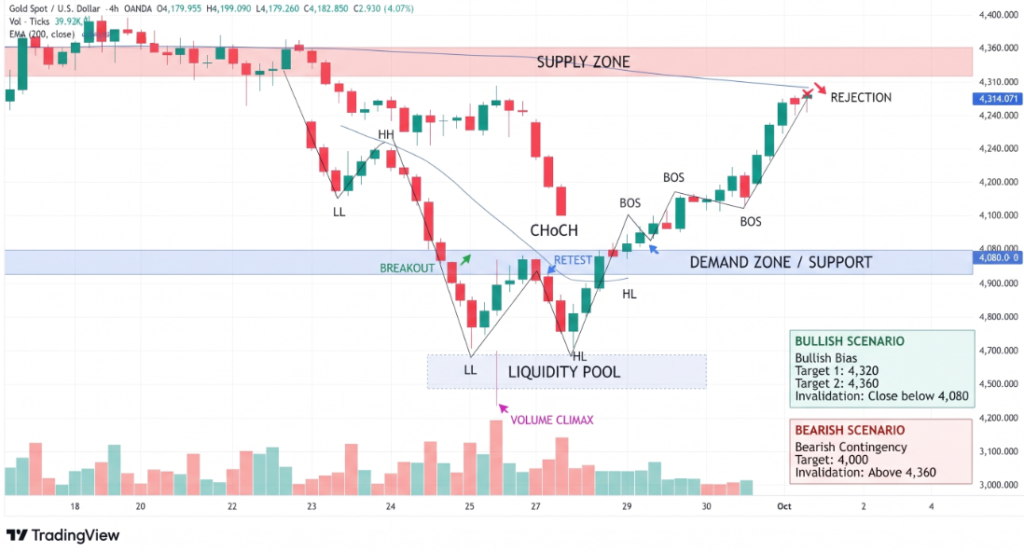
A weaker labor-market reading could reinforce the recent decline in rate-hike expectations, while stronger employment data could revive concerns about persistent inflation and higher-for-longer interest rates.
For gold, the interaction between inflation, Treasury yields, the dollar and Fed policy remains central. The latest PCE figures have reduced some immediate rate pressure, but they have not removed the broader monetary-policy risk facing bullion.
Conclusion
Gold begins October with a modest recovery after losing more than 6% in September. The latest PCE report offers some support for bullion by showing core inflation rising 0.2% in August and reducing expectations for an October Fed hike. However, strong consumer spending, elevated Treasury yields and a firm dollar continue to limit the recovery. The next major test will come from U.S. employment data, which could reshape expectations for the Federal Reserve’s remaining 2026 decisions.
Sources & Methodology
Primary-source standard: Market-moving facts should link to original data releases, regulator notices, company filings or official project announcements whenever available. Secondary reporting is used for additional context, not as a substitute for original evidence.
Page last reviewed: