
Gold prices dropped on Thursday as renewed Middle East hostilities raised concerns about energy supplies, inflation and the possibility of higher interest rates. At 00:59 ET (04:59 GMT), spot gold (XAU/USD) fell 1.2% to $4,091.66 an ounce, while U.S. gold futures declined 1% to $4,107.05. Investors are weighing rising geopolitical risks against expectations that the Federal Reserve will hold rates steady at its October 27–28 meeting.
Middle East Risks Pressure Gold
Bullion came under renewed selling pressure after gaining 0.4% in the previous session, which had ended a three-day losing streak. Concerns about a broader regional conflict intensified after the U.S. State Department ordered non-emergency government employees and their families to leave Saudi Arabia. A drone strike on a Saudi Aramco oil field also killed two people, according to the supplied report.
The developments heightened fears of energy supply disruptions that could push crude oil prices higher and make inflation more persistent. Gold has lost approximately 20% of its value since the U.S.-Iran conflict began in late February, as higher energy costs have complicated the outlook for monetary policy.
Other precious metals also weakened during Thursday’s session:
- Silver: XAG/USD dropped 2.8% to $56.3775 an ounce.
- Platinum: XPT/USD declined 2.3% to $1,593.95.
- Palladium: XPD/USD fell 2.8%.
- U.S. Dollar Index: The index slipped 0.2% to 101.58.
The broad decline in precious metals suggests that inflation and interest-rate concerns are outweighing some of the traditional safe-haven demand associated with geopolitical uncertainty.
Treasury Yields Raise Rate Concerns
U.S. Treasury prices fell across maturities, pushing yields higher. The two-year Treasury yield, which is particularly sensitive to expectations for Federal Reserve policy, reached its highest level in a week.
Higher yields can weaken gold’s appeal because bullion does not pay interest. When government bonds offer more competitive returns, investors may prefer interest-bearing assets over precious metals.
Recent U.S. economic indicators have presented a mixed picture. September housing starts declined, while pending home sales fell to a record low, according to the supplied report. These figures point to weakness in the housing sector, complicating the Fed’s assessment of economic growth and inflation.
However, elevated energy prices could keep consumer prices above the central bank’s 2% inflation target, limiting policymakers’ flexibility.
Fed Decision Puts $4,090 in Focus
Markets are preparing for the Federal Open Market Committee’s October 27–28 meeting. According to the supplied market figures, traders assign less than a one-in-six chance of a quarter-point rate increase in October, although expectations for a December increase remain elevated.
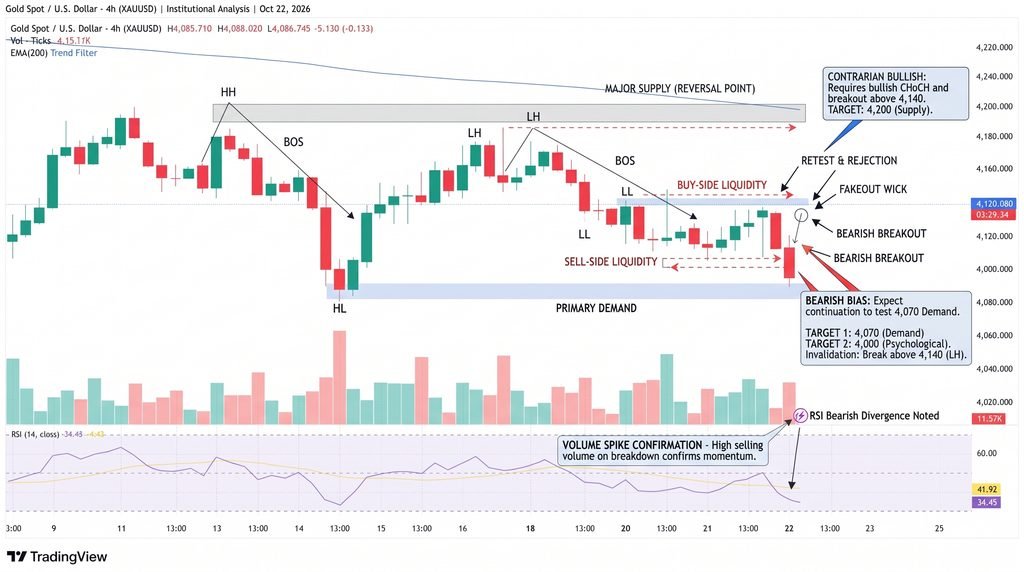
The Fed’s decision will depend on incoming inflation and employment data, as well as the extent to which higher energy costs feed into broader prices. A pause could offer temporary relief to gold, but signals of tighter policy could increase pressure on bullion.
Key factors for gold traders include:
- Developments affecting Middle East energy supplies.
- Changes in Treasury yields and the U.S. dollar.
- Federal Reserve guidance on future interest rates.
Conclusion
Gold’s decline toward $4,090 reflects mounting concern that geopolitical tensions could prolong inflation and keep interest rates elevated. The upcoming Fed meeting is likely to shape near-term sentiment. If yields rise further, bullion could face additional selling pressure; easing energy risks or a more cautious policy outlook could help stabilize prices. Traders should watch economic releases and geopolitical developments before drawing conclusions about gold’s next move.
Sources & Methodology
Primary-source standard: Market-moving facts should link to original data releases, regulator notices, company filings or official project announcements whenever available. Secondary reporting is used for additional context, not as a substitute for original evidence.
Page last reviewed: