
Bitcoin fell below $70,000 on Friday, reaching its lowest level in nearly three months as expectations of further Federal Reserve rate increases and uncertainty surrounding corporate Bitcoin buying weighed on market sentiment. The world’s largest cryptocurrency dropped 6% to $69,244.30, putting it on track for a weekly decline of almost 9% and extending its losing streak to six weeks. Pressure also intensified after MSCI announced plans to remove Strategy from its benchmark indexes, raising questions about the company’s future access to capital.
Fed rate expectations pressure Bitcoin
Stronger-than-expected US inflation data for October strengthened expectations that the Federal Reserve could raise interest rates in December. According to the market snapshot cited in the original report, traders were pricing in a potential increase of 25 to 50 basis points, with one basis point equal to 0.01 percentage point.
Higher borrowing costs can weigh on cryptocurrencies because they increase the relative appeal of interest-bearing assets, such as government bonds, while making speculative investments less attractive. Tighter monetary conditions can also reduce liquidity across financial markets, leaving risk-sensitive assets exposed to sharper declines.
However, market pricing does not guarantee a rate increase. The Fed’s eventual decision will depend on incoming inflation, employment and economic activity data.
Political uncertainty added another source of pressure. The Democratic Party’s gains in both chambers of Congress raised concerns among some investors about the possibility of stricter cryptocurrency oversight. Potential changes to anti-money-laundering requirements, investor protections and risk-management standards could increase compliance costs for digital-asset businesses.
Strategy faces MSCI index exclusion
Strategy, the largest publicly traded corporate holder of Bitcoin, became another focus for investors after MSCI announced that certain digital-asset treasury companies would be excluded from its indexes. The change is scheduled to take effect on November 30, according to the supplied report.
The decision does not automatically force Strategy to sell Bitcoin. However, exclusion from major benchmarks could reduce demand for its shares from index-tracking investment funds and potentially make future capital raising more difficult.
That matters because Strategy has relied heavily on issuing equity and debt to finance its Bitcoin purchases. If access to external funding becomes more expensive or restricted, the company could face greater pressure to manage its balance sheet and meet financial obligations.
Key risks investors are monitoring include:
- Reduced demand for Strategy shares from index-linked funds.
- Higher financing costs for future Bitcoin purchases.
- Potential pressure to sell some Bitcoin if liquidity needs intensify.
Any future sale remains a possibility, not a confirmed outcome.
Altcoins extend weekly declines
Bitcoin’s weakness spread across the wider cryptocurrency market. Ether fell 5.2% to $1,944.56 and was down 13.2% for the week, while XRP lost 1.6% on Friday and nearly 12% over the same period.
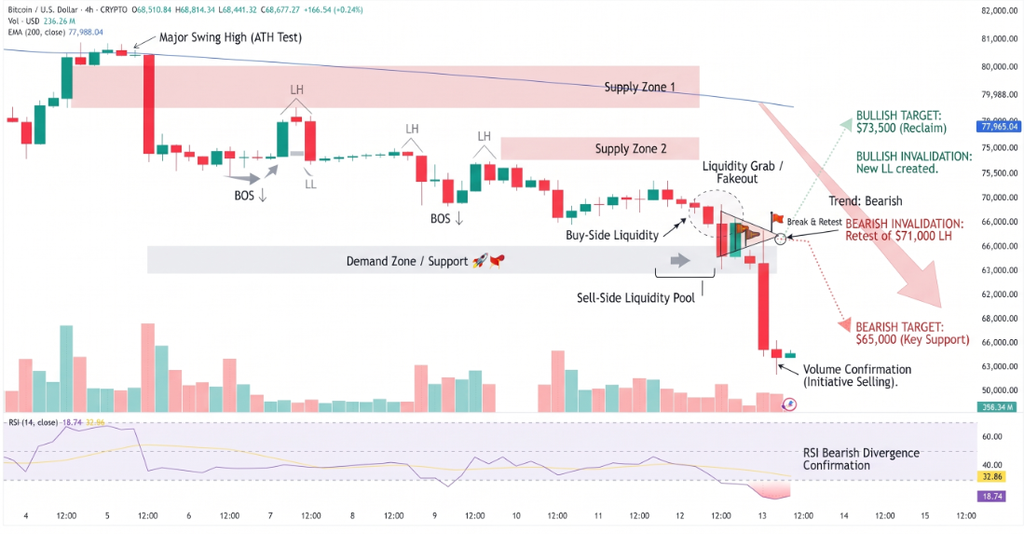
Bitcoin Price Chart – Source: Tradingview
Cardano and Solana declined 0.9% and 3.2%, respectively. BNB dropped 5.7%, extending its weekly losses to a range of pressure affecting major digital assets. Dogecoin and the TRUMP token also fell more than 3% each.
The market remains vulnerable to further volatility as investors reassess interest-rate expectations, regulatory risks and demand for leveraged crypto positions.
Conclusion
Bitcoin’s fall below $70,000 reflects a combination of macroeconomic pressure and concerns about institutional funding for corporate Bitcoin purchases. A sustained recovery will likely require improved risk appetite and clearer signals on US monetary policy. Until then, the six-week losing streak leaves the broader crypto market exposed to further downside.
Sources & Methodology
Primary-source standard: Market-moving facts should link to original data releases, regulator notices, company filings or official project announcements whenever available. Secondary reporting is used for additional context, not as a substitute for original evidence.
Page last reviewed: