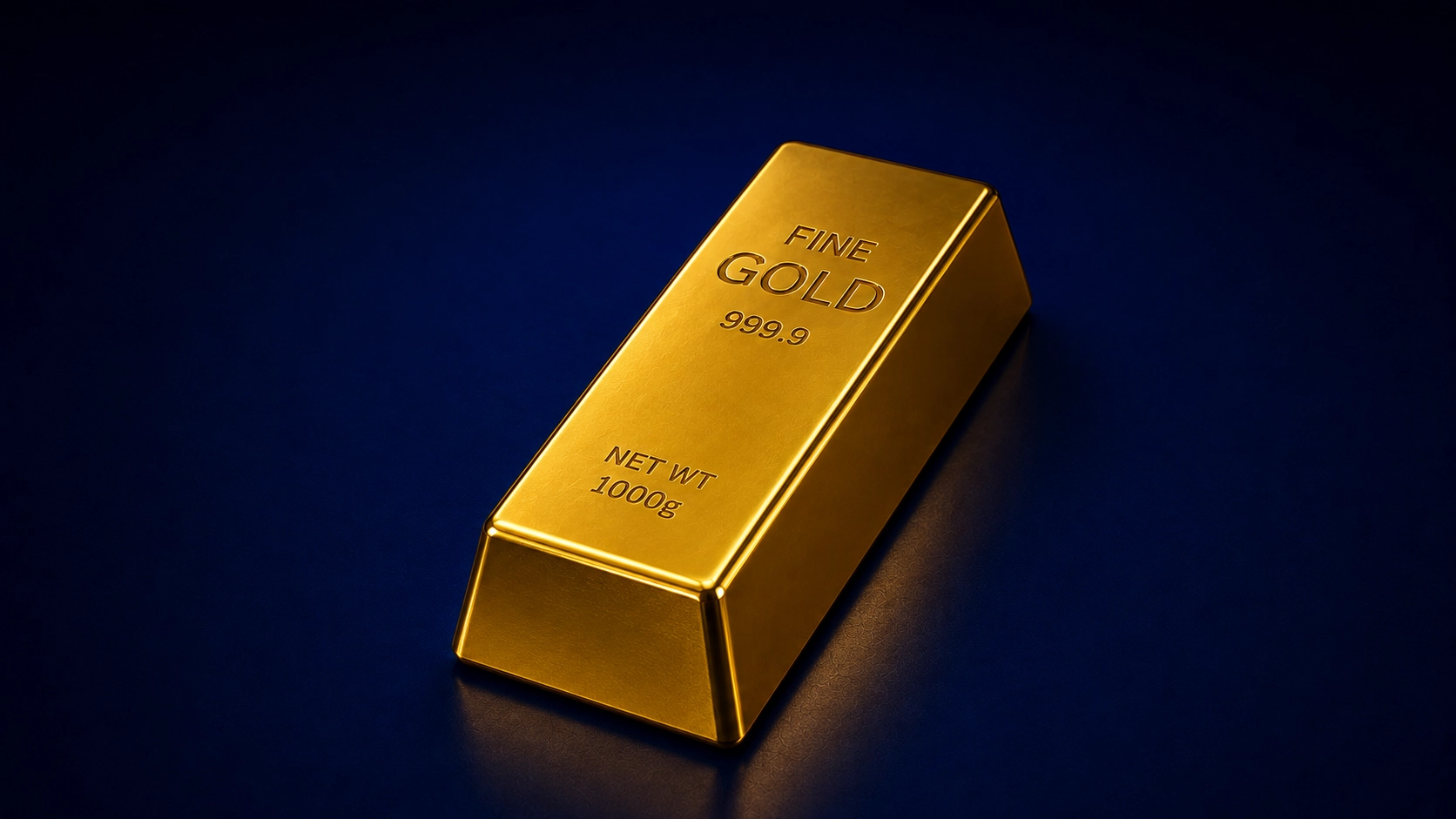
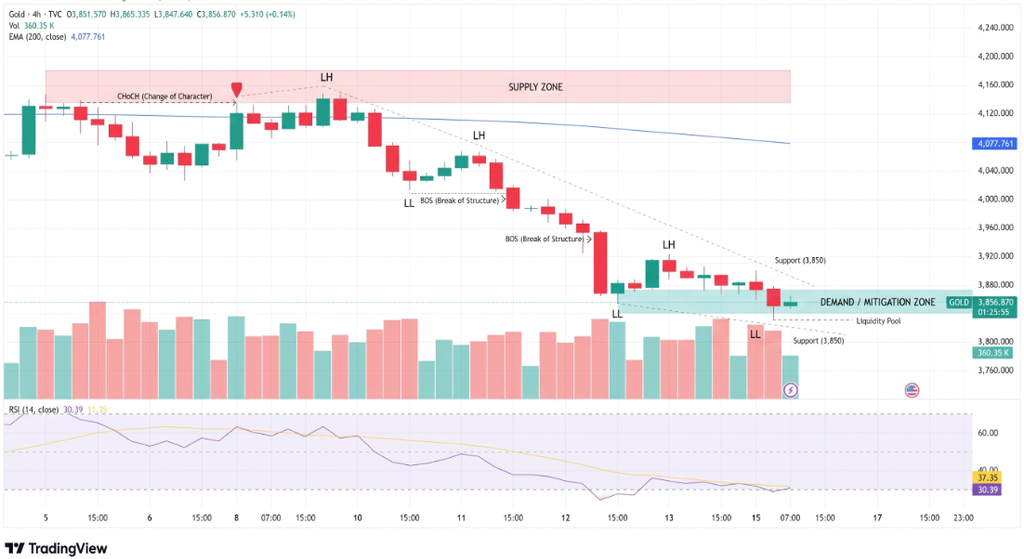
Gold prices extended their decline on Monday, falling further below the $3,900-an-ounce threshold as a stronger US dollar and growing expectations of additional Federal Reserve interest-rate increases pressured precious metals. Spot gold dropped 0.4% to $3,868.88 an ounce, while US gold futures declined 0.3% to $3,871.92. The sell-off followed a 4.5% weekly loss, with persistent inflation and rising energy prices reinforcing expectations that US borrowing costs could remain elevated for longer.
Gold and Silver Extend Weekly Losses
At 00:10 ET (05:10 GMT), spot gold (XAU/USD) traded at $3,868.88, down 0.4%, while gold futures slipped 0.3% to $3,871.92. Weakness extended across the precious metals market as investors reassessed their exposure to non-yielding assets.
Other metals also recorded substantial losses:
- Silver (XAG/USD) declined 2.1% to $47.7430 an ounce.
- Platinum(XPT/USD) fell 1.3% to $1,473.49.
- Palladium (XPD/USD) dropped 1.4% to $985.81, while palladium futures lost 1.6% to $984.25.
- The US Dollar Index edged 0.03% higher to 103.44.
Gold’s 4.5% weekly decline pushed prices to their lowest level in more than a year. Rising oil prices have intensified inflation concerns, increasing the likelihood that central banks, particularly the Federal Reserve, will maintain restrictive monetary conditions.
Fed Rate Hike Bets Strengthen Dollar
Fresh US inflation data added to the pressure on bullion. The Producer Price Index (PPI) increased 0.3% in October, while annual producer inflation accelerated to 6.5%, its largest increase since November 2022. The figures reinforced concerns that price pressures remain persistent despite previous monetary tightening.
Federal Reserve officials have also adopted increasingly cautious positions on inflation. Kansas City Fed President Jeff Schmid said Sunday that inflation remained uncomfortably above the central bank’s 2% target and that policymakers had more work to do.
Vice Chair Philip Jefferson said economic activity and labour-market conditions remained broadly solid, making inflation the more important consideration for his monetary-policy outlook. Boston Fed President Susan Collins similarly supported additional tightening, although she favoured a gradual approach.
According to the CME FedWatch Tool, markets are pricing in:
- A 94% probability of a 25-basis-point December rate increase.
- A 6% probability of a larger, 50-basis-point increase.
Higher interest rates generally reduce gold’s appeal because bullion does not generate interest income. A stronger dollar also makes dollar-denominated gold more expensive for international buyers, potentially limiting demand.
Warsh Speech and Geopolitical Risks Ahead
Investors are preparing for additional monetary-policy signals as the week progresses. Federal Reserve Chair Kevin Warsh is scheduled to speak on Tuesday, November 17, while the minutes from the October 27–28 Federal Open Market Committee meeting are due Wednesday, November 18.
These events could provide further insight into policymakers’ willingness to raise borrowing costs and their assessment of persistent inflation.
Geopolitical developments are also adding uncertainty to the outlook. On Sunday, Saudi-backed forces withdrew from positions near Yemen’s Bab el-Mandeb Strait to reinforce Aden amid advances by Iran-aligned Houthi rebels. Separately, Iran launched drone attacks targeting US military facilities in Bahrain, increasing tensions across the Gulf region.
Despite these geopolitical risks, gold has struggled to attract sustained safe-haven demand as inflation concerns and higher interest-rate expectations dominate market sentiment.
Conclusion
Gold’s immediate outlook remains under pressure as the US dollar strengthens and markets increasingly anticipate another Federal Reserve rate increase in December. The $3,900 level remains an important threshold for bullion, while upcoming Fed communications and inflation developments could determine whether prices stabilise or extend their decline. Until expectations of monetary tightening ease, gold may struggle to establish a convincing recovery.
Sources & Methodology
Primary-source standard: Market-moving facts should link to original data releases, regulator notices, company filings or official project announcements whenever available. Secondary reporting is used for additional context, not as a substitute for original evidence.
Page last reviewed: