
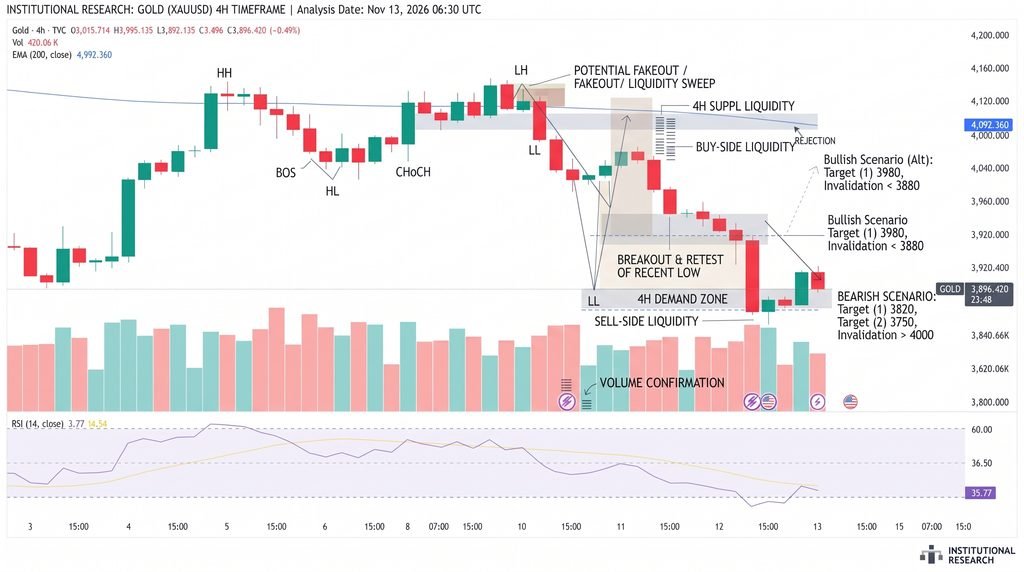
Gold prices recovered above $3,900 an ounce on Friday after falling to a 13-month low in the previous session. The rebound, however, has not erased the metal’s weekly losses, with spot bullion still down around 3.5%. Spot gold rose 1% to $3,915.31 per ounce by 0322 GMT as investors assessed a stronger US dollar, rising Treasury yields and growing expectations of further Federal Reserve interest-rate increases. These factors continue to challenge gold’s appeal because the metal does not generate interest income.
Fed rate bets weigh on gold prices
The latest decline in bullion accelerated after stronger-than-expected US inflation figures and hawkish remarks from Federal Reserve policymakers prompted investors to reassess the interest-rate outlook.
Treasury yields extended their gains on Thursday, with some maturities rising more than 12 basis points. Shorter-dated yields recorded particularly sharp increases because they are more sensitive to changes in expectations for the Fed’s policy rate. Higher yields raise the opportunity cost of holding gold, encouraging investors to consider interest-bearing alternatives.
Chicago Fed President Austan Goolsbee stressed that policymakers must contain inflation before economic activity becomes overheated. San Francisco Fed President Mary Daly also indicated that further rate increases could be necessary, citing persistent inflation across sectors beyond those directly affected by tariffs and energy prices.
Markets have increasingly favoured a 25-basis-point rate increase in December, while some investors have considered the possibility of a larger 50-basis-point move. These are market expectations, not confirmed policy decisions.
Dollar and oil add to bullion pressure
The US Dollar Index traded around 103.21 in the reported session. A stronger dollar makes gold more expensive for international buyers using other currencies, potentially limiting demand.
Energy prices have added another challenge. Brent crude approached $96 a barrel on Thursday after US President Donald Trump played down the prospect of a diplomatic breakthrough with Iran and indicated that military action remained an option.
Higher oil prices can increase transportation and production costs, adding to inflation concerns. If energy-driven inflation keeps central banks focused on restrictive monetary policy, gold could face further pressure from elevated borrowing costs and bond yields.
ANZ analysts linked gold’s fall below $3,900 to stronger economic data, rising energy costs, higher yields and a dollar above 103. They also warned that the Federal Reserve could consider a 50-basis-point increase if economic resilience continues to reinforce inflationary pressures.
Other precious metals recorded modest gains during Friday’s session:
- Silver: Rose to $50.0785 an ounce.
- Platinum: Advanced 0.2% to $1,524.
- Spot palladium: Increased 0.3% to $1,001.40.
Gold forecast: Can $3,900 hold?
Friday’s move above $3,900 offers some relief following the previous session’s steep decline. However, the recovery remains vulnerable while the dollar and Treasury yields stay elevated. A sustained improvement in bullion would likely require softer economic data or a shift toward a less restrictive Federal Reserve policy outlook.
Conclusion
Gold’s rebound to $3,915.31 has yet to establish a convincing reversal, with weekly losses still near 3.5%. Persistent inflation, rising energy prices and expectations of further Fed tightening could continue to limit demand. Investors will focus on upcoming US economic releases and policymakers’ comments for evidence that the interest-rate outlook is changing.
Sources & Methodology
Primary-source standard: Market-moving facts should link to original data releases, regulator notices, company filings or official project announcements whenever available. Secondary reporting is used for additional context, not as a substitute for original evidence.
Page last reviewed: