
Bitcoin rises to $64,064 amid tight range. Strategy sells 1,638 BTC for $104.7M, holdings fall to 842,138. BlackRock launches $311B tokenized funds in Europe; Coinkite cold-wallet hack drains ~$90M
Bitcoin rose about 1% to $64,064 by 09:42 ET (13:42 GMT) on Tuesday, remaining locked in a tight trading range. Broader caution over mixed U.S.-Iran signals and weak corporate earnings limited upside, while Strategy Inc. disclosed it sold 1,638 Bitcoin for roughly $104.7 million last week. A recent high-profile cold-wallet hack that drained nearly $90 million also weighed on sentiment.
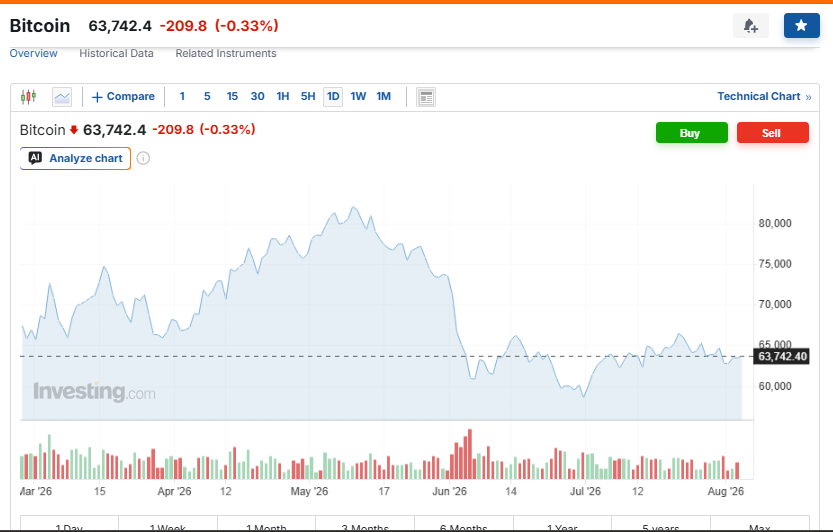
Bitcoin Holds $64K as Strategy Sells 1,638 BTC for $105M; BlackRock Tokenizes $311B Funds
Bitcoin traded near $64,064, up roughly 1% on the day but still confined to a narrow range after recent volatility. Ether rose 0.8% to $1,874.84, Solana gained 1%, BNB added 0.6%, while Cardano slipped 0.6% and XRP held flat at $1.0783. Memecoins Dogecoin and $TRUMP advanced 0.2% and 1.2%, respectively.
Strategy Inc. (NASDAQ: MSTR), the largest corporate Bitcoin holder, disclosed in an SEC filing on Monday that it sold 1,638 BTC between July 27 and August 2 for about $104.7 million at an average price of $63,957. The sale reduced its holdings to 842,138 BTC, acquired at an aggregate cost of $63.51 billion or an average of $75,419 per coin. Proceeds were split roughly evenly between preferred-stock dividends ($52.4 million) and STRC preferred-share repurchases ($52.3 million). The company also sold 3.01 million MSTR shares for $290.6 million, lifting its USD reserve to $4 billion. This marked Strategy’s third Bitcoin sale of 2026.
BlackRock launched its first tokenized fund access in Europe, issuing 12 onchain share classes on the Ethereum blockchain for select Institutional Cash Series money-market funds that held a combined $311 billion in assets as of June 30. The offering, developed with JPMorgan’s Kinexys platform, allows approved investors 24/7 peer-to-peer transfers while the official shareholder register remains off-chain with the transfer agent.
Separately, a firmware flaw in Coinkite’s Coldcard cold wallets enabled attackers to drain roughly 1,367–1,596 BTC (about $88–100+ million) from thousands of addresses in waves beginning July 30, according to Galaxy Research. Cold wallets are typically viewed as the most secure storage method.
Coinbase reported a second-quarter net loss of $359 million on $1.22 billion in revenue, missing estimates, with transaction revenue of $599 million and subscription-and-services revenue of $555 million. Adjusted EBITDA was $208 million.
Why Bitcoin Stayed Rangebound: Strategy’s $105M Sale, Cold-Wallet Hack and Mixed Iran Signals
Bitcoin’s modest gain occurred against a backdrop of mixed macro and geopolitical signals. Conflicting statements on U.S.-Iran talks—Trump asserting discussions were underway while Tehran largely denied them—kept risk assets cautious, even as the apparent pause in U.S. hostilities and sharp drop in oil prices provided some support.
Strategy’s third Bitcoin sale of the year, coming days after a larger-than-expected Q2 loss driven by unrealized losses on its holdings (average cost $75,419 vs. spot near $64,000), reinforced concerns that even the most committed corporate buyer is prioritizing cash reserves and preferred dividends over further accumulation. The Coinkite cold-wallet exploit, which undermined confidence in hardware security, added to near-term caution. Underwhelming Coinbase results further dented sector sentiment.
Positive institutional developments, including BlackRock’s European tokenization launch covering $311 billion in money-market assets, offered a partial counterweight by highlighting continued traditional-finance adoption of blockchain infrastructure.
Strategy’s $75K Cost Basis, $100M Coldcard Hack & BlackRock’s $311B Tokenization Push
Strategy has shifted from pure accumulation to a capital-management framework that allows limited Bitcoin sales to fund preferred dividends and build a multi-billion-dollar USD reserve. Its average acquisition cost of $75,419 remains well above current prices, contributing to large unrealized losses that weighed on recent earnings.
The Coinkite incident involved a firmware vulnerability that reduced seed-phrase entropy on certain Coldcard models, allowing offline reconstruction of private keys without physical access to the devices. Losses climbed across multiple attack waves to roughly $88–100 million or more.
BlackRock’s move extends its tokenization efforts beyond the earlier BUIDL fund into core institutional cash products, enabling 24/7 transfers while preserving traditional fund structures. Coinbase’s Q2 results reflected softer industry trading volumes, though the exchange continued to gain market share (record 10.3% crypto trading volume share) and diversified revenue (subscription and services now nearly half of net revenue).
What’s Next for Bitcoin: Range Breakout Hinges on Strategy Sales, Iran Talks & Tokenization Uptake
Traders will watch whether Bitcoin can break out of its recent range or remains constrained by ongoing Strategy sales, geopolitical headlines, and residual security concerns from the Coinkite exploit. Further details on Strategy’s capital framework utilization, any additional corporate treasury activity, and adoption metrics for BlackRock’s new tokenized share classes will be key. Broader crypto prices may stay sensitive to U.S.-Iran developments and upcoming macroeconomic data. Analysts continue to monitor corporate earnings for signs of improving or deteriorating crypto-related revenue.
Sources & Methodology
Primary-source standard: Market-moving facts should link to original data releases, regulator notices, company filings or official project announcements whenever available. Secondary reporting is used for additional context, not as a substitute for original evidence.
Page last reviewed: