
Ethereum wallets holding approximately $72 billion in Ether could face a future quantum-computing threat, according to researchers proposing a migration strategy to protect vulnerable accounts. The study estimates that millions of wallets have already exposed their public keys through previous transactions, potentially allowing sufficiently advanced quantum computers to derive private keys and access funds. Although no existing quantum computer can break Ethereum’s cryptography today, researchers warn that preparing a network-wide transition could take months, making early upgrades critical to protecting assets.
$72 Billion in ETH Faces Quantum Risk
A research paper published November 19 by researchers from the University of Pittsburgh and SeQure examines how Ethereum could transition to quantum-resistant cryptography before powerful quantum computers threaten conventional wallet security.
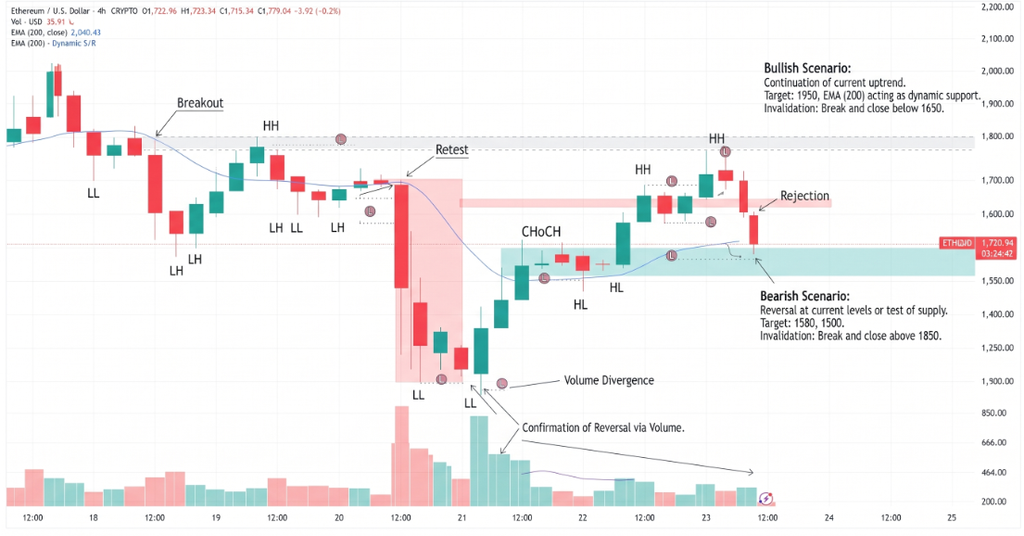
The researchers estimate that approximately 42 million ETH held in wallets that have previously sent transactions could be vulnerable. At Ether’s price of approximately $1,726, the holdings represent around $72 billion in potential exposure.
Ethereum addresses initially conceal their public keys. However, sending a transaction reveals the public key through its cryptographic signature. A sufficiently advanced quantum computer running Shor’s algorithm could theoretically derive the corresponding private key, allowing an attacker to authorize transactions and steal funds.
The paper also highlights risks to Ethereum’s staking infrastructure. Approximately 61% of staked ETH could eventually be withdrawn into wallets with exposed public keys, creating another potential vulnerability as staking withdrawals occur.
The threat remains theoretical, but researchers argue that the migration process must begin before quantum computing reaches the required capabilities.
Ethereum’s Proposed Wallet Migration
The study proposes a two-stage system that allows users to replace vulnerable cryptographic keys with quantum-resistant alternatives. Wallet owners would initially register new keys using their existing signatures, followed by a protocol upgrade that disables conventional signatures.
Accounts that fail to migrate before the cutoff would become frozen rather than permanently inaccessible. Owners could subsequently recover their wallets using a cryptographic proof derived from their original recovery phrase.
The proposed recovery mechanism is designed to protect wallet ownership without revealing sensitive seed phrases. Researchers tested the proof system on a laptop, with verification taking approximately 38 milliseconds.
Key elements of the proposed migration include:
- Key registration: Users enroll quantum-resistant keys before conventional signatures are retired.
- Wallet recovery: Owners prove control using their original seed phrases without revealing them.
- Fraud protection: Legitimate owners can override fraudulent registrations during a recovery window.
- Validator upgrades: Ethereum validators would transition to quantum-resistant signatures to protect network consensus.
The system would also allow owners to recover frozen accounts after the migration deadline, provided they retain their original seed information.
Millions of Wallets Could Take Months
Ethereum’s limited block capacity could become the biggest obstacle to a large-scale migration. Even if users can generate recovery proofs quickly, the blockchain must process millions of registration and recovery transactions.
Researchers estimate that approximately 4.45 million wallets holding at least 0.1 ETH could complete the initial migration in around 29 days if owners register before the cutoff. Recovering accounts after the transition could take approximately 235 days when recovery proofs are processed in batches of four.
The proposed system also introduces a recovery cost, with fees depending on network congestion and transaction requirements.
Conclusion
Ethereum’s quantum vulnerability is not an immediate security crisis, but the potential exposure highlights the importance of long-term cryptographic planning. A successful transition would require wallet developers, validators, exchanges and users to coordinate upgrades well before quantum computers become capable of breaking existing security standards.
Sources & Methodology
Primary-source standard: Market-moving facts should link to original data releases, regulator notices, company filings or official project announcements whenever available. Secondary reporting is used for additional context, not as a substitute for original evidence.
Page last reviewed: