
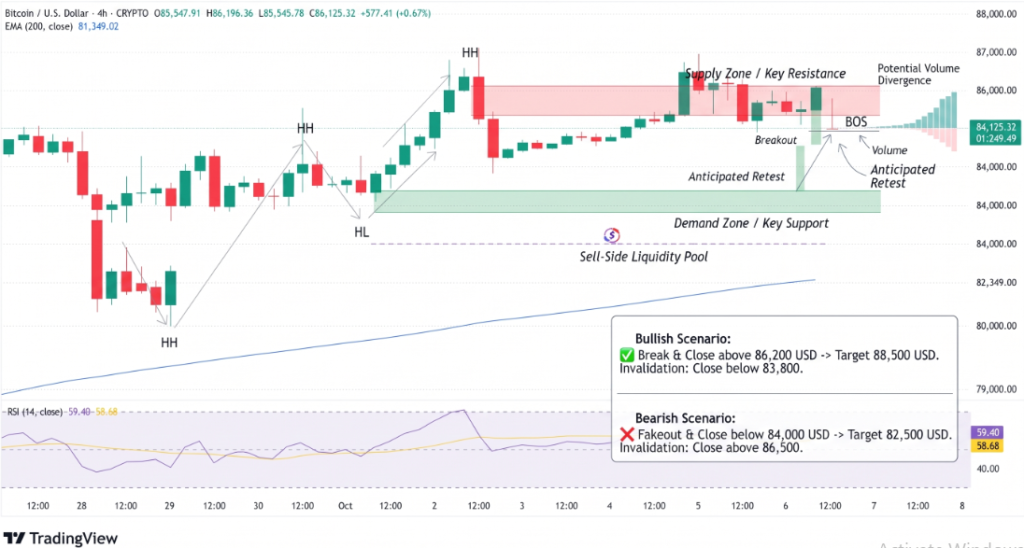
Bitcoin remained near $85,800 on Tuesday as a sharp rise in global bond yields limited demand for riskier assets. Bitcoin fell 0.13% to $85,830.70 by 05:35 ET (09:35 GMT), extending the previous session’s decline. The move came despite growing optimism around the US regulatory outlook for digital assets. Investors are also watching the potential rollout of tokenized US stock trading, while October’s historically stronger crypto performance remains a source of support for sentiment.
Rising Bond Yields Pressure Bitcoin
The latest Bitcoin weakness reflects a broader shift in global fixed-income markets. US Treasury yields climbed sharply, with the 10-year yield reaching 5.31% on October 5, according to Treasury data. Longer-dated yields were even higher, with the 30-year yield at 5.66%.
Higher yields can make government bonds more competitive with speculative assets because investors receive greater returns from relatively lower-risk securities. That dynamic can reduce demand for Bitcoin and other cryptocurrencies, particularly when markets are also concerned about inflation, fiscal deficits and the prospect of tighter monetary policy.
Still, Bitcoin has shown some resilience around the $85,000 area. Investors are balancing the pressure from rising yields against expectations that regulatory changes could make digital assets more accessible to traditional financial markets.
The regulatory backdrop strengthened Monday after the CFTC proposed a framework for retail crypto transactions involving leverage, financing or margin. The agency said the proposal seeks a national regulatory structure with stronger consumer protections and clearer requirements for crypto markets.
US Crypto Rules Offer Fresh Support
The CFTC initiative follows a September move by the SEC to allow certain venues to trade tokenized US stocks under a temporary, conditional exemption. The SEC said the measure permits Tokenized Securities Venues to use automated market makers and liquidity pools for eligible tokenized national-market-system stocks.
The exemption is limited rather than a blanket approval for tokenized equities. Eligible tokenized stocks must preserve the same rights and privileges as their traditional counterparts, while the venues face conditions covering trading limits, disclosures and smart-contract requirements. The relief is scheduled to expire five years after publication.
For Bitcoin, the broader significance is the possibility of deeper connections between blockchain-based markets and traditional finance. That potential is supporting sentiment even as higher yields keep immediate upside constrained.
Altcoins Track Bitcoin Lower
Most major cryptocurrencies also moved lower on Tuesday, showing that Bitcoin’s weakness was spreading across the broader market. Ether declined 0.5% to $2,702.16, while XRP lost 0.6%. Solana fell 1.1% and BNB dropped 0.5%, whereas Cardano gained about 2%.
- Bitcoin: $85,830.70, down 0.13%
- Ether: $2,702.16, down 0.5%
- XRP: down 0.6%
- Solana: down 1.1%
Dogecoin fell 1.4%, while the TRUMP token declined 2.6%. The mixed performance highlights the market’s sensitivity to liquidity conditions rather than a uniform reaction to the improving US regulatory narrative.
Conclusion
Bitcoin is caught between two competing forces: rising bond yields are increasing the opportunity cost of holding speculative assets, while US regulatory developments are improving the long-term institutional backdrop. With BTC near $85,800, the $85,000 area remains an important psychological zone. A sustained recovery would likely require easing yields and stronger risk appetite, while continued pressure from global bonds could keep Bitcoin vulnerable to further declines.
Sources & Methodology
Primary-source standard: Market-moving facts should link to original data releases, regulator notices, company filings or official project announcements whenever available. Secondary reporting is used for additional context, not as a substitute for original evidence.
Page last reviewed: