
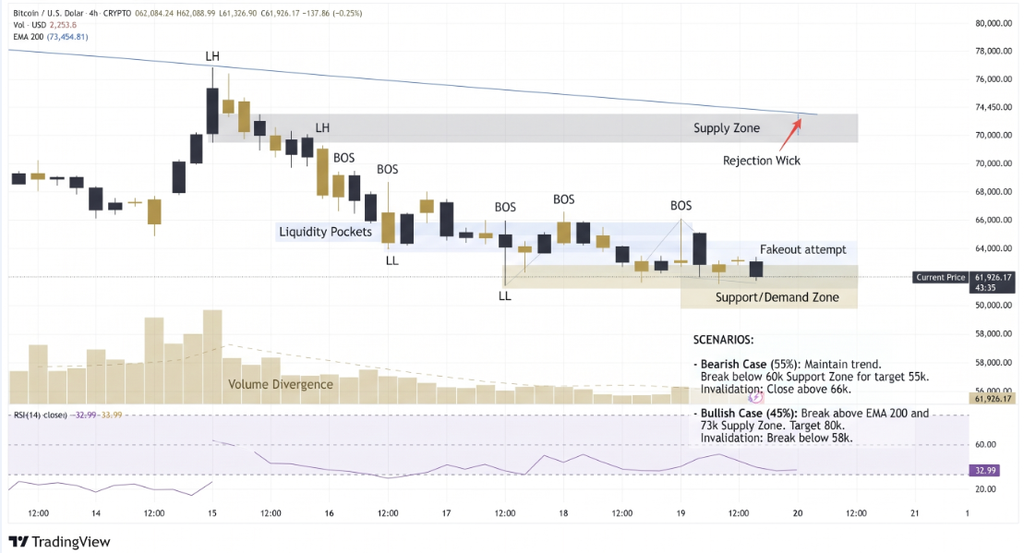
Bitcoin fell below $62,000 on Friday, reaching its weakest level in nearly five months as a broad sell-off in technology stocks weakened appetite for risk. The largest cryptocurrency was heading toward a seventh consecutive weekly decline, extending losses that began in early October. Heavy withdrawals from US-listed Bitcoin exchange-traded funds, concerns over higher US interest rates and uncertainty surrounding cryptocurrency regulation added to the pressure.
Bitcoin falls below $62,000
Bitcoin declined 2.3% to $61,874.40 by 00:59 ET (05:59 GMT) on Friday, leaving it down 4.1% for the week. The move reflected a wider retreat from speculative investments as investors reassessed valuations across the technology sector.
Technology shares faced heavy selling as investors questioned whether the enormous sums being invested in artificial intelligence infrastructure would generate returns sufficient to justify current valuations. Concerns about the sustainability of AI spending have encouraged investors to reduce exposure to higher-risk assets, including cryptocurrencies.
The market response to Anthropic’s initial public offering also failed to improve sentiment. The company’s shares finished below their intraday highs and lost further ground in after-hours trading on Thursday. Although the technology sector’s weakness and cryptocurrency selling occurred together, the available figures do not establish that Anthropic directly diverted investment capital away from Bitcoin.
Bitcoin ETFs see $1.12 billion outflows
US-listed spot Bitcoin exchange-traded funds (ETFs) recorded approximately $1.12 billion in net outflows during the week, according to SoSoValue. This marked the third consecutive week with withdrawals exceeding $1 billion, highlighting sustained pressure on institutional investment demand.
ETF flows are closely monitored because they provide an indication of investor appetite for regulated Bitcoin exposure. Continued withdrawals can reduce an important source of buying support, particularly when broader financial markets are weakening.
Monetary-policy expectations are another concern. Recent economic data and Federal Reserve commentary have strengthened expectations that US interest rates could remain elevated, with traders assessing the possibility of a December rate increase. Higher borrowing costs can make interest-bearing investments more attractive relative to assets such as Bitcoin, which do not generate regular income.
Regulatory uncertainty has also weighed on sentiment. Following the Democratic Party’s reported sweep of both chambers of Congress in the midterm elections, investors have considered the possibility of tighter cryptocurrency oversight when the new Congress takes office in 2027. Senator Elizabeth Warren has been among the prominent lawmakers calling for stricter regulation of the industry.
Altcoins extend losses across market
Selling pressure spread across major digital assets on Friday, with leading altcoins recording further declines.
- Ethereum: Fell 3.6% to $1,742.05.
- XRP: Dropped 1.8%, remaining below $1.
- Solana and BNB: Declined more than 3% each.
- Cardano: Lost 2.4%.
- Dogecoin and $TRUMP: Fell 3.2% and 4.5%, respectively.
Conclusion
Bitcoin’s decline below $62,000 reflects pressure from several directions: weakening technology valuations, persistent ETF withdrawals, expectations of higher US interest rates and regulatory concerns. A recovery in institutional demand and broader risk appetite could help stabilize prices. Until those conditions improve, Bitcoin and other cryptocurrencies remain exposed to further selling. The ability of BTC to reclaim and hold above $62,000 will be an important near-term signal for market sentiment.
Sources & Methodology
Primary-source standard: Market-moving facts should link to original data releases, regulator notices, company filings or official project announcements whenever available. Secondary reporting is used for additional context, not as a substitute for original evidence.
Page last reviewed: