
Bitcoin holds around $64,000 after Strategy sells 1,638 BTC for $104.7M, reducing holdings to 842,138. Markets cautious amid Coinkite hack, Coinbase results, and U.S.-Iran talks.
Bitcoin traded slightly higher on Tuesday but remained locked in a tight range around $64,000 as Strategy, the largest corporate Bitcoin holder, disclosed the sale of 1,638 BTC for approximately $104.7 million. Broader caution stemmed from mixed signals on U.S.-Iran negotiations over the Strait of Hormuz, a cloudy monetary policy outlook, underwhelming Coinbase earnings, and a high-profile cold wallet hack that drained nearly $100–140 million in Bitcoin.
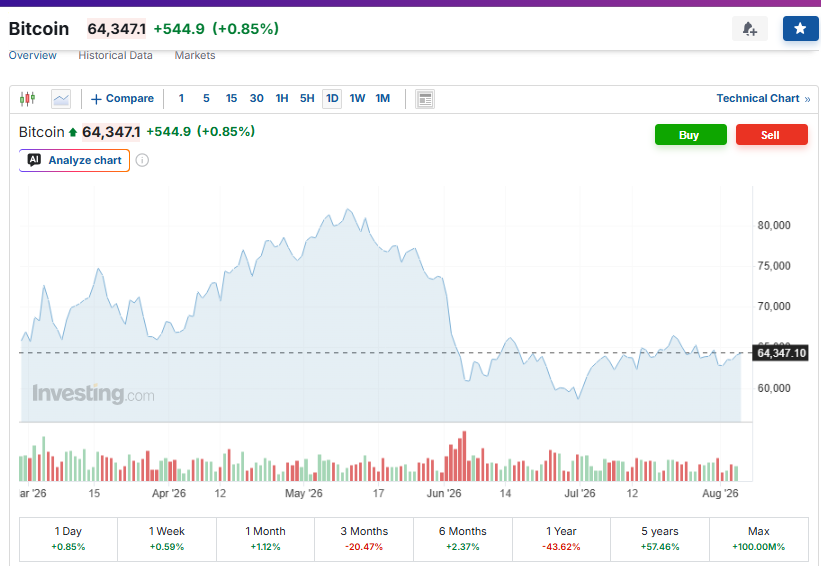
Bitcoin Holds Near $64,226 as Strategy Sells 1,638 BTC for $104.7M, Cutting Holdings to 842,138
Bitcoin was last up about 1% to $64,226 as of 17:37 ET on Tuesday, according to market data, after opening near $64,050–$64,120 and trading in a narrow band with recent daily closes around $64,000–$64,500. Over the prior sessions, prices had fluctuated between roughly $62,200 and $65,400.
Strategy (formerly MicroStrategy) disclosed in an SEC Form 8-K filing on Monday that it sold 1,638 Bitcoin between July 27 and August 2 at an average price of $63,957 per coin, generating about $104.7 million in proceeds. This reduced its total holdings to 842,138 BTC as of August 2. The company’s aggregate acquisition cost now stands at approximately $63.51 billion, or an average purchase price of $75,419 per Bitcoin. At current prices near $64,000, the holdings are valued at roughly $53–54 billion, implying unrealized losses of around $9.5–10.9 billion.
Proceeds from the Bitcoin sales funded about $52.4 million in preferred-stock dividend payments and $52.3 million toward repurchases of its STRC preferred shares. Separately, Strategy sold 3,011,361 shares of its common stock (MSTR) for net proceeds of $290.6 million. Of those proceeds, $250 million boosted its USD cash reserve to $4 billion, with additional amounts supporting further STRC buybacks (totaling about $81.2 million for 912,143 shares) and cash balances. This marked Strategy’s third Bitcoin sale of 2026 (following smaller sales earlier in the year totaling over 5,000 BTC overall), after a pause in purchases lasting more than five weeks. Holdings still represent roughly 4% of Bitcoin’s 21 million supply cap.
In parallel, a vulnerability in Coinkite’s Coldcard hardware wallets (marketed as highly secure cold storage) led to the theft of approximately 1,596 BTC (worth over $100–140 million at recent prices) from around 7,300 addresses, according to Galaxy Research analysis. The exploit stemmed from a 2021 firmware bug that reduced seed-phrase entropy, allowing remote reconstruction of private keys without physical access. Coinkite released patches and urged users to move funds.
BlackRock launched its first tokenized fund access in Europe, issuing 12 on-chain share classes on the Ethereum blockchain for select Institutional Cash Series money market funds (totaling $311 billion in assets as of June 30). The products, in partnership with JPMorgan’s Kinexys unit, cover Euro, Sterling, and U.S. Dollar liquidity and government funds. Tokens enable 24/7 wallet-to-wallet transfers via smart contracts while the official shareholder register remains with the transfer agent.
Coinbase reported Q2 2026 total revenue of about $1.22 billion (down from $1.5 billion year-over-year), a net loss of $359.5 million, and adjusted EBITDA of $208 million. Transaction revenue was $599 million and subscription/services $555 million. The exchange noted record crypto trading volume market share of 10.3% despite softer volumes.
Altcoins were mixed: Ether rose ~0.5% to around $1,873, Solana and BNB gained ~0.5–0.6%, Cardano edged up 0.1%, while XRP slipped 0.3% to ~$1.077 and Dogecoin fell 0.3%. Bitcoin dominance hovered near 58–59% of the total crypto market capitalization (around $2.19–2.26 trillion).
Strategy’s $104.7M BTC Sale and Coinbase’s $359M Loss Weigh on Sentiment as Bitcoin Stays Rangebound Near $64K
The Strategy sales reinforced a shift from pure accumulation toward liquidity management and preferred-share obligations, occurring while Bitcoin trades well below the firm’s average cost basis and after a large Q2 unrealized-loss-driven earnings hit for the company. Combined with Coinbase’s revenue miss and net loss amid lower trading volumes, this weighed on sector sentiment. The Coldcard hack undermined confidence in even “cold” storage security, contributing to caution. Macro factors—including mixed U.S.-Iran signals on reopening the Strait of Hormuz (a critical oil chokepoint) and uncertainty over monetary policy—kept risk assets rangebound, limiting upside despite modest Bitcoin gains.
Strategy’s 2026 BTC Sales Top 5,000 as Firm Builds $4B Reserve; BTC Dominance Holds Near 59%
Strategy began aggressively accumulating Bitcoin in 2020 under Executive Chairman Michael Saylor and remains by far the largest public corporate holder. Cumulative 2026 sales exceed 5,000 BTC as the firm prioritizes a $4 billion USD reserve (covering preferred dividends and interest) and capital structure management over further purchases. Bitcoin has traded in a multi-week range roughly $62,000–$66,000 after earlier 2026 volatility, with dominance elevated as capital prefers the largest asset amid broader caution. Total crypto market capitalization stands near $2.2 trillion. The Coinkite incident highlights ongoing self-custody risks even with hardware wallets. BlackRock’s tokenization move extends its institutional blockchain efforts (following U.S. products) into European regulated money-market funds. U.S. Treasury Secretary Scott Bessent stated on CNBC that a deal with Iran to open the Strait of Hormuz could come “today or tomorrow,” with Qatar mediating and draft language circulating, though no final agreement or direct talks were confirmed.
Key Levels Ahead: Bitcoin’s $62K–$66K Range, Hormuz Deal Watch, and Strategy’s Next Treasury Update
Markets will watch for confirmation of any U.S.-Iran Hormuz deal, which could ease energy-price pressure and support risk assets. Further Strategy treasury updates, Federal Reserve policy signals, and Bitcoin’s ability to break out of the current tight range (or defend support near recent lows) will be key. Additional details on the Coldcard vulnerability remediation and any further institutional tokenization announcements may influence sentiment. Corporate Bitcoin holders’ capital allocation decisions and overall crypto trading volumes remain important near-term drivers.
Sources & Methodology
Primary-source standard: Market-moving facts should link to original data releases, regulator notices, company filings or official project announcements whenever available. Secondary reporting is used for additional context, not as a substitute for original evidence.
Page last reviewed: