
Bitcoin declined before every recent U.S. midterm election, but is 2026 different? Explore how halving cycles, ETFs, and macro trends could shape BTC’s path.
Bitcoin’s Midterm Pattern Explained
Bitcoin has weakened ahead of each of the last three U.S. midterm elections, leading some investors to question whether the cryptocurrency is destined to repeat the pattern in 2026. While the historical record appears striking, three observations are far from enough to establish a reliable statistical trend.
The more compelling explanation lies elsewhere. Bitcoin’s previous declines were closely aligned with its four-year halving cycle rather than the political calendar. The timing of U.S. elections simply overlapped with the late stages of prolonged crypto bear markets.
Historically, the fourth quarter has been one of Bitcoin’s strongest periods. However, those averages are heavily influenced by explosive rallies recorded when the market was significantly smaller than it is today. Looking beyond averages reveals a more consistent reality: Bitcoin was already falling before voters headed to the polls and continued declining afterward during the 2014, 2018, and 2022 election cycles.
Rather than elections driving prices, the cryptocurrency was completing major market corrections that naturally coincided with the halving timeline. Two recurring four-year cycles happened to intersect, creating a pattern that appears meaningful but lacks evidence of direct causation.
Halving Cycle Signals for 2026
Viewing Bitcoin through the lens of the halving cycle paints a different picture for investors.
The most recent halving occurred in April 2024. Previous market cycles suggest that Bitcoin typically reaches its lowest point roughly 26 to 30 months afterward, placing the potential cycle bottom in the second half of 2026.
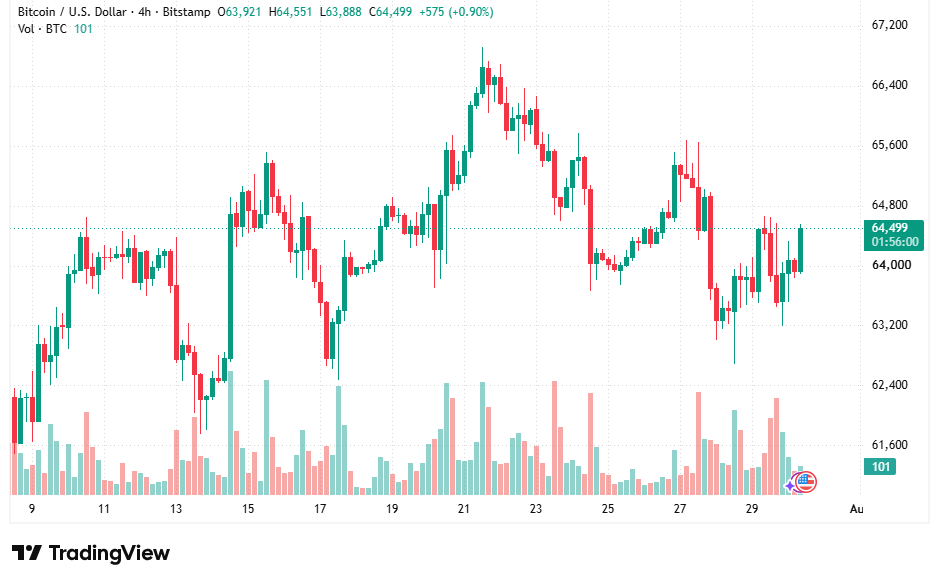
Recent performance broadly supports that framework. Bitcoin declined 22.2% during the first quarter and 14.1% in the second quarter before recovering 9.3% in the third quarter as of July 30. The asset has also retraced roughly half of its value from its October 2025 peak, indicating a market that may be approaching the latter stages of a correction instead of reacting to election uncertainty.
Key observations include:
- Previous bear markets aligned more closely with halving cycles than elections.
- Historical cycle analysis places a potential bottom in mid-to-late 2026.
- Price stabilization depends on selling pressure easing, not election outcomes.
- Macroeconomic conditions remain a larger influence than political events.
If the decline is halving-driven, Bitcoin could stabilize whenever sellers are exhausted, regardless of what happens during the November elections.
ETFs and Macro Forces Change the Landscape
Each previous midterm decline was intensified by a major crypto-specific crisis.
In 2014, the collapse of Mt. Gox removed a significant share of global Bitcoin trading liquidity. Four years later, the bursting of the ICO bubble erased speculative demand across digital assets. In 2022, the failure of FTX accelerated an already severe downturn after allegations that customer assets had been improperly transferred to Alameda Research.
These events exposed weaknesses in a crypto market dominated by retail traders, leverage, and centralized intermediaries. Any one of these structural failures carried more weight than election headlines.
The environment entering 2026 looks fundamentally different. The approval of U.S. spot Bitcoin ETFs in January 2024 introduced institutional access through regulated investment products, expanding participation from financial advisers, asset managers, and brokerage clients.
While ETFs cannot prevent sharp corrections of 20% or more, they have transformed how Bitcoin responds to market conditions. Instead of relying heavily on crypto-native exchanges, Bitcoin is increasingly influenced by broader financial forces, including Treasury yields, interest-rate expectations, commodity prices, and global liquidity.
As institutional ownership grows, macroeconomic developments—not election cycles—are likely to become the dominant force determining Bitcoin’s direction in 2026.
Sources & Methodology
Primary-source standard: Market-moving facts should link to original data releases, regulator notices, company filings or official project announcements whenever available. Secondary reporting is used for additional context, not as a substitute for original evidence.
Page last reviewed: