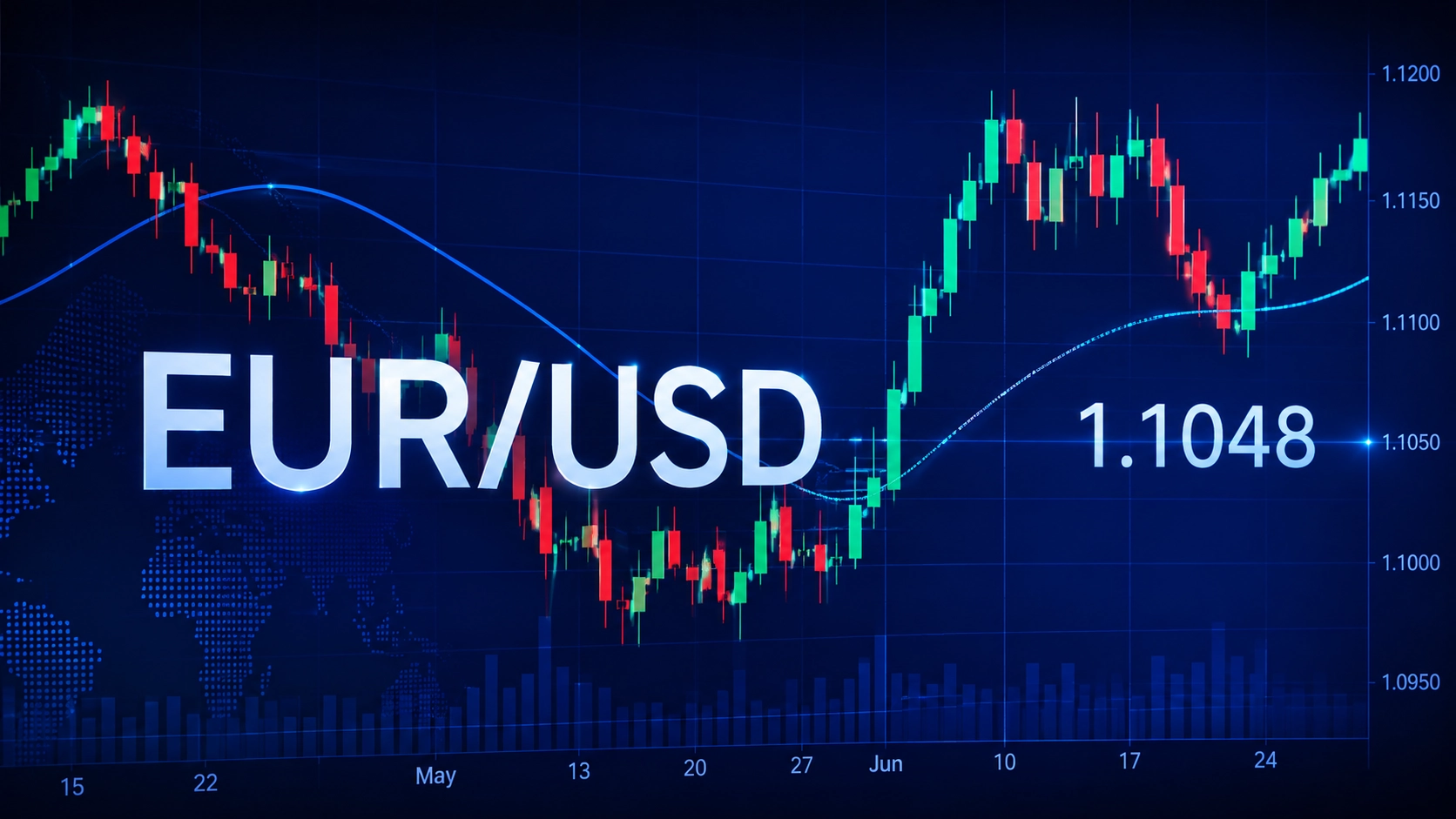
EUR/USD trades near 1.0965 on Thursday, extending its decline as the US Dollar strengthens following hawkish Federal Reserve meeting minutes and aggressive comments from policymakers. The pair remains under pressure ahead of the US Initial Jobless Claims report, while expectations for further monetary tightening continue to favor the Greenback. Meanwhile, the Euro faces uncertainty over the European Central Bank’s next policy move. Technically, EUR/USD remains below key moving averages, although oversold conditions could temporarily slow the decline.
Fed minutes reinforce rate hike expectations
The US Dollar gained momentum after the Federal Reserve’s October meeting minutes revealed broad support for additional interest rate increases in the months ahead. Nearly all policymakers agreed that further tightening would likely be necessary to bring inflation back toward the central bank’s 2% target.
The minutes also indicated that two officials considered a rate increase exceeding 25 basis points at the December meeting if incoming inflation figures deteriorated. The Fed maintained its benchmark interest rate at 3.75%-4.00% in October, with the decision split 10-2.
Fed Governor Christopher Waller further strengthened the hawkish outlook, arguing that a 50-basis-point increase could be appropriate to counter persistent inflation. Other officials, including John Williams and Alberto Musalem, also signaled that additional tightening may be necessary.
Markets now focus on Thursday’s US Initial Jobless Claims data for fresh clues about labor-market conditions and the Fed’s policy trajectory. Strong employment figures could reinforce expectations for higher interest rates, supporting the Dollar and extending EUR/USD losses.
Dollar outlook faces geopolitical risks
Analysts at MUFG warn that the scope for further Dollar gains may be limited despite the recent hawkish repricing. A renewed escalation in Middle East tensions could push crude oil prices higher, potentially strengthening inflation concerns and increasing US Treasury yields.
Such a scenario could drive the US Dollar Index higher and push EUR/USD toward 1.0800. However, MUFG notes that much of the recent interest-rate repricing has already occurred, with markets anticipating additional tightening.
On the Euro side, the European Central Bank remains focused on inflation risks. Expectations for further rate increases could provide some support for the single currency and limit the pair’s downside over the longer term. The timing and scale of any additional ECB tightening, however, remain uncertain.
EUR/USD technical outlook remains bearish
EUR/USD remains below its 20-day Bollinger Band middle line and the 100-day simple moving average (SMA), confirming the prevailing bearish trend. The Relative Strength Index (RSI) at 29 signals oversold conditions, suggesting downside momentum could temporarily weaken.
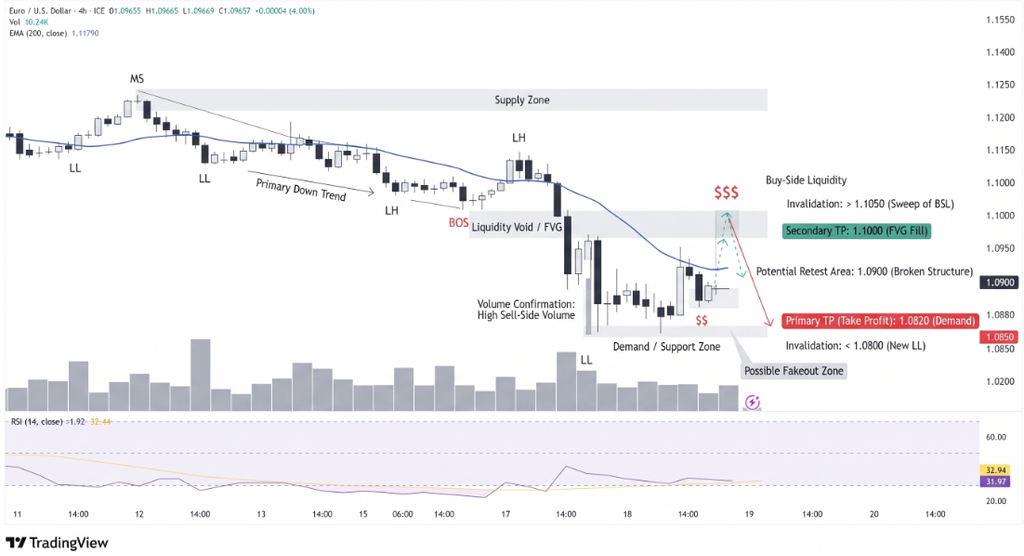
Key technical levels include:
- Immediate support: 1.0950, near the lower Bollinger Band.
- Additional support: 1.0733, the May 27, 2025, low.
- Initial resistance: 1.1000 psychological level.
- Major resistance: 1.1125, the 20-day Bollinger middle band.
- Longer-term resistance: 1.1385, the 100-day SMA.
A sustained break below 1.0950 could expose the 1.0733 level, while a recovery above 1.1000 would ease immediate selling pressure.
Conclusion
EUR/USD remains vulnerable to further declines as hawkish Fed expectations support the US Dollar. However, oversold technical conditions and potential changes in European monetary policy could slow the sell-off. A decisive break below 1.0950 would strengthen the bearish outlook, while a move above 1.1000 could signal an initial recovery. The next US economic releases and central-bank comments are likely to determine the pair’s near-term direction.
Sources & Methodology
Primary-source standard: Market-moving facts should link to original data releases, regulator notices, company filings or official project announcements whenever available. Secondary reporting is used for additional context, not as a substitute for original evidence.
Page last reviewed: