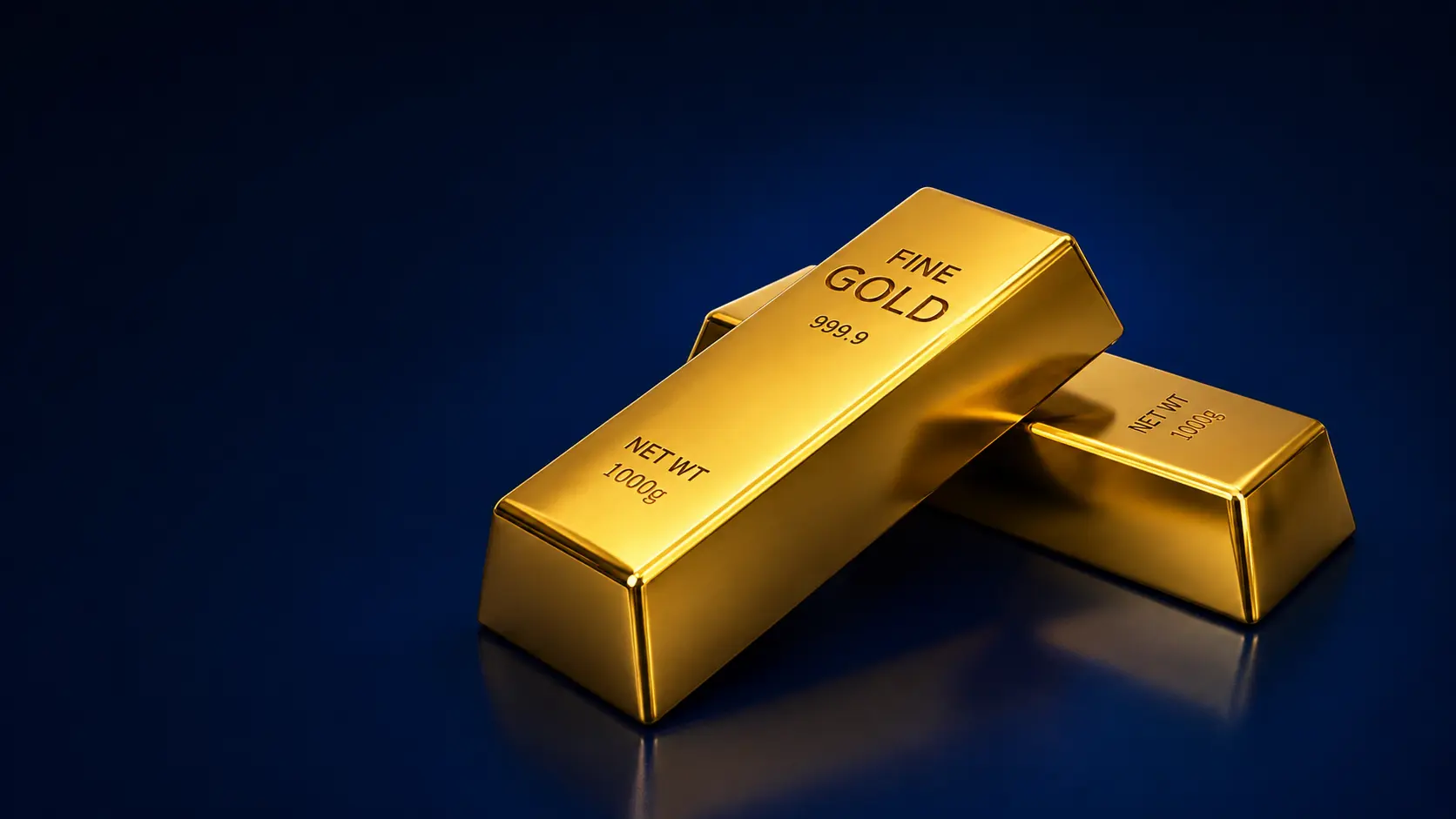
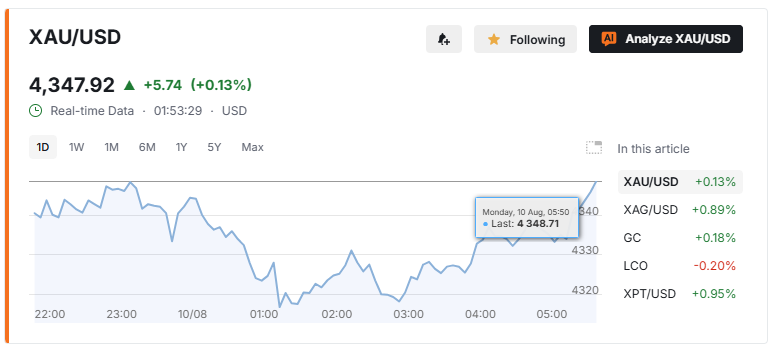
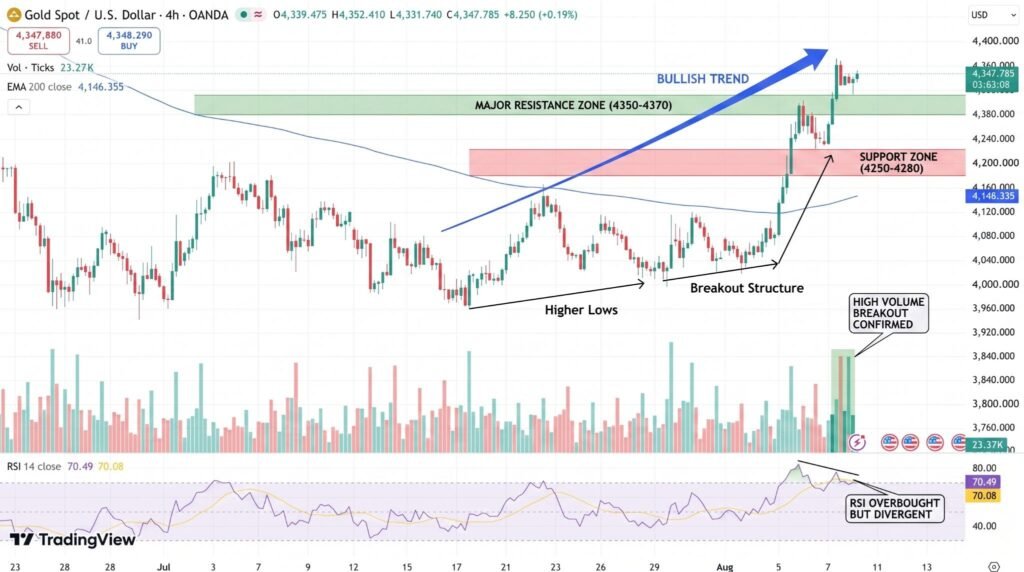
Gold held near seven-week highs on Monday after a surprise U.S. jobs contraction sharply reduced expectations for a Federal Reserve rate hike this September. Spot gold slipped 0.1% to $4,336.43 an ounce as of 00:27 ET, while U.S. gold futures eased 0.1% to $4,395.40. Prices had jumped as high as $4,401 on Friday, their strongest level since June 17, after payroll data showed the U.S. economy shed jobs unexpectedly in July. Traders now weigh that shift against upcoming inflation data and unresolved tension around a critical Middle East shipping route.
Weak Jobs Data Reshapes Rate Bets
U.S. nonfarm payrolls fell by 23,000 in July, a sharp miss against forecasts for an 80,000 gain, according to Bureau of Labor Statistics data released Friday. May and June figures were also revised down substantially, cutting the trailing 12-month average pace of job creation to roughly 34,000 a month. The scale of the miss reshaped rate expectations almost immediately: futures markets now price the odds of a Fed rate hike at the September 15-16 meeting at below 50%, down from above 57% before the report, based on CME FedWatch data. Lower borrowing-cost expectations tend to support gold, since bullion pays no yield and becomes more attractive when the opportunity cost of holding it falls.
Inflation Data and Hormuz Developments Ahead
Investors are now turning to two scheduled data releases that could confirm or reverse this week’s rate repricing. The Bureau of Labor Statistics is due to publish July Consumer Price Index figures on Wednesday, August 12, followed by producer price data on Thursday. Softer readings on either report would likely reinforce expectations for a less restrictive Fed stance and could extend gold’s rally further.
Geopolitical risk remains a parallel driver. Iran and Oman have reached agreement in principle on new coordinates for commercial shipping lanes through the Strait of Hormuz, a waterway that normally carries about 20% of global oil and LNG shipments. Iranian officials have stressed that a bilateral deal with Oman alone would not reopen the strait, insisting Washington must first lift its naval blockade and halt strikes on Iranian infrastructure before transit resumes. That unresolved standoff continues to support gold’s safe-haven appeal, even as renewed strength in oil prices complicates the broader inflation outlook and tempers expectations for Fed easing.
- Spot silver rose 0.5% to $63.89 an ounce, adding to a weekly gain of roughly 5%
- Platinum gained 0.5% to $1,757.50, also on track for a weekly advance
Conclusion
Gold’s pause near seven-week highs reflects a market absorbing a significant labor-market shock rather than losing momentum. With rate-hike odds cut nearly in half in a single session and two major inflation releases due this week, the metal’s next move depends heavily on whether Wednesday’s CPI print confirms the softer trajectory the jobs data implied. The Hormuz negotiations add a second, less predictable variable: a genuine reopening would ease the oil-driven inflation pressure weighing on Fed policy, while continued deadlock keeps both energy prices and safe-haven demand for gold elevated at the same time.
Sources & Methodology
Primary-source standard: Market-moving facts should link to original data releases, regulator notices, company filings or official project announcements whenever available. Secondary reporting is used for additional context, not as a substitute for original evidence.
Page last reviewed: