
Gold holds near $4,400 after July CPI cuts September Fed hike odds to 40%. Track XAU/USD, PPI, Hormuz risks and key $4,450 resistance levels.
Gold prices remained near $4,400 an ounce on Thursday after a softer U.S. inflation report pushed bullion to its highest level in more than two months. Spot gold was around $4,408.55, while December gold futures held near $4,467. The July CPI report showed consumer prices rising 0.1% month over month and 3.4% annually, both broadly matching expectations. The data reduced the probability of a September Federal Reserve rate hike, while unresolved U.S.-Iran tensions and risks around the Strait of Hormuz continued to support demand for bullion.
July CPI Reduces Fed Rate Pressure
The latest inflation data gave gold a direct boost because lower expectations for interest-rate increases reduce the opportunity cost of holding a non-yielding asset. Gold climbed about 0.9% on Wednesday and briefly reached roughly $4,450 before giving back part of the advance. Reuters reported that markets reduced the probability of a September Fed hike to about 40%, from 46% before the CPI release.
Headline CPI rose 0.1% in July after falling 0.4% in June. Core CPI, which excludes food and energy, increased 0.2% for the month, while annual core inflation eased to 2.5% from 2.6%. The headline annual rate also declined from 3.5% in June to 3.4% in July, although inflation remains above the Federal Reserve’s 2% target.
The Fed left its policy rate unchanged at 3.50%-3.75% at its July 29 meeting. Three of the 12 voting policymakers dissented and preferred a rate increase, showing that inflation remains a significant policy concern. The next major test is the July Producer Price Index. The U.S. Bureau of Labor Statistics scheduled the release for August 13 at 8:30 a.m. Eastern time. The PPI is important because stronger wholesale-price pressure could challenge the market’s more relaxed view of future Fed policy.
Hormuz Risk Keeps Oil Inflation Relevant
The CPI report has not eliminated the inflation risk tied to energy markets. U.S.-Iran tensions remain unresolved, while uncertainty surrounding the Strait of Hormuz continues to influence crude prices. Brent crude was around $88.35 a barrel and U.S. crude near $82.58 on Thursday, keeping energy costs relevant to the inflation outlook.
For gold, the relationship is important. A renewed oil-price surge could lift inflation expectations and encourage the Fed to maintain restrictive policy for longer. That would normally weigh on bullion. At the same time, geopolitical uncertainty can increase demand for gold as investors seek protection from market and policy risks.
Key factors now include:
- September Fed rate-hike probability near 40%.
- July headline CPI at 3.4% year over year.
- Core CPI at 2.5% year over year.
- July PPI due August 13 at 8:30 a.m. ET.
$4,450 Becomes the Immediate Gold Test
Gold’s move above its 100-day moving average has strengthened the short-term technical picture. The metal briefly reached its highest level since June 5 before stabilizing around $4,400, according to Reuters. The $4,450 area is now an important near-term test because gold reached that region during Wednesday’s rally. A sustained move above it would keep the recent advance intact and could shift attention toward the $4,500 level. By contrast, a failure to hold above $4,400 would expose the market to a deeper pullback.
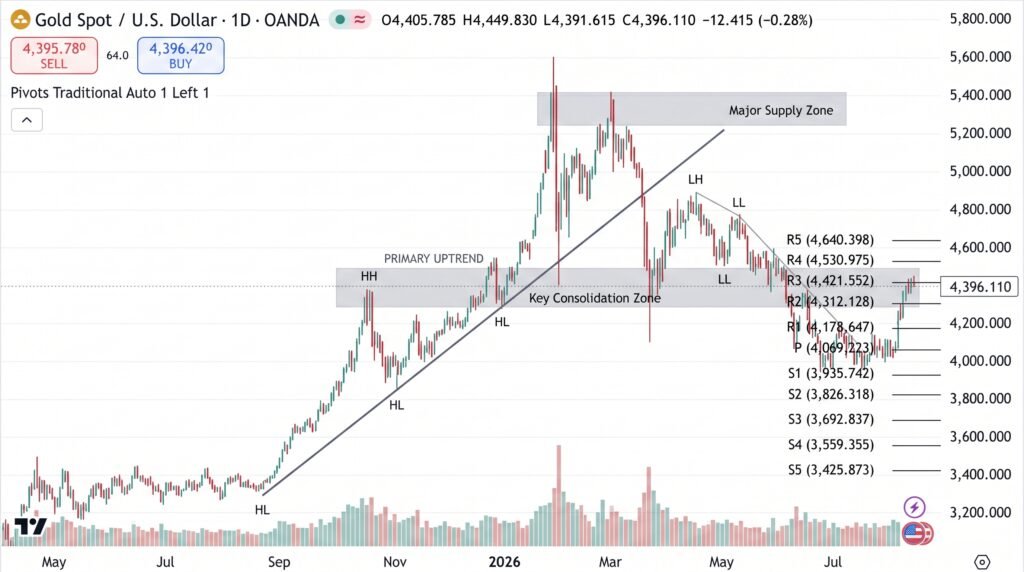
The broader trend also remains significant. Gold has risen more than 8% over the past month and remains well above $4,000, according to recent market data. The immediate direction will depend less on the CPI itself and more on what follows. The July PPI, future employment data, Fed communication and developments involving Iran and the Strait of Hormuz will determine whether gold can extend its move toward $4,500.
Conclusion:
Gold has regained momentum because July inflation did not strengthen the case for a September Fed hike. But the rally is not without obstacles. A stronger PPI reading or renewed energy-price pressure could restore expectations for tighter policy, while continued geopolitical uncertainty could keep safe-haven demand elevated. For now, $4,400 is the key area to defend, with $4,450 and then $4,500 defining the next upside tests.’
Sources & Methodology
Primary-source standard: Market-moving facts should link to original data releases, regulator notices, company filings or official project announcements whenever available. Secondary reporting is used for additional context, not as a substitute for original evidence.
Page last reviewed: