
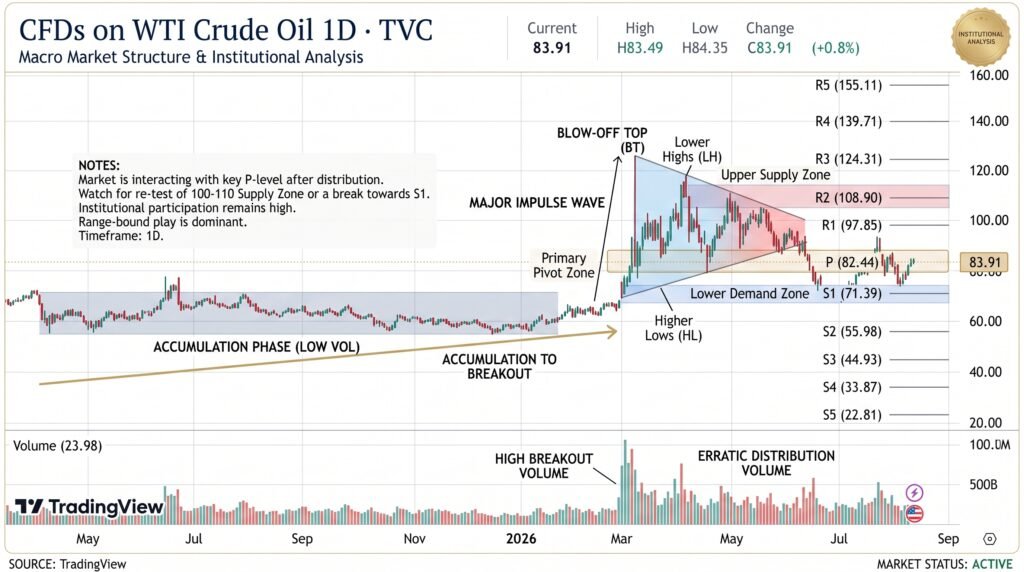
Oil prices approach a two-week high as the Hormuz closure and Houthi attacks threaten crude supplies, pushing Brent toward $90 and WTI above $83.
Oil prices moved higher Wednesday as the unresolved Strait of Hormuz closure and renewed Houthi attacks on Red Sea shipping kept supply risks elevated. Brent crude rose 0.7% to $89.55 a barrel, while West Texas Intermediate gained 0.8% to $83.89.
The move put both benchmarks near their highest levels in about two weeks. Markets remain focused on whether U.S.-Iran negotiations can restore tanker traffic through Hormuz, while attacks around the Red Sea create a second threat to energy transportation.
Hormuz Remains Oil Market’s Main Risk
The Strait of Hormuz remains central to the outlook because it is one of the world’s most important energy chokepoints. Roughly one-fifth of global oil supplies normally move through the waterway, linking major Gulf producers with international markets. A prolonged disruption therefore has consequences beyond the Middle East, particularly for Asian refiners that depend heavily on Gulf crude.
Shipping through Hormuz remains severely restricted as Washington and Tehran struggle to reach terms that would allow commercial traffic to resume. Recent reports indicate that negotiations have produced limited progress, while Iran has maintained conditions for reopening the passage. The standoff leaves traders assessing not only current supply availability but also how long disrupted flows could persist.
Houthi Attacks Expand Shipping Threat
The Red Sea has become another source of pressure for crude markets. Yemen’s Iran-backed Houthis have resumed attacks on commercial vessels, including incidents near the Bab el-Mandeb Strait. Yemeni officials reported casualties following a recent strike on a commercial ship, highlighting the growing danger for vessels operating along the route.
The Houthis also announced a naval blockade targeting Saudi Arabia in July. Saudi officials have condemned the move, while reports of attacks on Saudi-linked oil tankers have raised concerns about the security of alternative export routes.
The Houthis also announced a naval blockade targeting Saudi Arabia in July. Saudi officials have condemned the move, while reports of attacks on Saudi-linked oil tankers have raised concerns about the security of alternative export routes.
Important market figures include:
- Brent: $89.55 a barrel, up 0.7%
- WTI: $83.89 a barrel, up 0.8%
- Hormuz: roughly 20% of global oil supplies normally pass through the strait
Crude Prices Depend on Shipping Flows
The immediate direction of oil prices will depend heavily on developments around Hormuz and the Red Sea. A sustained reopening of Hormuz would reduce the supply risk premium, while continued attacks or further restrictions could keep crude prices elevated.
The latest developments provide little evidence that transportation risks are disappearing. With two major maritime routes exposed to conflict, traders have a clear reason to keep supply disruption in their calculations.
Conclusion
Brent’s move toward $90 reflects a market responding to physical shipping risks rather than demand alone. Until Hormuz traffic resumes on a reliable basis and Red Sea attacks ease, geopolitical disruptions are likely to remain a significant force in crude pricing.
Sources & Methodology
Primary-source standard: Market-moving facts should link to original data releases, regulator notices, company filings or official project announcements whenever available. Secondary reporting is used for additional context, not as a substitute for original evidence.
Page last reviewed: