
Oil prices slip as weaker demand forecasts offset Strait of Hormuz risks. Brent falls to $88.56 while U.S. inventories surge 17.4 million barrels.
Oil Prices Pull Back From Recent Gains
Oil prices edged lower Thursday as concerns over weakening global demand outweighed ongoing risks to supplies from tensions surrounding the Middle East and the Strait of Hormuz. Brent crude fell 42 cents, or 0.47%, to $88.56 a barrel by 0405 GMT, while U.S. West Texas Intermediate crude declined 55 cents, or 0.66%, to $82.72.
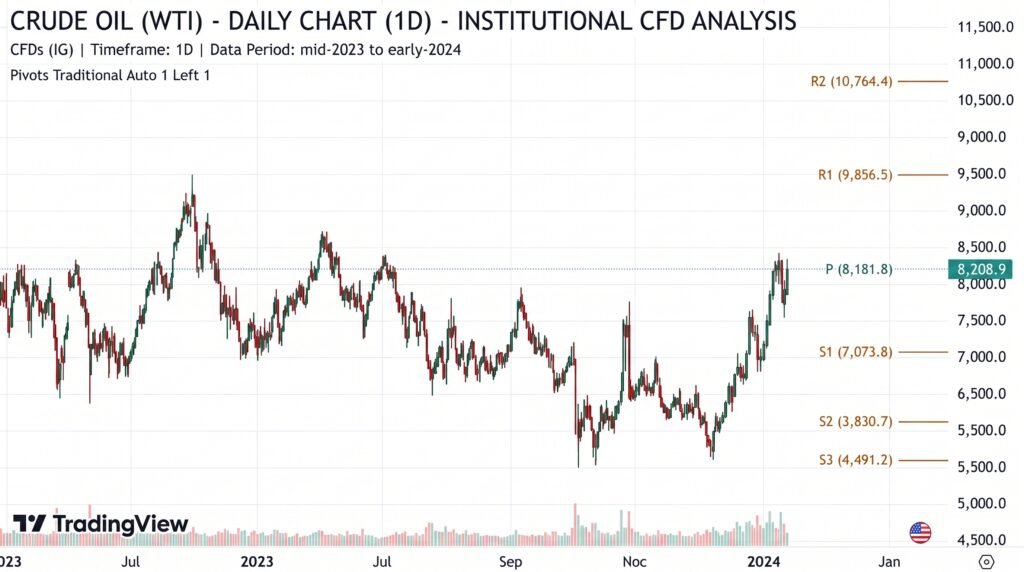
The declines followed several sessions of gains for both benchmarks, as traders reassessed whether supply disruptions would be severe enough to sustain higher prices. With no meaningful progress reported in U.S.-Iran negotiations, however, the Strait of Hormuz remains a major source of uncertainty for global energy markets.
A senior Iranian source said Wednesday that talks had made no progress toward reviving an interim agreement reached in June or establishing a timetable for implementation. ING analysts said the discussions remained deadlocked, leaving markets without a clear path toward easing regional supply risks.
U.S. Oil Inventories Raise Demand Fears
The focus shifted toward consumption after U.S. crude inventories posted an unexpectedly large increase. Data from the Energy Information Administration showed commercial crude stocks jumped by 17.4 million barrels in the week ended August 7 to 424.4 million barrels.
The increase was the largest weekly build since January 2023 and pushed inventories to their highest level since June 5. Analysts had expected stocks to decline by 1.4 million barrels, making the result a significant bearish signal for the market. The inventory increase was also linked to weaker exports, adding to concerns that demand may not be strong enough to absorb available supplies.
Key developments include:
- U.S. crude inventories rose 17.4 million barrels.
- Brent crude slipped to $88.56 a barrel.
- WTI fell to $82.72 in early trading.
OPEC and IEA Cut Demand Outlooks
Global demand projections have also weakened. OPEC reduced its forecast for 2026 oil demand growth to 580,000 barrels per day in its latest monthly report. The International Energy Agency went further, projecting a 1.6 million-barrel-per-day contraction in consumption this year, compared with its previous estimate of a 1 million bpd decline.
Higher prices and restricted supplies linked to the conflict involving the U.S., Israel and Iran are expected to weigh on consumption. That creates a difficult balance for oil markets: geopolitical risks can support prices, but elevated costs can simultaneously weaken demand.
For now, the Strait of Hormuz remains central to the outlook. Shipping conditions have deteriorated, with some vessels reportedly switching off tracking signals, making it harder for traders to assess real-time supply flows. Until there is greater clarity on regional security and demand, oil prices may remain sensitive to both geopolitical headlines and inventory data.
Sources & Methodology
Primary-source standard: Market-moving facts should link to original data releases, regulator notices, company filings or official project announcements whenever available. Secondary reporting is used for additional context, not as a substitute for original evidence.
Page last reviewed: