
Gold pulls back from multi-week highs near $4,300 as Fed officials warn on inflation and USD gains. ADP private payrolls rose only 44K in July; ISM Services at 54.1. Houthi tanker attacks and Hormuz deal hopes keep oil depressed.
Gold (XAU/USD) struggled to hold above the $4,300 level and pulled back from its highest point since June 18 during the Asian session on Thursday, as some US Dollar buying emerged. Hawkish comments from Federal Reserve officials on persistent inflation revived USD demand and weighed on the non-yielding metal, though softer private payrolls data and hopes for a Strait of Hormuz deal limited further downside.
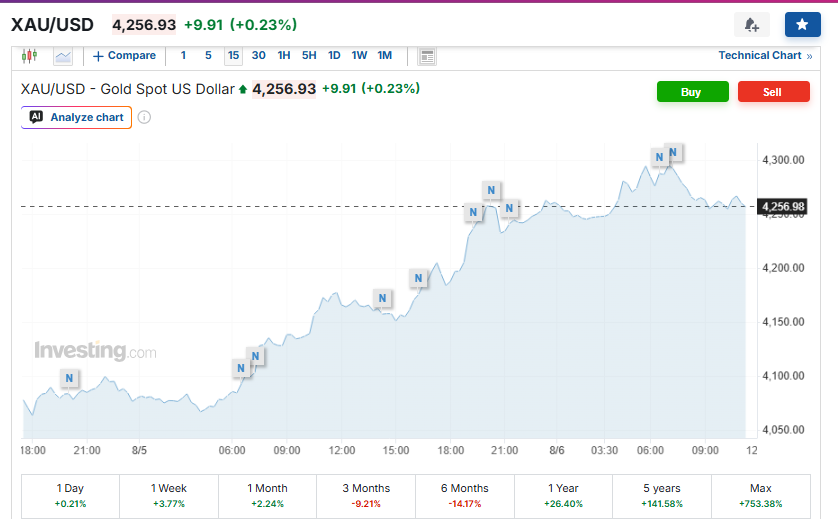
Gold Retreats from $4,300 High to $4,250–$4,270 as Fed Flags Inflation; ADP Jobs +44K, ISM Services 54.1
Spot gold retreated after briefly testing levels near $4,300–$4,304, with prices last seen around $4,250–$4,270 in early Thursday trading. The metal had surged more than 4% on Wednesday to multi-week highs amid broader risk dynamics.
Fed Governor Lisa Cook said inflation remains “too high” (PCE at 3.7% year-over-year through June) and that she is “prepared to act by raising interest rates if necessary” if disinflation stalls. San Francisco Fed President Mary Daly, who supported the July hold, stressed the need for more data before the September meeting to determine whether inflation pressures are temporary or lasting. Markets were still pricing roughly an 80% chance of a rate hike by year-end, though softer data trimmed September odds to around 55% from 67%.
ADP reported private-sector employment rose by just 44,000 in July (versus a revised 95,000 in June and consensus near 70,000–75,000). The ISM Services PMI edged up to 54.1 from 54.0 but missed the 54.5 forecast; the employment sub-index fell into contraction at 47.4.
Iran-backed Houthis claimed a ballistic-missile attack on a Saudi oil tanker (identified as Wafa/NCC Wafa) off Yanbu and another in the Gulf of Aden, marking their eighth claimed strike on Saudi-linked vessels since late July. Optimism persisted, however, over a potential US-Iran deal to reopen the Strait of Hormuz, with Iran saying it was in the final stage of drafting an agreement with Oman. This kept oil prices near multi-week lows (WTI in the mid-$70s, Brent near $79).
Fed Inflation Warnings Lift USD, Cap Gold; Soft ADP Jobs Temper Rate-Hike Bets
Hawkish Fed rhetoric on stubborn inflation (still nearly double the 2% target) supported the USD and pressured gold, which pays no yield. Soft ADP and mixed ISM data cooled rate-hike expectations slightly, preventing a sharper dollar rally and offering gold some support. Hormuz deal hopes and depressed oil prices reduced near-term inflation fears from energy, while Houthi attacks injected limited geopolitical risk. Traders remained cautious ahead of Friday’s Nonfarm Payrolls report.
Gold Volatile in 2026 ($3,311–$5,595 Range); Fed Holds at 3.50%–3.75% Amid Sticky Inflation
Gold has traded in a volatile range in 2026, with the 52-week span running from roughly $3,311 to above $5,595. The metal benefits from safe-haven demand during geopolitical stress but is highly sensitive to real yields and USD strength. The Fed held rates in the 3.50%–3.75% range at its July meeting amid sticky inflation now in its sixth year above target. Private hiring has slowed after stronger spring gains, and services activity remains expansionary but shows cooling employment. The Middle East conflict, including Houthi disruptions in the Red Sea and ongoing Hormuz tensions, continues to influence energy prices and inflation expectations.
Focus on NFP Report, Jobless Claims and Hormuz Deal for Gold’s Next Move
Thursday’s Weekly Initial Jobless Claims and further Fed speaker comments will influence USD demand. Friday’s Nonfarm Payrolls report is the key near-term catalyst for rate-path pricing. Any formal announcement (or delay) on a Hormuz deal, plus updates on Houthi activity, could swing oil and risk sentiment, feeding back into gold. Traders will watch whether gold can reclaim and hold above $4,300 or if USD strength drives further consolidation.
Sources & Methodology
Primary-source standard: Market-moving facts should link to original data releases, regulator notices, company filings or official project announcements whenever available. Secondary reporting is used for additional context, not as a substitute for original evidence.
Page last reviewed: