

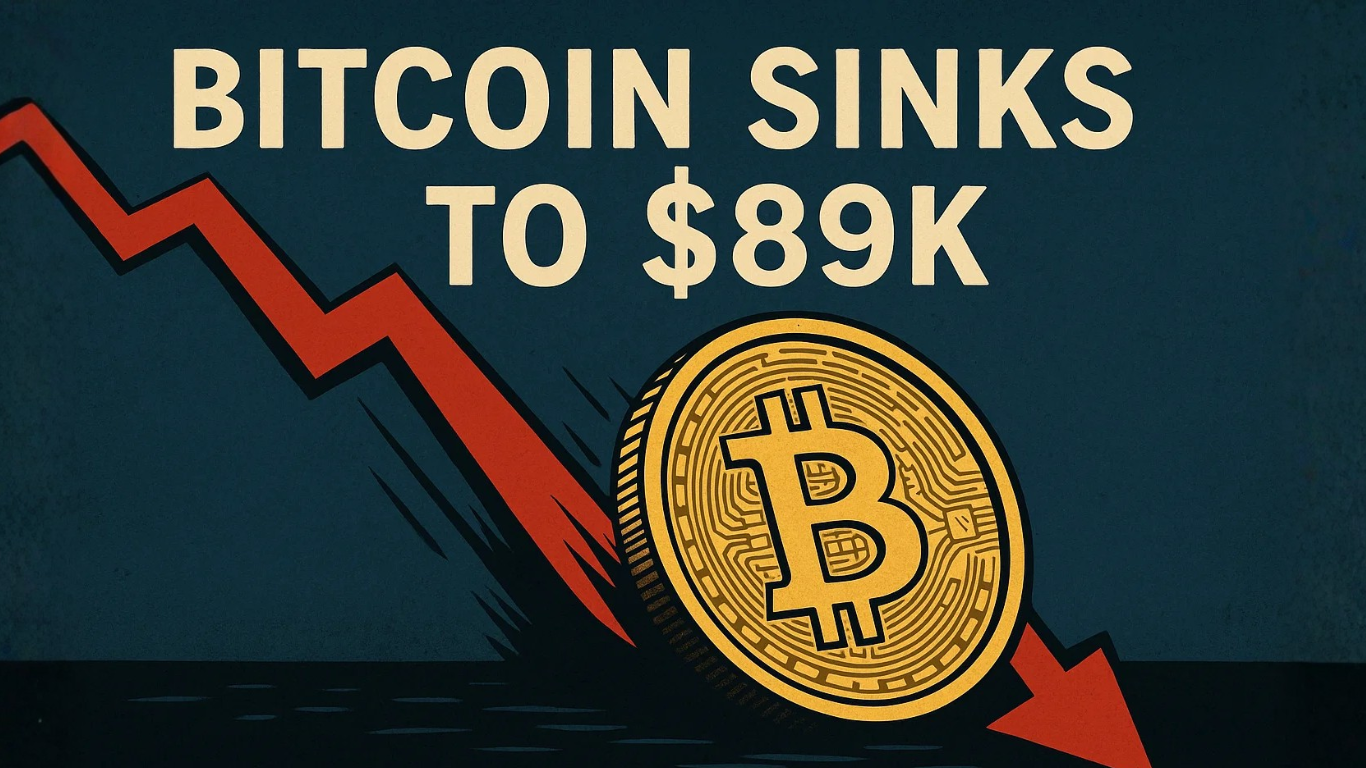
Bitcoin extended its sharp decline early Tuesday, briefly sinking to $89,420, its lowest level since February. The slide, which marks a nearly 30% drop from the all-time high near $126,000 reached just six weeks ago, has erased all gains made earlier in 2025 and rattled retail traders who had bet heavily on continued momentum.
The retreat represents more than a technical correction. Since early October, the crypto market has shed over $1 trillion in value, while more than $19 billion in leveraged positions have been liquidated. Analysts say the fall below the $100,000 threshold accelerated panic-selling among investors who purchased at the $102,000–$107,000 range.
Wallets associated with smaller retail holders dumped 148,000 BTC at a loss on Nov. 14, according to CryptoQuant—one of the largest retail capitulation events since 2022. “Retail is clearly shaken,” said one market analyst. “A decisive move below realized price bands has flushed out a lot of weak hands.”
Winklevoss Calls Sub-$90K Prices a ‘Last Opportunity’
Despite the downturn, some long-time Bitcoin advocates see the decline as a temporary dislocation. Gemini Co-Founder Cameron Winklevoss said on X that prices under $90,000 could represent the final opportunity to accumulate BTC before a potential recovery. His comments point to confidence that structural demand remains intact.
Other prominent supporters echoed the optimism:
- Robert Kiyosaki, author of Rich Dad Poor Dad, said he is continuing to buy BTC despite the downturn.
- Long-term Bitcoin holders argue that macro pressures, not fundamentals, are driving the decline.
- Analysts note that institutional flows have slowed, but not reversed.
The downturn has also prompted strategic repositioning across the market. Dan Tapiero, founder of 50T Holdings, said capital is rotating from BTC into stablecoins and tokenized asset products, a shift he believes is temporary rather than structural.
Fed Rate Expectations Add Pressure to Crypto Markets
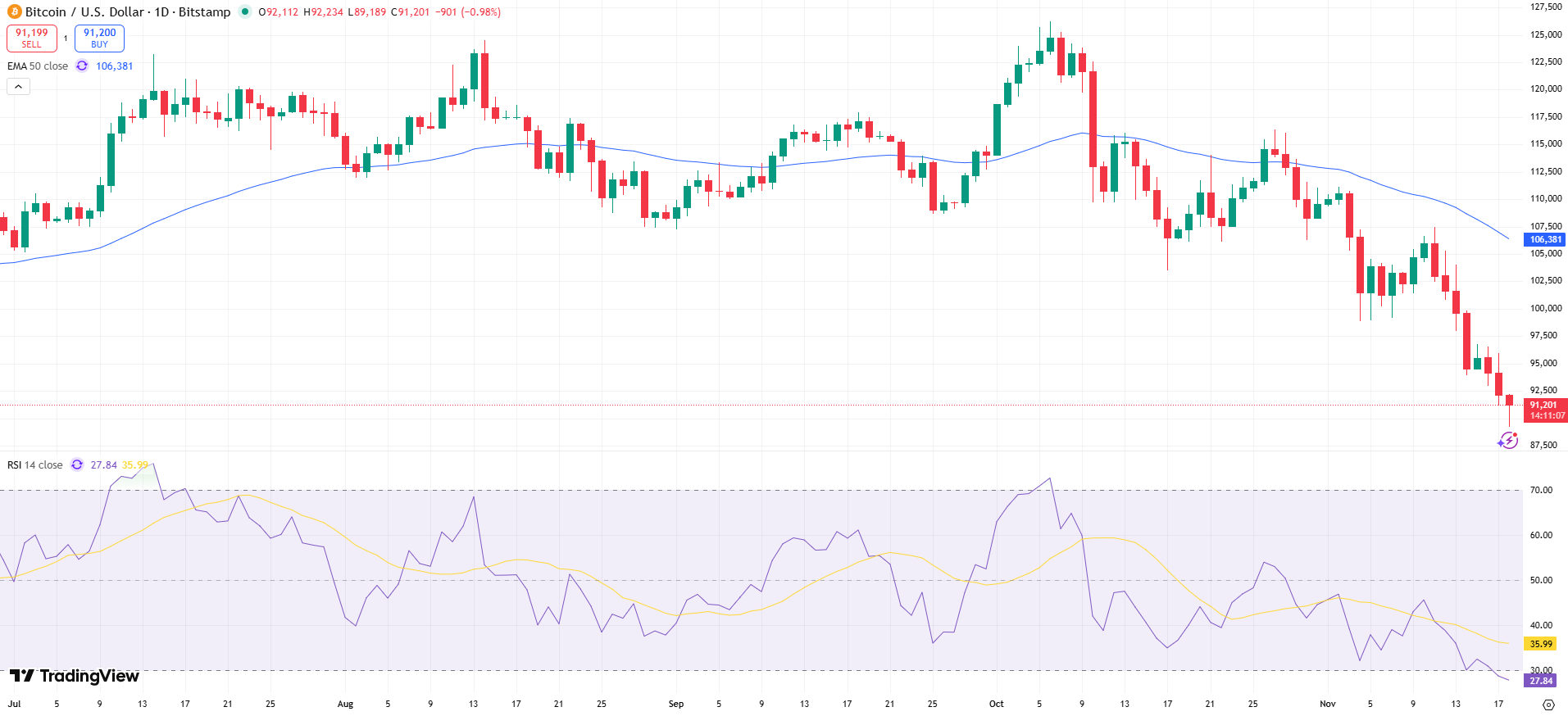
Macroeconomic uncertainty continues to weigh heavily on digital assets. The probability of a December Federal Reserve rate cut has fallen below 50%, reducing risk appetite across financial markets. Bitcoin, which often trades inversely to real yields and the dollar, remains vulnerable as inflation data and Fed commentary push expectations toward tighter-for-longer policy.
Some analysts warn that if prices continue to drift lower, crypto treasuries may face forced selling to manage collateral and liquidity constraints. Still, institutional conviction has not evaporated. Strategy reportedly added to its BTC holdings this week, viewing the downturn as an opportunity.
Kronos Research’s Vincent Liu maintains that Bitcoin’s long-term narrative remains intact, calling it “digital gold” even amid significant near-term volatility.
With retail traders shaken, institutional flows cautious, and macro pressures unresolved, Bitcoin’s path ahead remains turbulent—but, for committed believers, potentially full of opportunity.

