

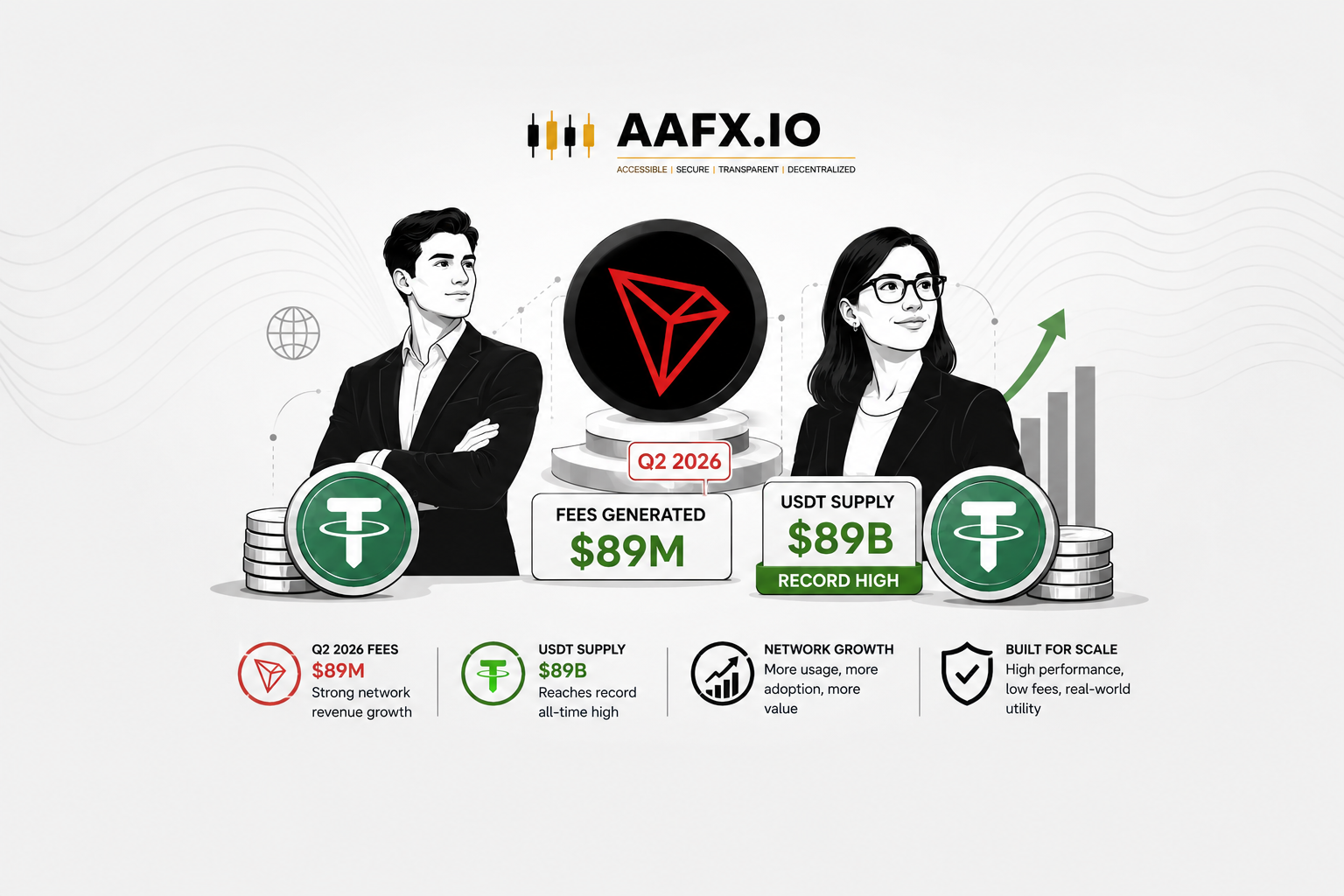
TRON Q2 2026 delivered $89M in protocol fees as USDT supply reached $89B. Explore stablecoin growth, institutional adoption, AI integration, and TRX performance.
Stablecoin Growth Drives TRON Revenue
TRON strengthened its position as the leading blockchain for stablecoin transactions during the second quarter of 2026, transforming record transaction activity into substantial protocol revenue. The network processed an all-time high $89 billion in USDT, representing nearly 47% of the global USDT supply. While the overall stablecoin market remained relatively unchanged, TRON expanded its market share by attracting more users and transaction volume rather than relying on industry-wide growth.
According to quarterly data, TRON’s share of the stablecoin market climbed from 27.3% to 28.7%, highlighting its growing importance in digital payments. Retail users increasingly favored the network, with transfers below $1,000 accounting for 52% of all comparable USDT transactions, up from 43% in the previous quarter.
The blockchain also reinforced its reputation as a payment-focused network. Approximately 93% of stablecoin transfers occurred directly between users, significantly higher than Solana’s 68%, demonstrating that TRON continues to serve as a practical settlement layer rather than a speculative trading platform.
Daily activity reflected this momentum. Average daily active users increased from 3.2 million to 3.5 million, placing TRON second only to Solana’s 3.8 million and well above the major blockchain average of roughly 1.1 million users.
Fees and Institutions Fuel Expansion
The surge in payment activity translated directly into stronger financial performance. TRON generated $89 million in protocol fees during Q2, ranking second only to Hyperliquid’s $199 million. The network produced approximately $25 in quarterly fee revenue per average daily active user, demonstrating one of the strongest monetization models in the blockchain sector.
Crypto payment adoption also accelerated. Industry-wide payment card volume increased from $2.0 billion to $2.4 billion, while TRON expanded its market share from 33% to 34%, reinforcing its dominance in real-world crypto payments.
Institutional adoption added another layer of growth. Several notable developments strengthened TRON’s enterprise presence:
- Hamilton Lane launched its tokenized private credit fund HLSCOPE on TRON through Securitize.
- Bitnomial introduced TRX spot trading on its CFTC-regulated U.S. exchange.
- Hyperlane connected TRON to more than 150 blockchain networks, improving interoperability.
- B.AI and deBridge introduced infrastructure supporting AI-powered financial agents.
- TRON joined the Agentic AI Foundation alongside major technology companies including Stripe and GoDaddy.
These partnerships position TRON as infrastructure capable of supporting institutional finance alongside emerging machine-to-machine payment systems.
DeFi Slows but TRX Stays Strong
While payment metrics reached new highs, decentralized finance activity softened during the quarter. Total value locked declined slightly from $4.6 billion to $4.5 billion, with lending protocols continuing to represent 93% of locked assets.
JustLend, the network’s largest lending platform, experienced a noticeable slowdown as outstanding loans dropped from $200 million to $126 million, representing a 37% decline. Despite weaker lending activity, the ecosystem’s governance token JST appreciated 38%, supported by an ongoing buyback and burn program that has removed roughly $21 million worth of tokens from circulation.
Meanwhile, SunSwap introduced its V4 upgrade, consolidating liquidity into a single contract to improve trading efficiency and reduce transaction costs. By June, the new version processed approximately 30% of the platform’s trading volume. Spot trading reached $5.8 billion, although perpetual futures volume declined to $12 billion, indicating stronger improvements in infrastructure than overall trading demand.
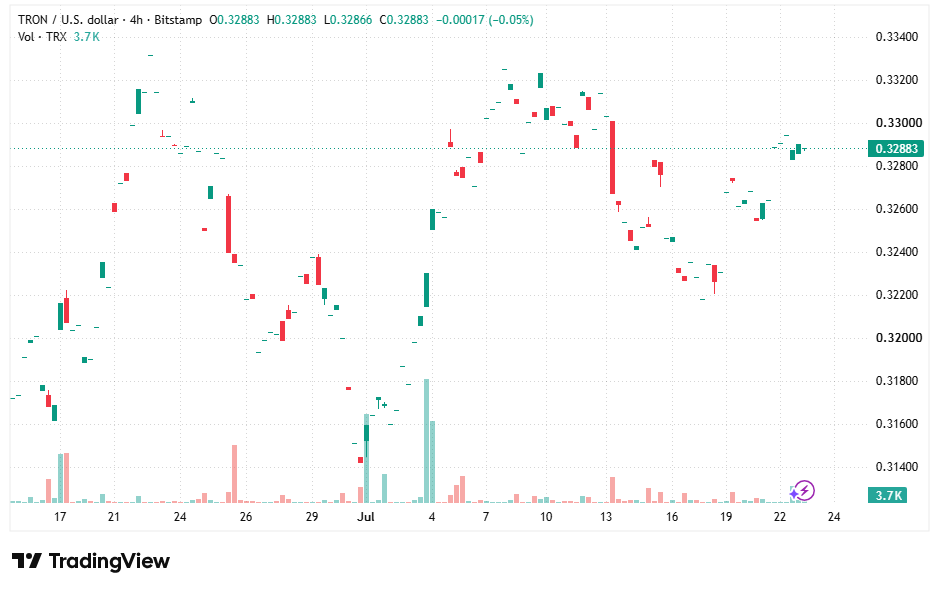
TRX itself outperformed the broader cryptocurrency market, rising 3% while Bitcoin declined 4% during the same period. Although total exchange trading volume fell from $36 billion to $29 billion, market liquidity remained relatively stable after recovering from temporary weakness in late May.
TRON’s second-quarter performance demonstrates that stablecoin payment networks can generate meaningful revenue without depending on rapid DeFi expansion. While reliance on Tether remains a key concentration risk and lending activity continues to weaken, growing institutional participation, expanding AI integrations, and consistent payment usage suggest the network has established a durable business model built around real-world digital asset transfers rather than speculative trading alone.
