

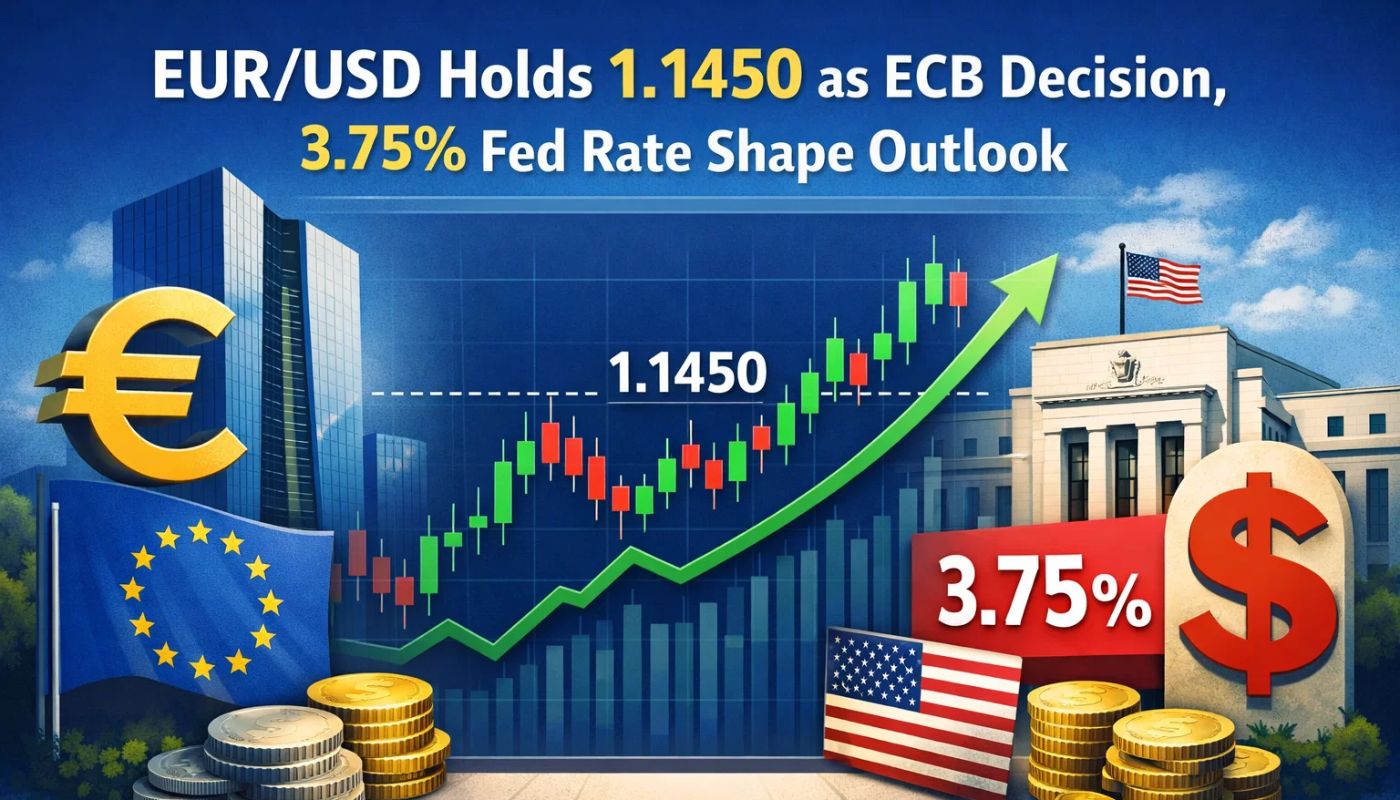
The EUR/USD currency pair remained stable above 1.1450 during Thursday’s European session as traders waited for the European Central Bank (ECB) policy announcement. The ECB is set to release its decision at 13:15 GMT, followed by President Christine Lagarde’s press conference at 13:45 GMT.
Investors expect the ECB to keep interest rates unchanged but are watching closely for signals of a tougher stance on inflation. Rising oil and gas prices have increased concerns about inflation across Europe, which could push the ECB toward a more hawkish tone.
At the same time, the U.S. dollar has shown strength after the Federal Reserve maintained its interest rate range at 3.5% to 3.75%. This has limited the upside for EUR/USD, keeping the pair under pressure despite holding above key support levels.
In simple terms, traders are waiting to see what the ECB says next, while the strong U.S. dollar is keeping the euro from rising too much.
Technical Signals Show Downside Risk
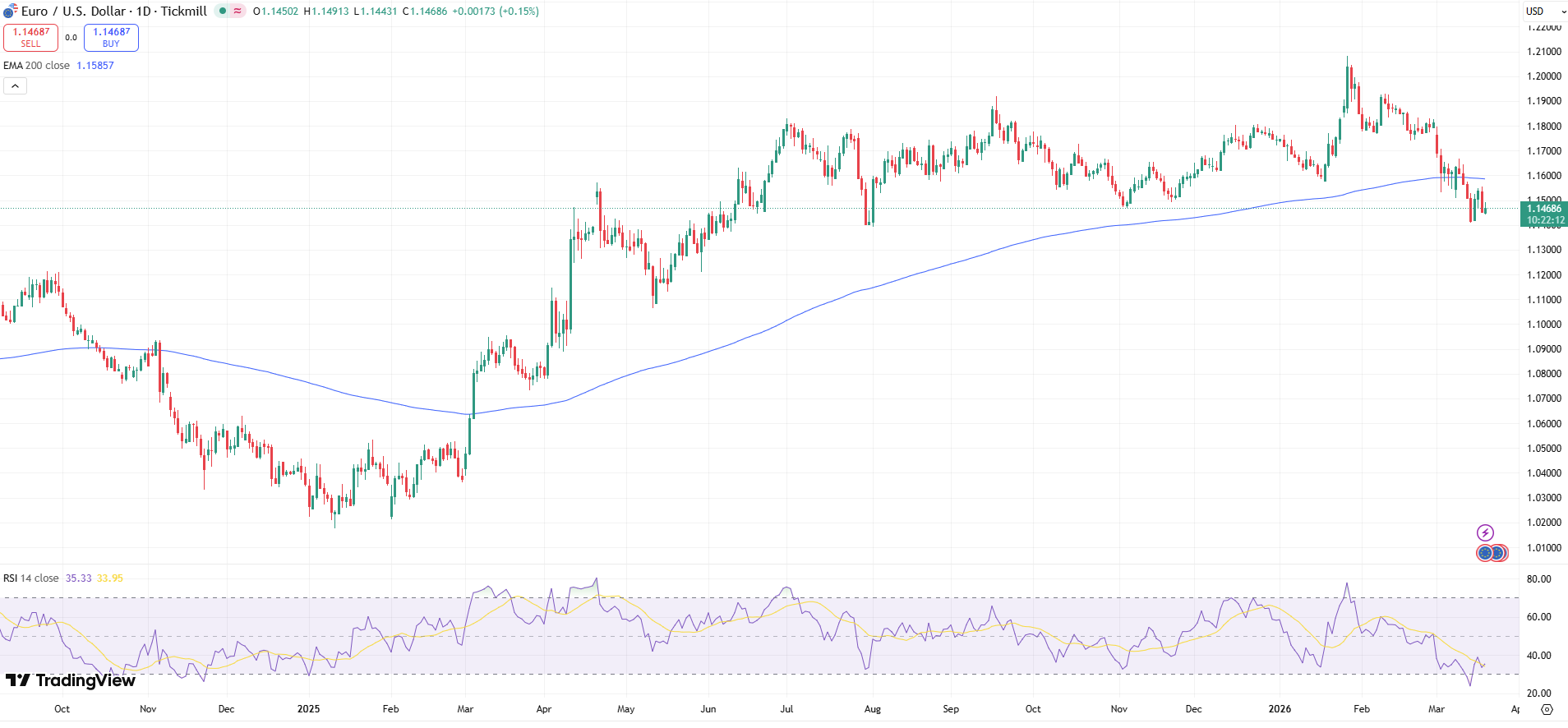
From a technical perspective, EUR/USD is still facing downward pressure. The pair is trading below several important moving averages, which signals that sellers remain in control in the short term.
The 20-period Simple Moving Average (SMA) is near 1.1495, while the 50-period SMA sits around 1.1532. These levels act as resistance, meaning the price may struggle to move higher.
The broader trend also looks weak. The pair is trading below the 100-period SMA at 1.1617 and the 200-period SMA at 1.1724, confirming a bearish outlook. Indicators such as the Relative Strength Index (RSI), currently in the low 40s, suggest bearish momentum but not extreme selling conditions.
Key technical levels to watch:
- Resistance: 1.1500, 1.1531, 1.1620
- Support: 1.1400, 1.1340
- RSI near 40, showing mild bearish momentum
- Price below major SMAs, indicating selling pressure
If the pair falls below 1.1400, it could signal further downside movement. On the other hand, a break above 1.1530 may improve the short-term outlook.
Fed Policy and Dollar Strength Impact
The Federal Reserve’s recent policy decision continues to influence the currency market. The Fed kept rates steady at 3.5%–3.75% and signaled only one 25 basis-point rate cut in 2026 and another in 2027.
Updated forecasts also show inflation, measured by Personal Consumption Expenditures (PCE), rising to 2.7% by the end of 2026, up from 2.4% previously. Fed Chair Jerome Powell warned that higher energy prices could push inflation higher and delay any rate cuts if progress slows.
This cautious stance has strengthened the U.S. dollar, making it harder for EUR/USD to move higher.
Looking ahead, the ECB’s message will be crucial:
- A hawkish tone could lift the euro
- Neutral guidance may keep EUR/USD stable
- A cautious outlook could push the pair lower
In simple terms, EUR/USD is stuck between two forces: ECB expectations and strong U.S. policy. The next move will depend on how central banks respond to rising inflation.

