

The EUR/USD currency pair showed a small recovery during Asian trading on Friday, climbing to around 1.1620 after modest losses in the previous session. Even with the rebound, technical indicators suggest the pair remains under pressure and the broader trend is still bearish.
On the daily chart, the pair has been trading within a descending channel, which typically signals a downward trend. At the same time, the euro is struggling to gain momentum because the U.S. dollar continues to attract investors seeking safety amid geopolitical tensions in the Middle East.
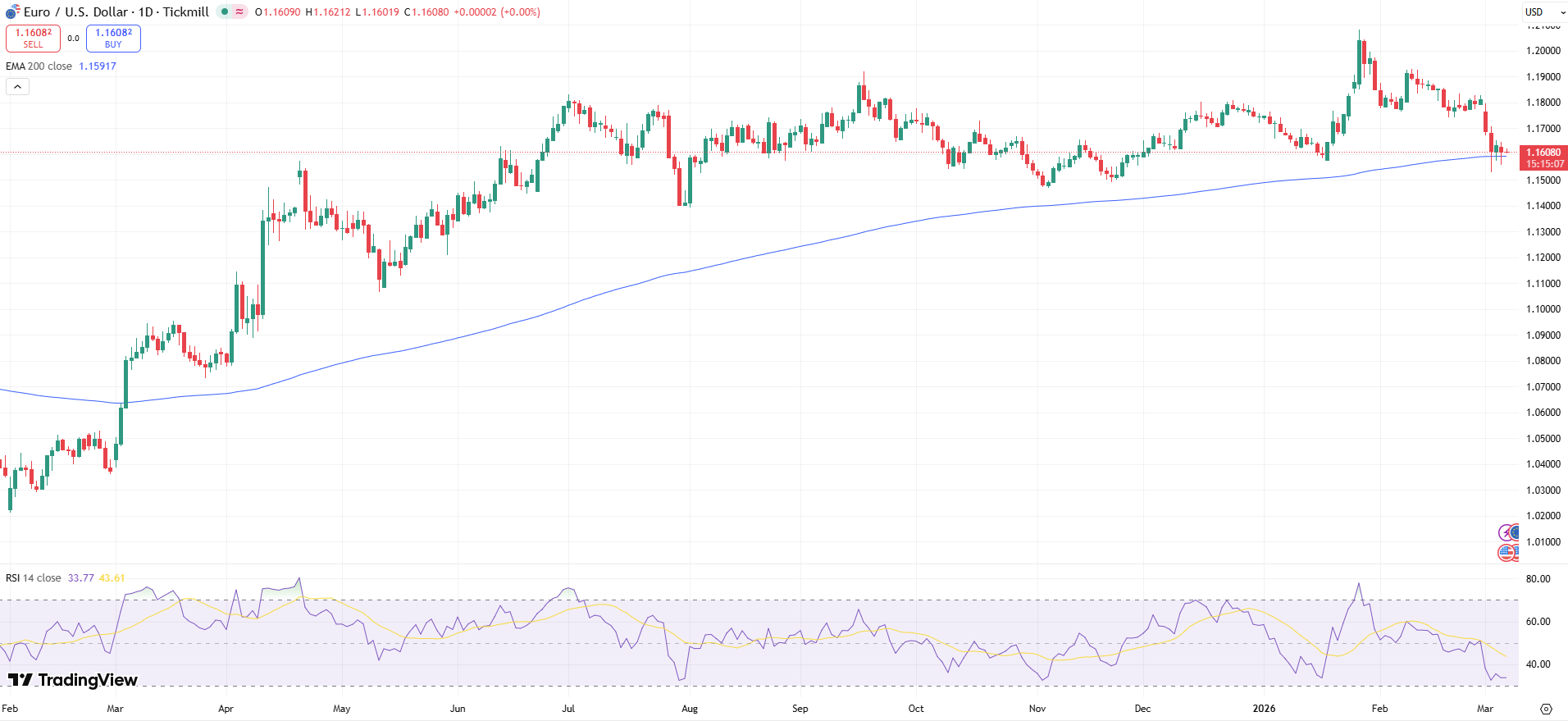
Technical indicators also reinforce the cautious outlook. The pair recently traded around 1.1582, staying below important moving averages that traders often use to identify market direction. The 55-day and 100-day Simple Moving Averages (SMAs) are flattening near 1.1766–1.1700, while the 200-day SMA is still rising close to 1.1670.
Meanwhile, the Relative Strength Index (RSI) has dropped toward 32, approaching oversold territory. This suggests downside pressure is building, although the market may soon reach a point where sellers begin to slow down.
Key technical signals traders are watching:
- Current trading area: around 1.1620
- Daily reference level: 1.1582
- RSI reading: near 32 (close to oversold)
- 200-day SMA: around 1.1670
- Descending channel: indicates ongoing bearish bias
These indicators show that while short-term rebounds are possible, the overall direction remains uncertain.
Key Support and Resistance Levels
From a technical perspective, several price levels are now acting as important barriers for the euro–dollar pair. These zones help traders determine where the market could reverse or continue its trend.
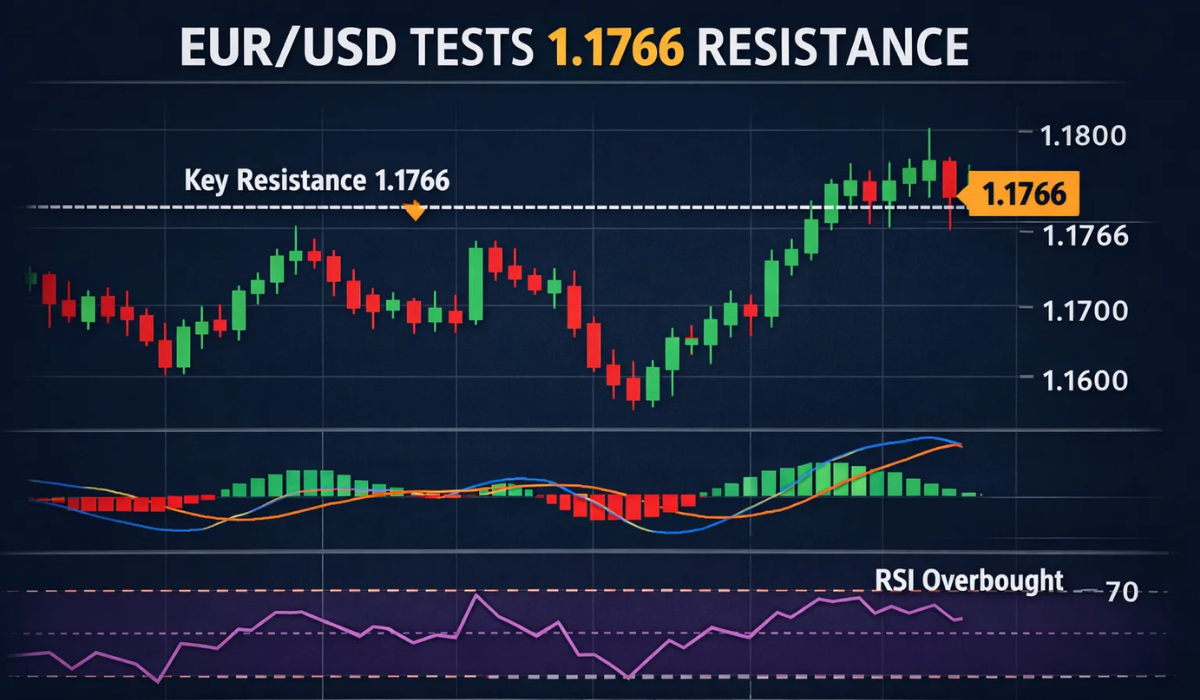
The nearest resistance level sits at 1.1766, where multiple technical signals converge. This area includes the recent horizontal resistance and the cluster of both the 55-day and 100-day moving averages. A strong break above this level would be needed to ease the current bearish pressure.
If the euro manages to rise above 1.1766, the next major upside target appears around 1.2082.
On the downside, the market is currently testing support near 1.1578. If this level fails, the euro could slide further toward 1.1491 and 1.1469. A deeper decline could eventually push the pair toward 1.1392, where buyers might step in if the RSI moves firmly into oversold territory.
Important price levels to watch include:
- Resistance: 1.1766
- Next upside target: 1.2082
- First support: 1.1578
- Lower supports: 1.1491 and 1.1469
- Major downside level: 1.1392
These levels provide a roadmap for traders trying to understand possible price movements.
Dollar Strength Drives Market Direction
At the moment, the biggest force moving the US Dollar is coming from economic and geopolitical developments in the United States rather than Europe.
The US Dollar Index has climbed above 99.00, approaching recent multi-week highs. This rise reflects strong demand for the dollar as a safe-haven currency during periods of global uncertainty.
Policy decisions from the Federal Reserve also play a key role. In January, the central bank kept its federal funds rate at 3.50%–3.75%, which matched market expectations. However, the tone from policymakers suggested confidence in the U.S. economy.
Fed Chair Jerome Powell described current policy as being in a “good place,” emphasizing that future decisions will depend on incoming economic data. The vote inside the policy committee was 10-to-2, with two members supporting a 25-basis-point rate cut, showing that the debate over interest rates is still ongoing.
Meanwhile, the European Central Bank has also kept interest rates unchanged. ECB President Christine Lagarde said inflation is expected to return to the 2% target over the medium term, although services prices remain under close watch.
Investor positioning also reflects cautious sentiment. Data from the Commodity Futures Trading Commission shows speculative long positions in the euro dropped to around 157,000 contracts, the lowest level in four weeks. Open interest also fell to roughly 911,300 contracts, indicating traders are reducing exposure rather than aggressively betting against the currency.
Looking ahead, markets are watching the U.S. Nonfarm Payrolls report, which could shape expectations for future interest rate decisions. As long as the dollar stays strong and geopolitical risks remain high, the euro may continue facing downward pressure.

