

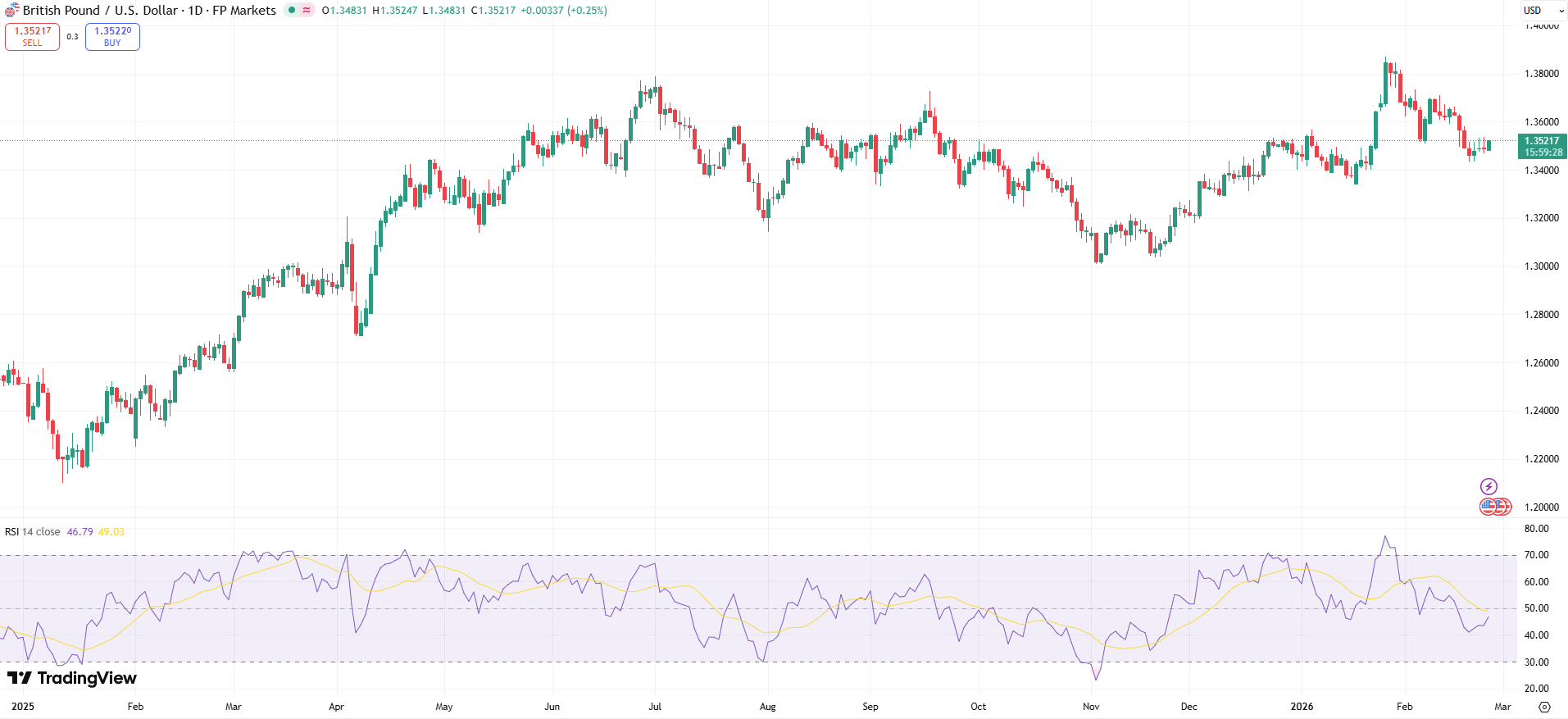
The British pound remains steady against the U.S. dollar, with GBP/USD trading near 1.3510 during Asian hours on Wednesday. The pair has now posted gains for four straight sessions, staying above the key 1.3500 level. A softer U.S. dollar followed President Donald Trump’s first State of the Union address of his second term, which offered no major policy surprises.
Currency markets often react to political clarity. In this case, investors saw little new information to push the dollar sharply higher. As a result, the pound found support.
From a technical perspective, GBP/USD is hovering near the 200-period Simple Moving Average (SMA) on the four-hour chart, around 1.3550. This level is important for short-term traders. Staying above it suggests stability, while a move below could attract sellers.
Momentum indicators show mixed signals. The Moving Average Convergence Divergence (MACD) histogram remains negative, meaning bearish pressure has not fully faded. The Relative Strength Index (RSI) stands at 40, which is below the neutral 50 mark but no longer deeply oversold. In simple terms, the pair is steady but not strongly bullish.
UK Jobs Data Signals Slowdown
Fresh labor market data from the Office for National Statistics showed signs of weakness. The UK unemployment rate rose to 5.2% in the three months to December, up from 5.1% previously. This marks the highest level since early 2021.
At the same time, the number of people claiming jobless benefits increased by 28,800 in January. Wage growth also slowed. Average Earnings Excluding Bonus rose 4.2%, down from 4.6% in the prior quarter. Earnings Including Bonus also eased to 4.2% from 4.6%.
Key UK labor figures:
- Unemployment rate: 5.2%
- Claimant count change: +28.8K
- Wage growth (ex-bonus): 4.2%
- Wage growth (incl. bonus): 4.2%
Slower hiring and softer wage growth reduce inflation pressure. This strengthens expectations that the Bank of England could cut interest rates in March. Lower rates typically weaken a currency because investors earn less return holding it.
Dollar Outlook Hinges on Fed
On the U.S. side, the dollar recently touched a one-week high but lacks strong upward momentum. Softer consumer inflation data last Friday increased bets that the Federal Reserve may begin cutting rates in June. Markets now see a higher probability of at least two rate cuts in 2026.
Investors are watching upcoming events closely:
- FOMC Minutes release Wednesday
- U.S. PCE Price Index on Friday
- UK Consumer Price Index on Wednesday
These reports could shift expectations for interest rates on both sides of the Atlantic.
For now, GBP/USD sits at a crossroads. Weak UK jobs data argues for caution, while softer U.S. rate expectations limit dollar strength. As long as the pair holds above 1.3500, short-term stability remains intact. But upcoming inflation reports may decide the next clear direction.

