

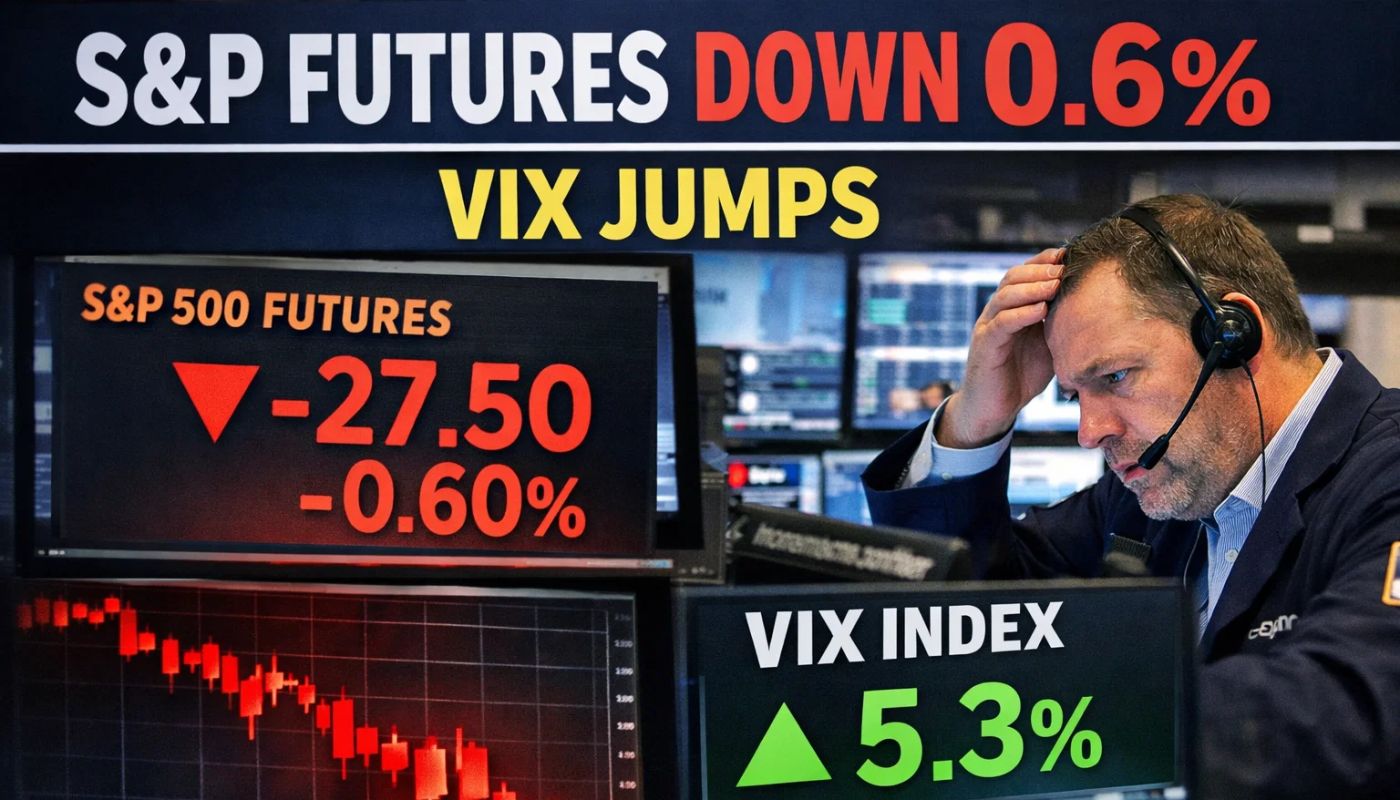
U.S. stock futures moved lower Monday night as tensions between the United States, Israel and Iran showed no signs of easing. Investors reacted after reports said a U.S. embassy in Riyadh, Saudi Arabia, was struck by Iranian drones. President Donald Trump warned that Washington would retaliate, reinforcing fears of a broader conflict.
By 21:11 ET, S&P 500 futures were down 0.6% to 6,846.25 points. Nasdaq 100 futures fell 0.7% to 24,843.25, while Dow Jones futures declined nearly 0.6% to 48,677.0. The drop followed a volatile session earlier in the day when Wall Street swung sharply between losses and gains.
Despite the late weakness in futures, major indexes had finished Monday only slightly changed. Investors balanced geopolitical risks against encouraging economic data and a rebound in technology shares.
Wall Street Swings, Tech Leads
The main indexes ended mixed after recovering from steep intraday losses. The S&P 500 closed flat. The Dow Jones Industrial Average slipped 0.2%, while the Nasdaq Composite added 0.4%.
Technology stocks provided support, especially chipmakers that had suffered deep losses in February. Shares of NVIDIA Corporation rose 2.9% on Monday after falling 7.3% in the previous month. The rebound signaled renewed interest in artificial intelligence stocks, even as broader market sentiment remained fragile.
Volatility increased sharply. The CBOE Volatility Index, often called the market’s “fear gauge,” surged nearly 8%. Rising volatility shows that investors expect bigger price swings ahead.
Key market moves included:
- S&P 500 futures: -0.6% to 6,846.25
- Nasdaq 100 futures: -0.7% to 24,843.25
- Dow futures: -0.6% to 48,677.0
- VIX: +8%
- NVIDIA: +2.9% after a 7.3% February loss
Oil, Inflation and Fed Concerns
The geopolitical backdrop remains tense. U.S. and Israeli strikes on Iran over the weekend reportedly killed hundreds, including Supreme Leader Ayatollah Ali Khamenei and other senior leaders. Iran responded with drone and missile attacks against Israel and nearby countries, and officials said they were not ready to negotiate.
One major worry is oil. Prices have risen sharply on fears that supply from the Middle East could be disrupted. Higher oil prices can push up inflation because energy costs affect transportation, food and manufacturing.
Recent economic data added another layer of complexity. February purchasing managers index (PMI) data showed U.S. manufacturing expanded for a second straight month, and new orders exceeded expectations. However, manufacturing prices rose sharply, even before the latest oil surge. Combined with stronger-than-expected January producer inflation data, this has raised concerns that the Federal Reserve may keep interest rates higher for longer.
ANZ analysts described the oil surge as a “negative supply-side shock” that increases inflation while slowing growth. Several Federal Reserve officials are scheduled to speak in the coming days, and markets will listen closely for signals about future rate policy.
For now, investors face a simple but serious question: how long will the conflict last? The answer will shape stock prices, oil markets and interest-rate decisions worldwide.

