


Gold prices retreated in Asian trading on Friday as reduced expectations for a December Federal Reserve rate cut pushed the dollar higher and pressured commodities across the board. Spot gold slipped 0.6% to $4,053.09 an ounce, while December futures edged 0.3% lower to $4,049.76. The metal is now down 0.8% for the week, reversing nearly half of last week’s 2% rise.
The pullback followed stronger labor-market signals. September nonfarm payrolls exceeded forecasts, reinforcing the narrative that the Fed has little urgency to pivot toward monetary easing. Elevated inflation readings have further fueled expectations that policymakers will maintain borrowing costs at current levels in December.
Yet the downturn in bullion remained moderate. A global sell-off in major technology names, coupled with rising fiscal anxieties in Japan, continued to provide a safety bid for investors seeking defensive positioning.
Dollar Strength Weighs on Bullion
The prospect of a longer-than-expected period of elevated U.S. interest rates pushed investors toward the greenback, curbing demand for non-yielding assets like gold. According to CME FedWatch, traders now assign a 28.5% probability to a 25-basis-point rate cut at the Fed’s Dec. 10–11 meeting—higher than yesterday’s reading but sharply below the 45.4% odds seen just one week prior.
A firm dollar generally makes commodities priced in the currency more expensive for overseas buyers, amplifying downward pressure on gold. Meanwhile, Fed officials scheduled to speak later Friday, along with next week’s delayed batch of U.S. economic releases for September, are expected to shape final market expectations ahead of the December meeting.
Other precious metals followed gold lower:
- Platinum declined 0.6% to $1,507.78/oz
- Silver dropped 2.1% to $49.5955/oz
Tech Rout and Fiscal Worries Limit Losses
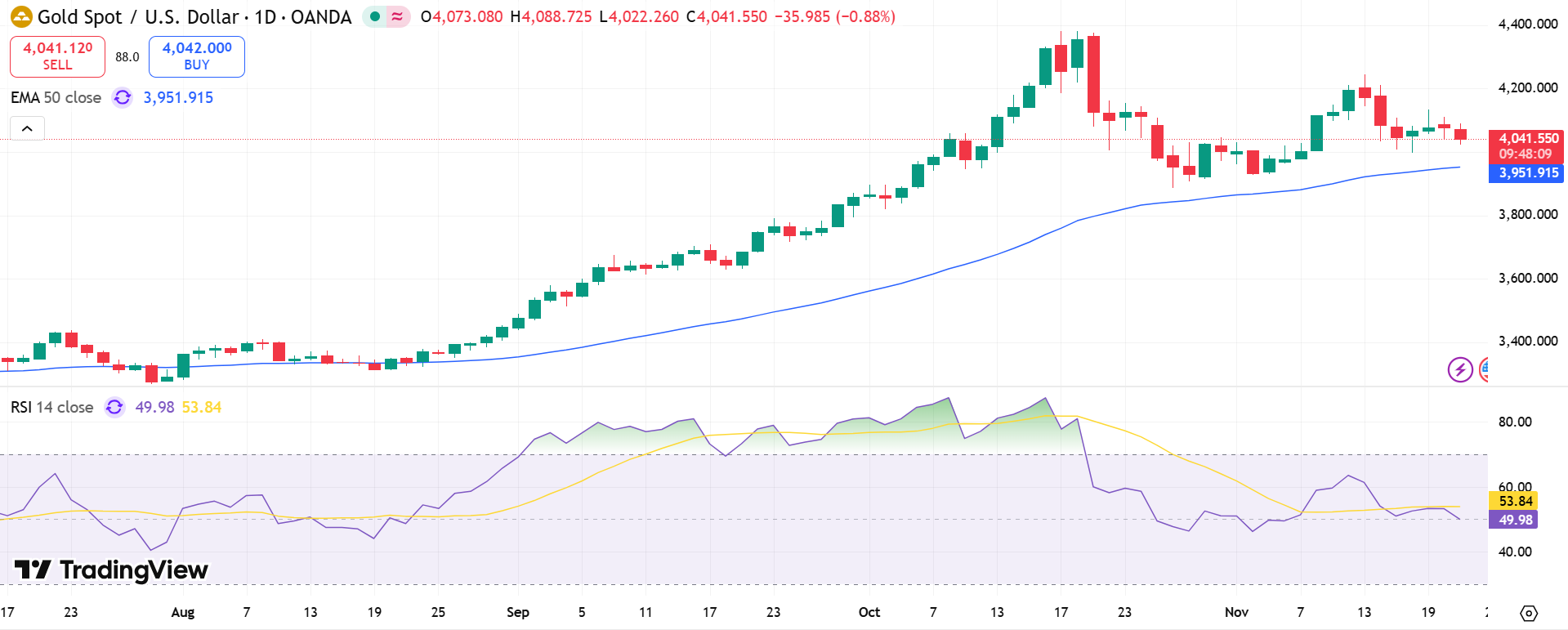
Despite the broader sell-off, several risk-off currents helped cushion gold’s decline. Global technology stocks continued to unravel deep into the week. Even upbeat earnings from NVIDIA Corp. failed to lift sentiment, as investors grew uneasy about swelling inventory levels and concerns over circular financing tied to the chipmaker’s customer investments.
The continued unwinding of lofty tech valuations—much of it tied to the three-year boom in artificial-intelligence-driven stocks—has revived fears of an overheated market. That dynamic has redirected some flows back into traditional safe havens.
Japan added another layer of caution. Prime Minister Sanae Takaichi’s government approved a ¥21.3 trillion ($135 billion) stimulus package on Friday, raising fresh questions about sustainability as long-term Japanese bond yields hit multi-decade highs. Investors, wary of swelling fiscal risks, kept part of their portfolios parked in gold.

