

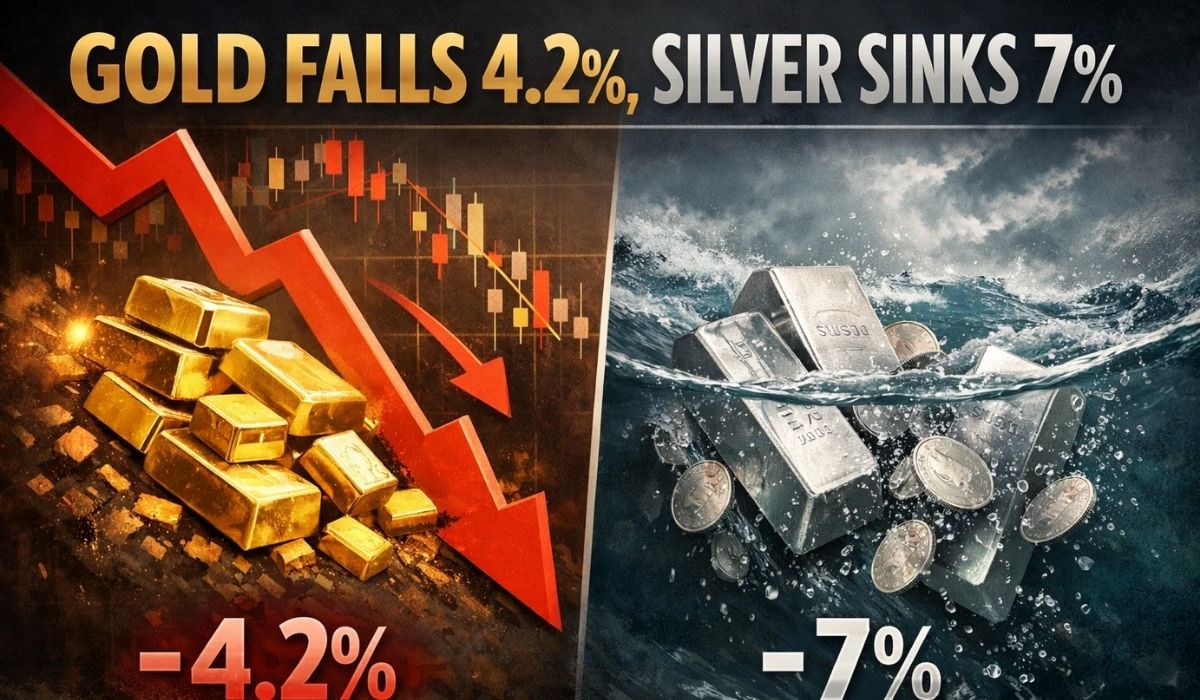
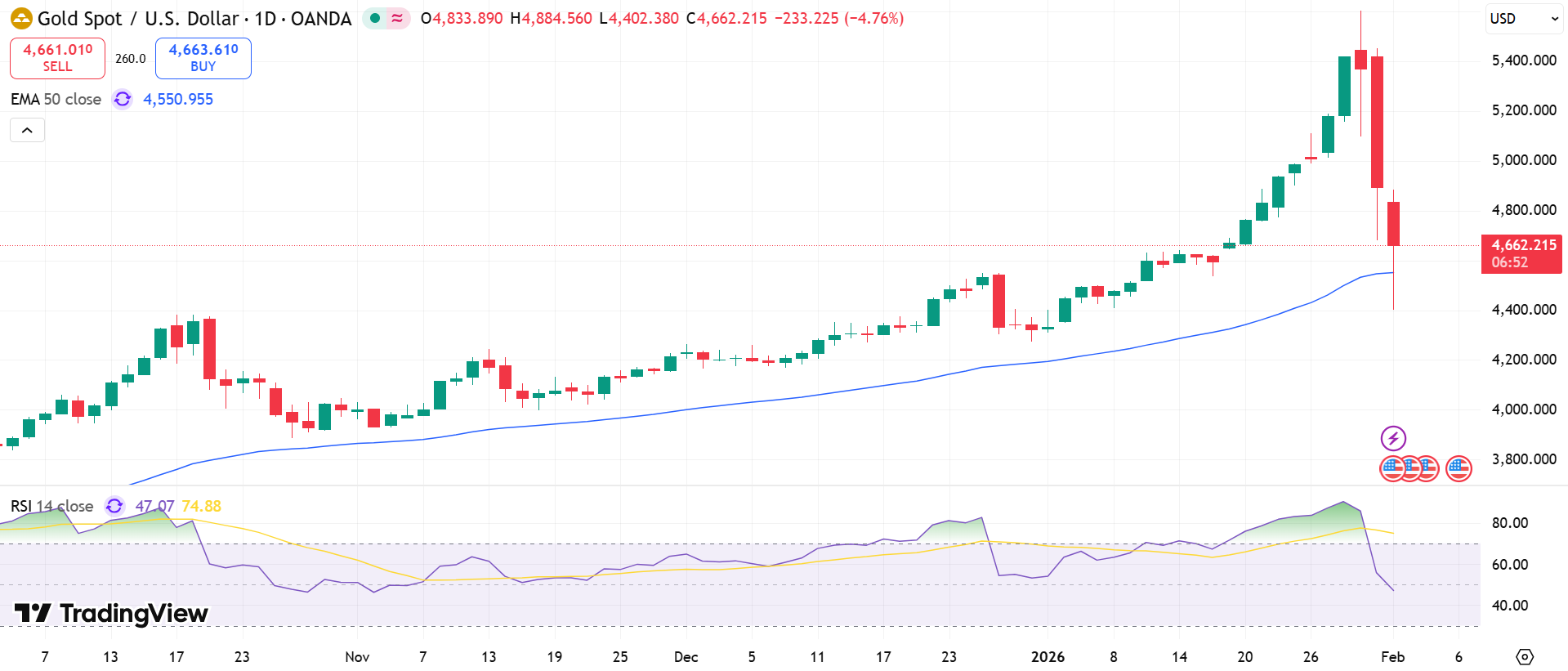
Gold markets opened the week under heavy pressure as investors rushed to lock in gains after one of the fastest rallies in modern history. Spot bullion slid 4.2% to $4,660.22 an ounce by early afternoon in New York, having briefly plunged to $4,402.38 before stabilizing. April gold futures eased 1.3% to $4,682.86 an ounce.
The move followed Friday’s brutal session, when spot gold shed nearly 10% from a record near $5,600. Traders said positioning had become stretched, leaving prices vulnerable to even modest shifts in policy expectations.
Warsh nomination jolts markets
President Donald Trump’s decision to nominate former Federal Reserve governor Kevin Warsh to replace Jerome Powell in May proved to be the immediate trigger. The pick removed a cloud of uncertainty—but also rattled risk assets and revived the U.S. dollar.
The greenback rebounded from a four-year low, squeezing dollar-priced commodities. For gold, the stronger currency reduced its appeal to overseas buyers while encouraging profit-taking among momentum traders who had piled in during January’s surge.
Investors remain divided over how Warsh would actually run the Fed. He has backed Trump’s push for lower rates but criticized large-scale asset purchases, a stance many interpret as structurally hawkish. That ambiguity has added to short-term volatility.
Even after the selloff, gold still ended January up nearly 15%, its strongest start to a year in decades.
Geopolitics trims safe-haven bid
Fresh signs of diplomatic engagement between Washington and Tehran also undercut gold’s safe-haven demand.
Reports suggested U.S. and Iranian officials were exploring talks in Turkey this week, building on Trump’s comments that negotiations over Iran’s nuclear program were proceeding “seriously.” The prospect of de-escalation in the Middle East prompted some investors to scale back hedges.
Macquarie strategist Thierry Wizman said gold had begun slipping before news of the Warsh nomination circulated, implying the market was primed for a correction regardless of politics.
Banks stay broadly bullish
Major banks moved quickly to argue that the pullback does not signal the end of the bull market.
Deutsche Bank reiterated its $6,000-per-ounce target, saying the selloff overshot the importance of its catalysts and that demand from central banks, institutions, and retail investors remains solid.
JPMorgan went further, lifting its year-end 2026 forecast to $6,300 an ounce, citing steady official-sector buying and resilient investor appetite despite recent volatility.
Across the rest of the metals complex:
- Silver: Spot prices fell 6.7% to $78.96/oz after briefly tumbling about 12%, compounding Friday’s historic 27% drop.
- Platinum: Edged higher to $2,124.40 after dipping as low as $1,882 earlier, underscoring choppy conditions across the market.
For now, traders are balancing fading geopolitical fears against an uncertain monetary outlook—a mix likely to keep precious metals volatile in coming weeks.

