

Gold and other precious metals climbed in Asian trading on Wednesday after fresh U.S. economic data suggested the world’s largest economy may be slowing down. When the U.S. economy cools, investors often buy gold because they expect lower interest rates and a weaker dollar — both of which usually help gold prices.
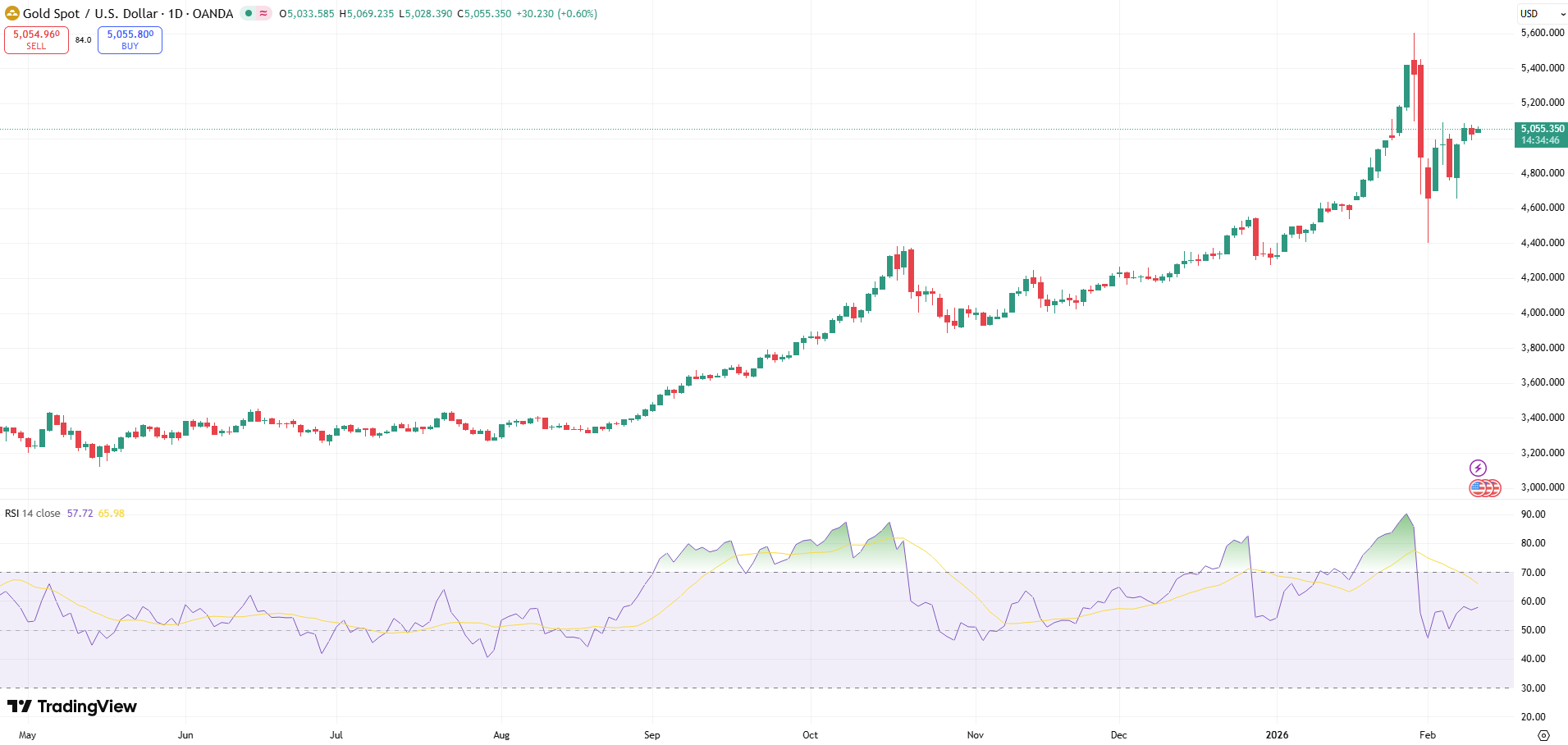
Spot gold rose 0.6% to $5,052.11 per ounce, while April gold futures gained 0.9% to $5,076.40 per ounce at 01:02 ET (06:02 GMT). Even with this rebound, gold is still about $600 per ounce below its recent record high from late January, showing how shaky the market remains. Prices have been moving up anGold Jumps to $5,052 as Weak U.S. Data Revives 2025 Rate-Cut Hopesd down sharply since that peak.
The U.S. dollar also slipped, which made gold cheaper for buyers outside America. The dollar index fell 0.2% in Asian trade, extending losses from earlier in the week. At the same time, U.S. Treasury yields dropped as traders began to expect possible interest-rate cuts. Lower yields usually make gold more attractive because gold does not pay interest like bonds do.
Uncertainty in the Middle East continues to support some safe-haven buying, but investors are still cautious and not rushing back into the market in a big way. Most traders are waiting for clearer economic signals before making large bets.
Soft spending shakes confidence
The turning point this week was weaker-than-expected December U.S. retail sales. This report showed that American shoppers are spending less, likely because prices are still high and many people feel pressure from higher borrowing costs. Slower spending can mean slower economic growth.
ANZ analysts said gold’s earlier rally had stalled because prices had risen “too fast, too soon.” Now that many speculative traders have stepped back, weaker U.S. data is giving gold a fresh reason to rise again.
If consumer weakness continues, the Federal Reserve may feel more pressure to cut interest rates later in 2025 to support the economy. That possibility has already pushed bond yields lower and given metals some breathing room after their January selloff.
Jobs and inflation next
Markets are now focused on two key U.S. reports. First is nonfarm payrolls, due later on Wednesday. If job growth looks weak, traders will likely increase bets on future rate cuts — a bullish signal for gold.
Second is the consumer price index (CPI) report due Friday. This will show whether inflation is still sticky or finally easing. Together, jobs and inflation are the two biggest factors guiding the Federal Reserve’s decisions.
Adding to uncertainty is President Donald Trump’s nomination of Kevin Warsh as the next Fed chair. Warsh is seen as less willing to cut rates than other candidates, a view that helped trigger sharp losses in gold and silver in late January. Traders are still weighing what his leadership could mean for future policy.
For now, investors are balancing hope for rate cuts against fear of policy tightening, keeping markets nervous but active.
Market snapshot (key moves)
- Spot gold: +0.6% to $5,052.11/oz
- Gold futures (April): +0.9% to $5,076.40/oz
- Spot silver: +1.7% to $82.1375/oz
- Spot platinum: +2.1% to $2,130.63/oz
- Dollar index: –0.2% in Asian trade

