

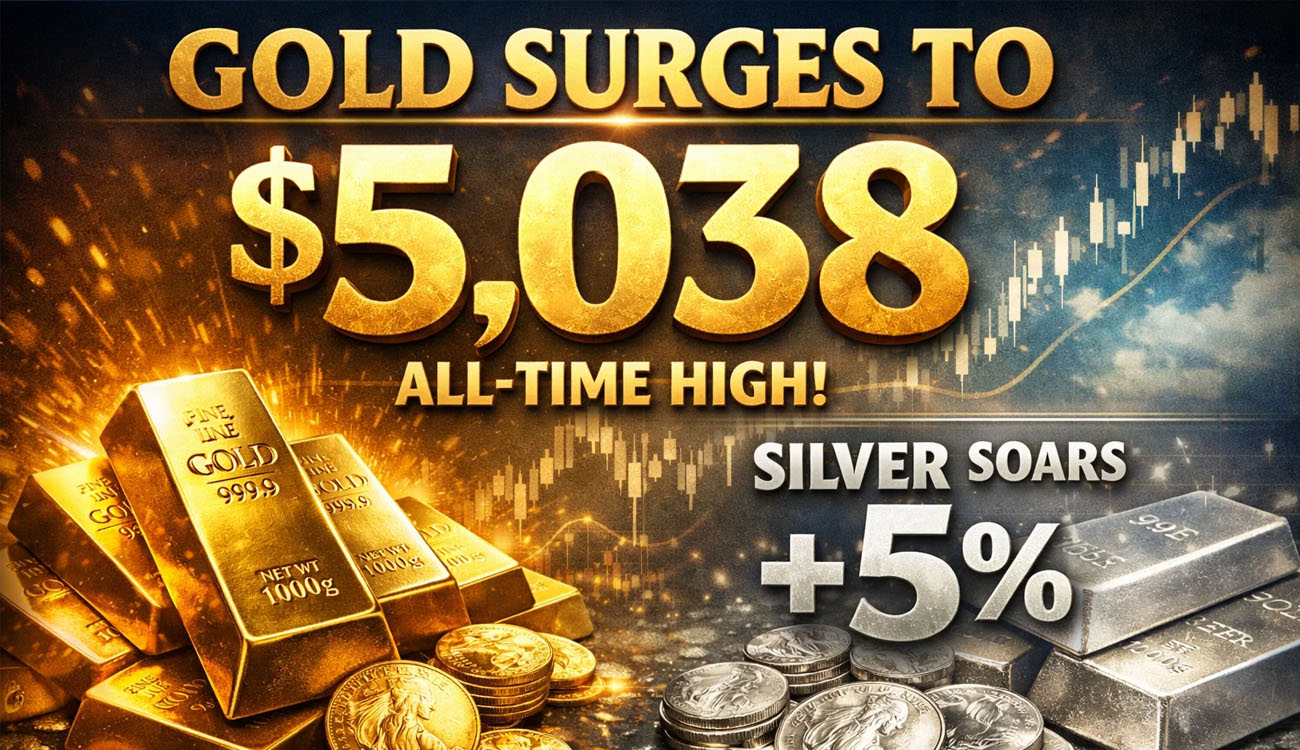
Precious metals opened the week on firmer footing as trading resumed across Asian markets, reversing some of the turbulence that rattled investors in the prior session. Gold edged decisively higher on Monday morning, while silver delivered an even sharper rebound, suggesting that bargain buyers were stepping in after last week’s volatility.
The move came despite cooling safe-haven demand following signs of diplomatic progress between Washington and Tehran. Weekend negotiations over Iran’s nuclear program reduced geopolitical anxiety that had previously underpinned bullion prices. Even so, metals found support as traders repositioned ahead of a data-heavy week in the United States.
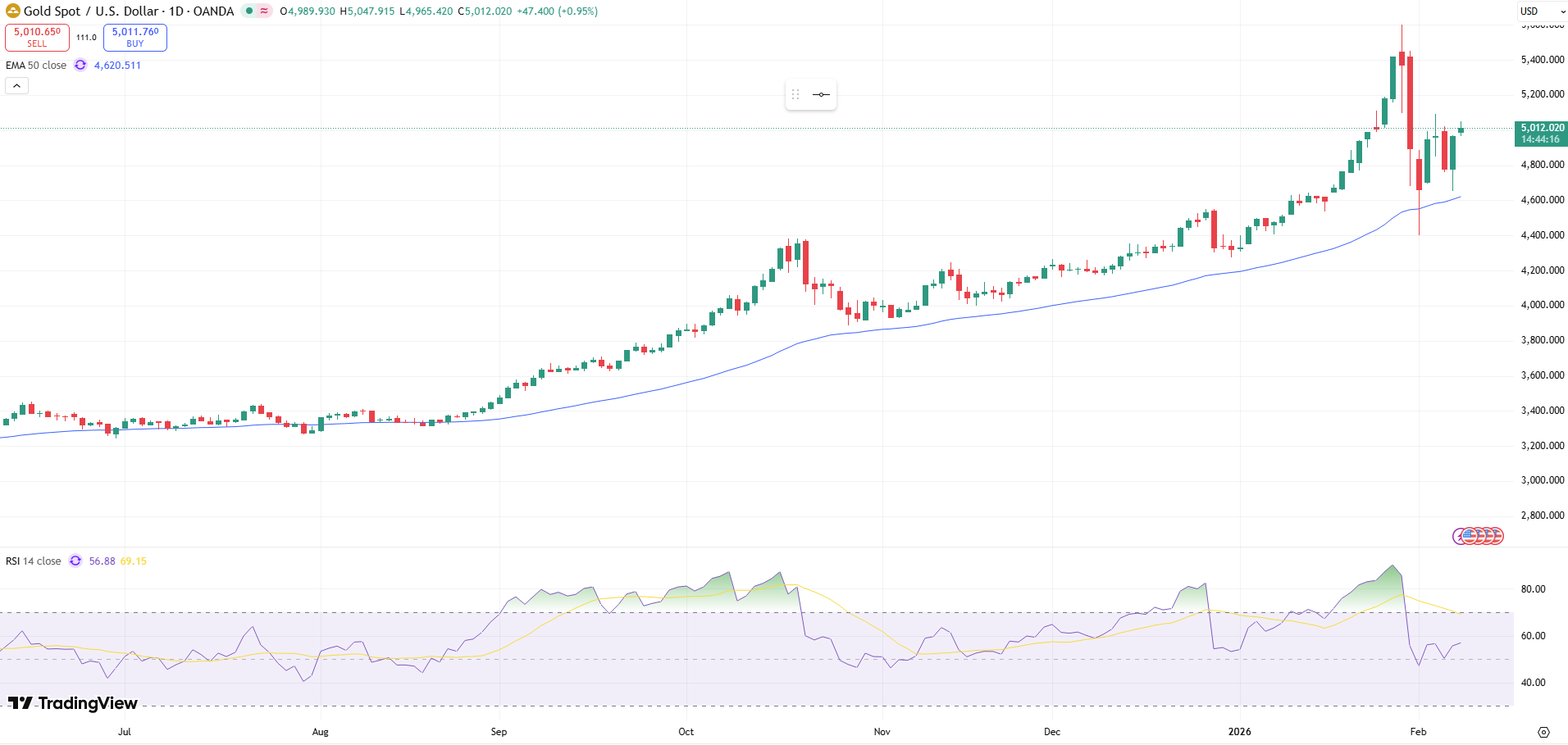
By early New York time, spot gold had climbed 1.6% to $5,038.38 per ounce, reclaiming the psychological $5,000 level that often acts as a magnet for momentum traders. April gold futures were slightly stronger at $5,064.04 per ounce, reflecting expectations that physical demand could tighten in coming weeks.
Silver outperformed dramatically, rallying 5.3% to $82.1780 per ounce after briefly flirting with the $60 mark last week. Platinum, by contrast, traded largely unchanged near $2,105.13, highlighting how industrial demand for different metals is diverging.
Central banks keep buying gold
Last week’s price swings were amplified by political uncertainty in Washington. Markets reacted nervously to President Donald Trump’s choice of Kevin Warsh as a potential Federal Reserve chair, a figure perceived as more tolerant of higher interest rates. The prospect of tighter policy briefly strengthened the U.S. dollar and triggered profit-taking across commodities.
Yet beneath the short-term noise, institutional demand for gold remains robust. Large asset managers continue to treat bullion as a hedge against fiscal risk, currency debasement, and geopolitical instability.
ANZ Research noted that the People’s Bank of China extended its gold purchases into a fifteenth straight month in January, a signal that Beijing still views bullion as a strategic reserve asset rather than a trading instrument. Over the past year, central banks globally have been among the most consistent buyers of gold, partly due to concerns over rising government debt in developed economies.
Political developments abroad have reinforced that view. In Japan, Prime Minister Sanae Takaichi’s decisive victory in Sunday’s lower house election raised expectations of additional fiscal spending—another factor that can weaken currencies and lift demand for gold.
U.S. and China data in focus
Markets now turn their attention to a slate of high-stakes economic releases that could shape the Federal Reserve’s next moves and, by extension, the trajectory of precious metals.
Key events to watch:
- Wednesday: U.S. nonfarm payrolls report
- Friday: U.S. Consumer Price Index (CPI)
- Friday: Chinese CPI inflation data
Stronger U.S. jobs growth or hotter inflation would likely bolster the dollar and weigh on metals by reducing expectations for rate cuts. Softer readings could have the opposite effect, giving gold and silver more room to rally.
In China, inflation data will be closely scrutinized for clues about whether policymakers will deploy additional stimulus to revive domestic growth. Any sign of renewed monetary easing would likely be supportive for industrial and precious metals alike.
Despite last week’s selloff, gold is still up roughly 15% in 2026, while silver has gained about 5% year-to-date even after sliding from early-February highs. That resilience suggests that, for many investors, bullion is less a speculative trade and more a structural hedge in an increasingly uncertain global economy.

