

Gold prices extended their downturn in Asian trading on Monday, pressured by fading expectations of a Federal Reserve rate cut next month. The retreat followed a stronger U.S. dollar and deepening uncertainty over upcoming economic releases—both key drivers for metal markets.
Spot gold slipped 0.6% to $4,053.84 an ounce, while December futures dropped 0.9% to $4,055.91. The decline marked a continuation of the prior session’s losses as traders recalibrated expectations around monetary policy.
- Spot gold: $4,053.84/oz, down 0.6%
- December futures: $4,055.91/oz, down 0.9%
- Dollar index: +0.1% on the session
Market Reprices Fed Path Forward
The primary pressure point came from a sharp reduction in market bets on a December policy shift. According to CME FedWatch, the probability of a 25-basis-point cut at the Dec. 10–11 meeting fell to 39.8%, down from 61.9% just a week earlier. Odds of a hold rose to 60.2%, signaling a broad reevaluation of the Fed’s near-term stance.
Uncertainty has been amplified by the U.S. government’s record-long shutdown, which disrupted key October economic indicators—particularly inflation and jobs data. Without these readings, policymakers face reduced visibility heading into December.
Fed Chair Jerome Powell has offered little commitment toward a near-term rate reduction, and sticky inflation trends continue to challenge the case for easing. Higher-for-longer interest rates typically weigh on non-yielding assets such as precious metals.
Other metals posted mixed performance: platinum edged up 0.1% to $1,548.0/oz, while silver held flat at $50.5795/oz after retreating from last week’s near-record levels.
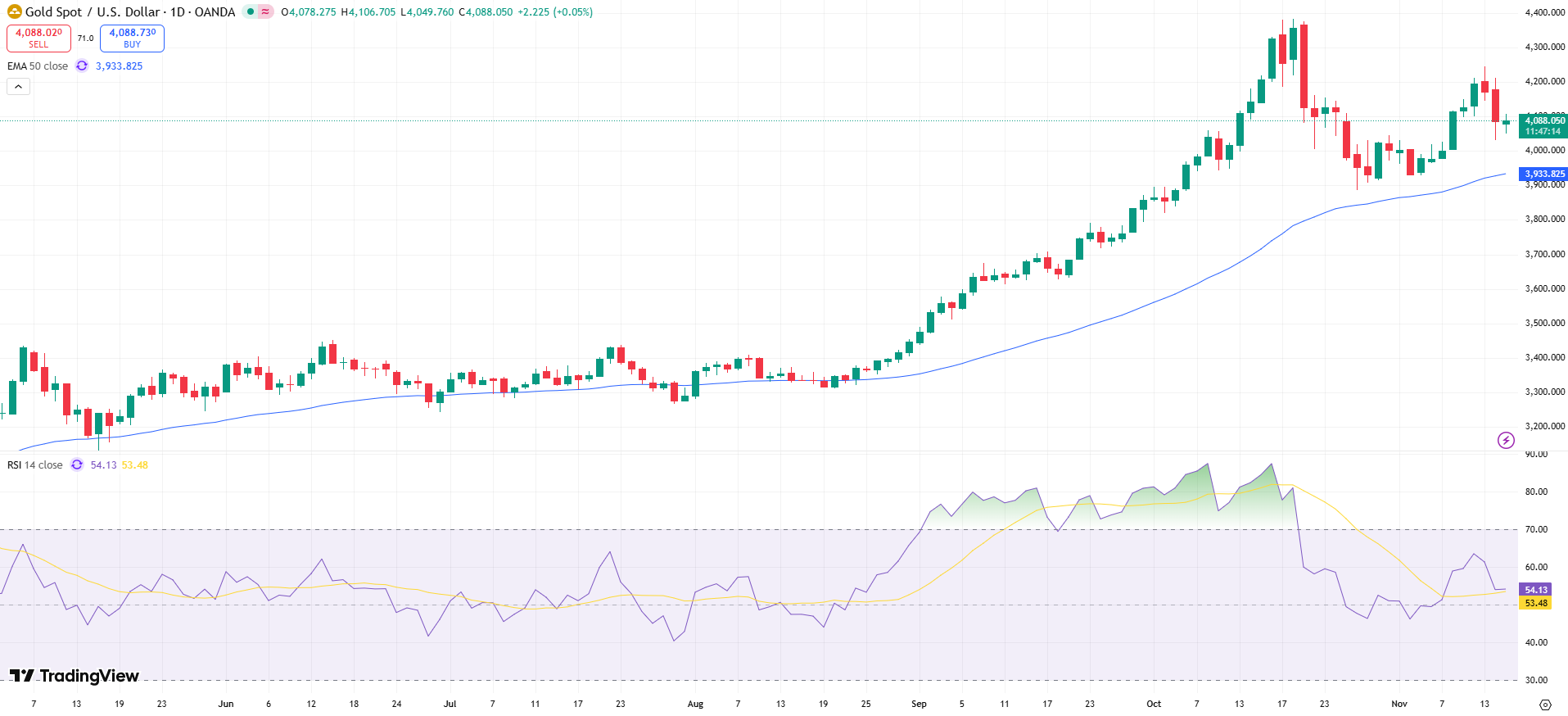
Dollar Firms as Investors Await U.S. Data
The dollar strengthened modestly, clawing back some of last week’s losses ahead of several influential U.S. releases. Markets are preparing for November PMI figures, the delayed September nonfarm payrolls report expected Thursday, and the Fed’s October meeting minutes due Wednesday.
These indicators typically shape interest-rate expectations, but officials recently signaled that October inflation and employment readings may not be released at all due to the shutdown’s impact. With two of the Fed’s most critical inputs potentially missing, traders may continue shifting their risk assessments into December.

