

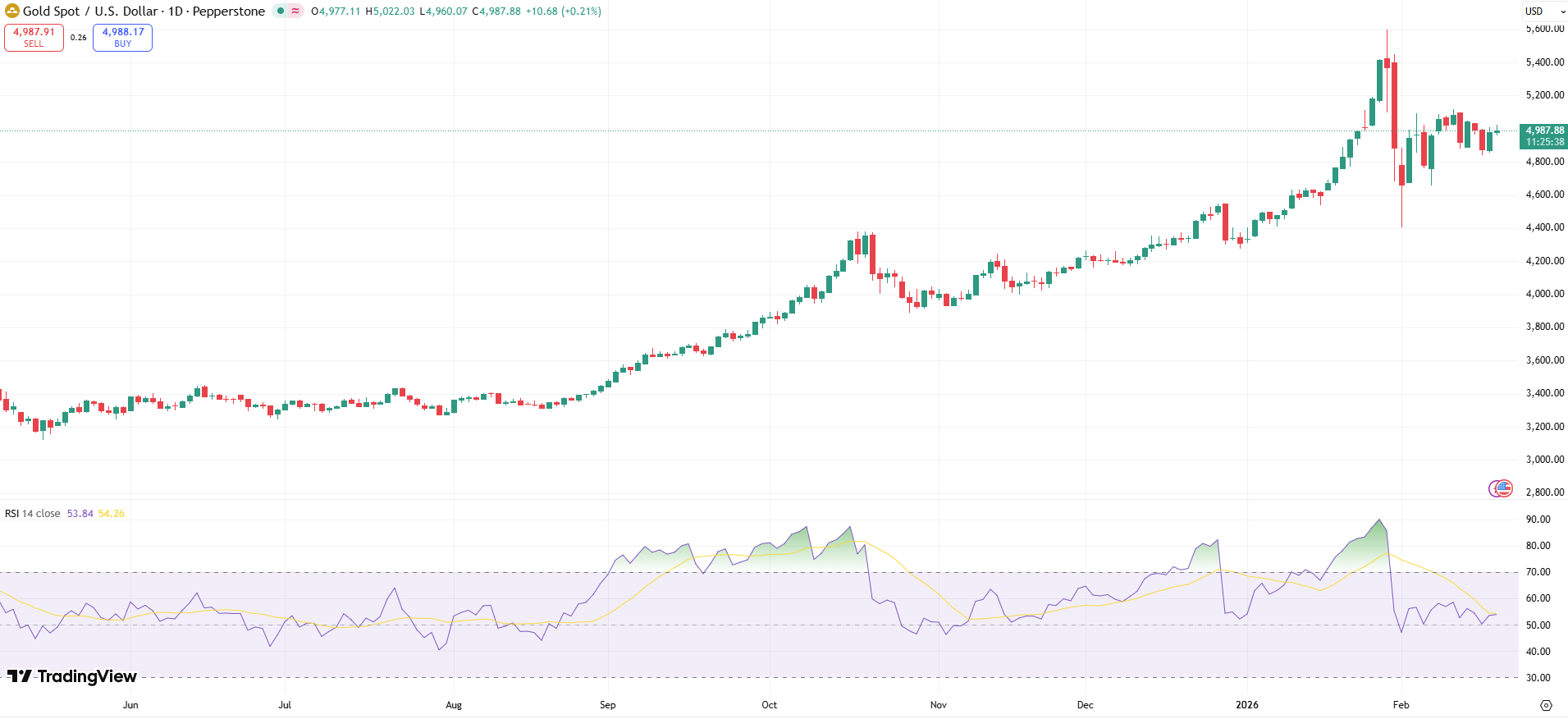
Gold prices climbed back above $5,000 an ounce in Asian trading Thursday, extending a sharp rally fueled by geopolitical tension and cautious signals from the Federal Reserve. After rising 2.1% in the previous session, spot gold gained another 0.9% to $5,019.95 an ounce by 02:03 ET (07:03 GMT). U.S. gold futures followed, adding 0.6% to $5,037.75.
The move recaptured most of the losses seen earlier in the week and underscored how quickly sentiment can shift when global risks intensify. Trading volumes were thin, with several major Asian markets closed for holidays. Lower liquidity amplified price swings, making gains appear larger.
Geopolitics Push Gold Higher
Gold is often called a “safe-haven” asset. That means investors buy it when they are worried about war, political conflict or financial instability. This week, those fears returned to the forefront.
Tensions between the United States and Iran have increased, especially around maritime security in the Strait of Hormuz. At the same time, nuclear negotiations remain stalled. In Europe, limited progress toward ending the Russia-Ukraine conflict has reinforced concerns about prolonged instability.
When uncertainty rises, many investors shift money into gold because it is seen as a store of value that is not tied to any one country’s economy.
Fed Minutes Cap the Rally
While geopolitical risks supported prices, fresh signals from the Federal Reserve tempered enthusiasm.
Minutes from the Fed’s latest policy meeting showed policymakers divided on interest rates. Some officials warned that if inflation remains stubborn, further tightening could be needed. Others suggested conditions might allow rate cuts later this year.
This split outlook boosted the U.S. dollar, which had jumped 0.6% overnight before trading largely flat. Higher interest rates and a stronger dollar typically weigh on gold because:
- Gold does not pay interest, unlike bonds.
- Rising yields increase the cost of holding gold.
- A stronger dollar makes gold more expensive for overseas buyers.
Investors are now watching the U.S. personal consumption expenditures (PCE) price index due Friday. The PCE is the Fed’s preferred measure of inflation and could shape expectations for future rate decisions.
Silver, Platinum and Copper Move
Other metals also posted notable moves:
- Silver surged 2.3% to $78.98 per ounce.
- Platinum rose 0.8% to $2,099.11 per ounce.
- London Metal Exchange copper slipped 0.5% to $12,920.20 a ton.
- U.S. copper futures edged up 0.5% to $5.80 a pound.
Together, these shifts highlight a market balancing two forces: geopolitical risk driving demand for safety, and monetary policy uncertainty limiting further upside. For now, gold’s position above $5,000 reflects how sensitive global markets remain to both headlines and central bank signals.

