

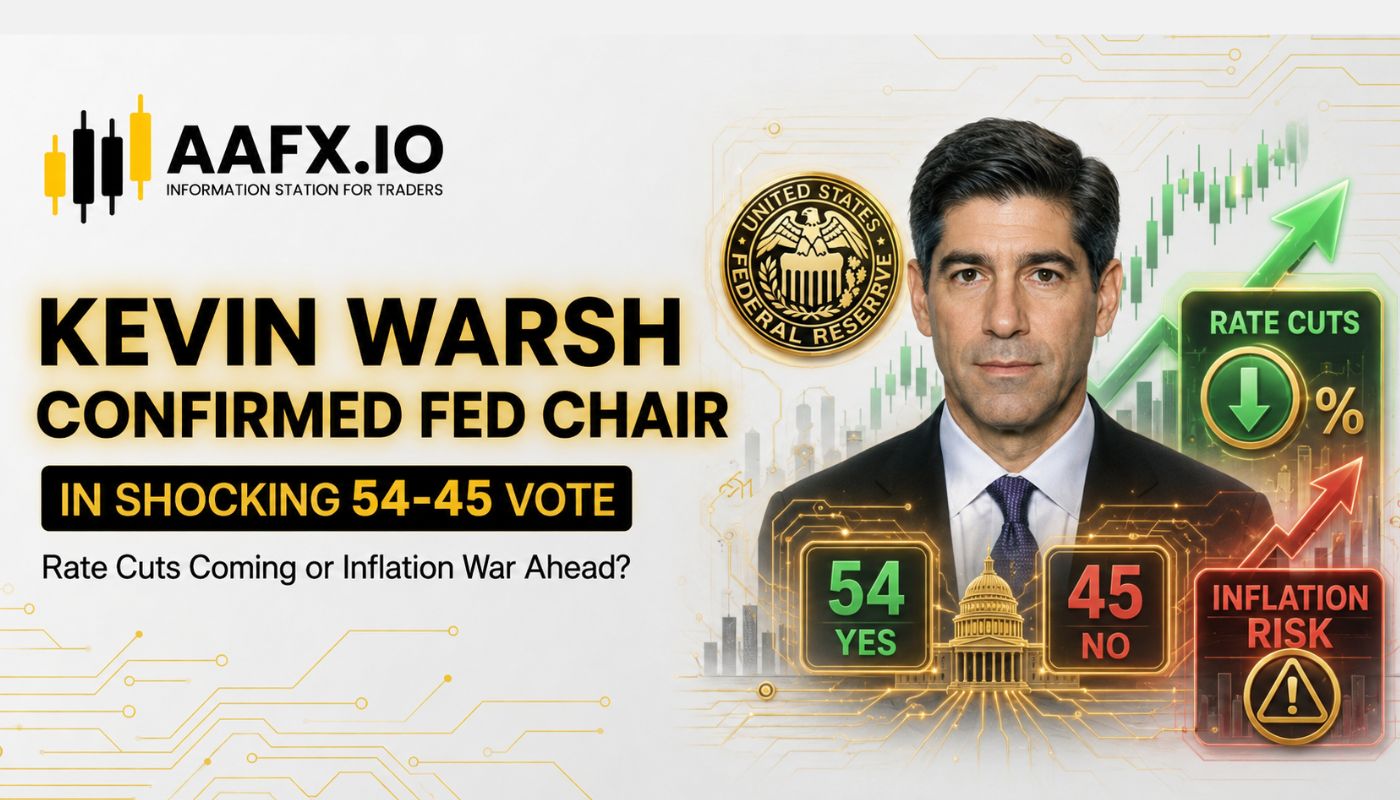
Kevin Warsh was confirmed as the next Federal Reserve Chair on May 13, 2026, after a dramatic 54-45 Senate vote. This was the most partisan and divisive vote in recent memory. All Republicans supported President Trump’s nominee, and only one Democrat, Sen. John Fetterman of Pennsylvania, voted in favor. Warsh will take over from Jerome Powell, whose term ends on May 15, 2026. Powell will stay on as a member of the Board of Governors.
At 56, Warsh takes on the Fed’s top job during one of the toughest economic periods in years. He has a strong background as a former Fed Governor from 2006 to 2011, including during the 2008 financial crisis. He is also a Hoover Institution fellow and has worked as a Wall Street executive, including time at Stanley Druckenmiller’s firm. Warsh is known as one of the wealthiest people to lead the Fed and is respected for his policy knowledge and practical experience from the private sector.
Warsh’s Bold Policy Vision
Warsh puts a strong focus on price stability and keeping the Fed independent. He has criticized what he calls past “policy errors,” especially the extra easing after 2020 that led to higher inflation. He wants a major shift at the central bank and prefers using trimmed-mean inflation measures, which remove extreme outliers, instead of relying mostly on headline CPI or core PCE.
Warsh takes a different view from traditional models that connect inflation mostly to wages and consumer spending. He believes price pressures are more closely tied to government spending and fast money supply growth. He also sees artificial intelligence as a strong force for lowering inflation by boosting productivity, which could let the Fed ease policy. Still, he warns that keeping policy too loose could bring inflation back. Warsh is often called a “hawkish dove” and promises to make decisions based on data while managing political pressure for lower rates.
His first big challenge will be at the FOMC meeting on June 16 and 17, 2026.
Immediate Market Reactions
Markets reacted with both resilience and caution on May 14 and 15. Stocks were mostly strong, with the Nasdaq and S&P 500 reaching or nearing record highs, while the Dow had mixed results. Bond yields rose, showing that investors expect rates to stay high because of stubborn inflation. The U.S. dollar also got stronger as people bet on greater credibility.
Gold and silver prices fell sharply as the stronger dollar and a more hawkish outlook reduced demand for safe-haven assets. Oil prices stayed high because of ongoing geopolitical tensions, and cryptocurrencies faced more selling as investors became cautious. Expectations for future interest rates have changed a lot. Many investors now think rates will stay around 3.5 to 3.75 percent through 2026, and some even expect possible hikes if inflation gets worse. The chances of rate cuts have dropped sharply.
Challenges and Asset Implications
Warsh takes over with April’s CPI at about 3.8 percent, the highest in three years. Producer prices are rising, job numbers are strong, and oil prices have jumped above $100 in some places because of global risks. This stubborn inflation makes it hard to cut rates aggressively, even though President Trump would prefer itBonds and Rates: Yields are likely to stay high, which will put pressure on long-term assets and make borrowing more expensive for mortgages and companies. Banks might benefit if the yield curve gets steeper.ve.
- Equities: Growth and tech stocks, especially those in the Nasdaq, could remain strong if the Fed’s credibility stays intact. However, market swings may increase as policy uncertainty grows. Stocks with strong fundamentals and steady dividends might do better.
- Dollar: The dollar will probably keep gaining strength.
- Commodities: Gold and silver may face challenges, while oil prices are still driven by geopolitical events and add to inflation risks.
Broader Outlook
Warsh’s confirmation signals a clear move away from the Powell era, with a focus on more traditional and credibility-driven policies and new ideas about how to measure inflation. So far, markets have reacted calmly, but what happens next will depend on new data like inflation numbers, growth rates, and energy prices. Warsh will need to keep the Fed independent while also dealing with political pressures and working to keep prices stable.
Investors should closely monitor trimmed inflation gauges, FOMC communications, and Warsh’s early signals. The new Chair’s success could shape everything from portfolio returns to mortgage rates in the months ahead.
Will Kevin Warsh be able to lower rates without causing new inflation? This important transition is just beginning, so stay tuned.
