

Oil prices surged in Asian trading Monday, recovering from their sharpest weekly decline in nearly three months after OPEC+ agreed to a smaller-than-expected supply increase for November. The move soothed market concerns over an oversupply that had weighed heavily on prices last week.
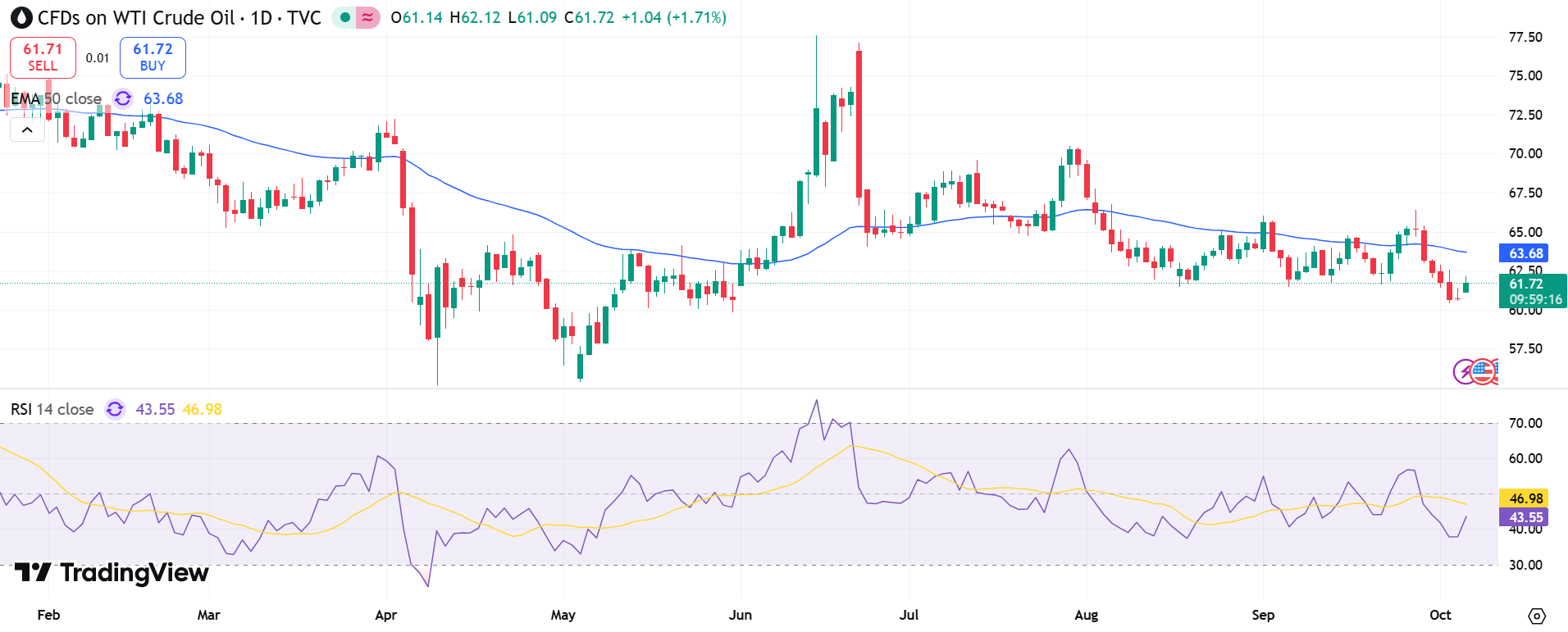
At 21:06 ET (01:06 GMT), Brent crude futures (Dec) climbed 1.4% to $65.45 per barrel, while West Texas Intermediate (WTI) rose 1.5% to $61.78 per barrel.
Both benchmarks had plunged more than 8% last week, as traders braced for a larger production boost from the oil alliance. The latest decision has temporarily steadied sentiment, though analysts warn the market remains sensitive to demand trends.
OPEC+ Surprises With Smaller Hike
At its Sunday meeting, the Organization of the Petroleum Exporting Countries and allies — known as OPEC+ — agreed to raise collective output by 137,000 barrels per day (bpd) in November, matching the prior month’s increase. That figure came in well below the 500,000 bpd hike many traders had anticipated.
The smaller adjustment was widely interpreted as an effort to prevent a supply glut and support prices amid weakening demand signals.
Key highlights from the OPEC+ update:
- November output hike: +137,000 bpd
- Cumulative 2024 supply additions: over 2.7 million bpd
- Next meeting: November 2 to reassess production strategy
“The modest hike reflects OPEC+’s awareness of the fragile demand backdrop,” said Giovanni Staunovo, commodity analyst at UBS. “The alliance is balancing market share ambitions with price stability.”
Still, analysts note that rising U.S. shale output, sluggish manufacturing activity in Europe and Asia, and a stronger U.S. dollar could continue to pressure crude markets through year-end.
Geopolitical Tensions Add to Volatility
Broader geopolitical developments also remained in focus. U.S. President Donald Trump said “very positive discussions” had taken place with Hamas, and that technical teams from both sides would meet in Egypt to advance Gaza peace talks.
Delegations from Israel and Hamas are expected to hold indirect negotiations in Sharm el-Sheikh, centered on hostages, military withdrawal, and governance frameworks. Any progress could help reduce regional risk premiums in energy markets, though uncertainty remains high.
Oil’s rebound underscores traders’ cautious optimism that OPEC+’s restrained production strategy could stabilize prices, at least in the short term. The market’s next key test will come at the November 2 meeting, where policymakers must again balance supply growth against fragile demand recovery.

