


Oil prices climbed for a third straight session Tuesday as investors reacted to a widening military conflict between the U.S., Israel and Iran. The market is focused on one key risk: disruption to supplies from the Middle East, which produces a large share of the world’s energy.
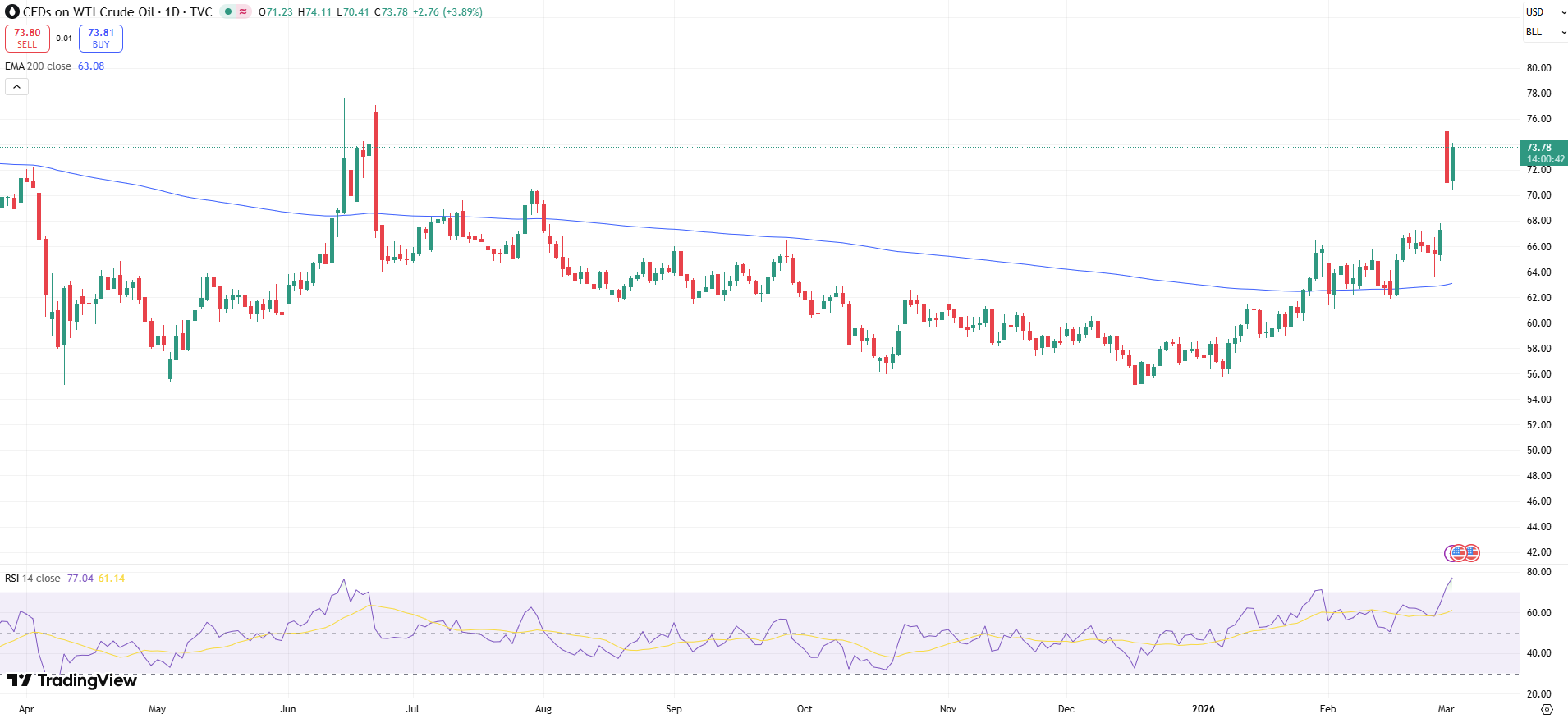
Brent crude futures rose $1.70, or 2.2%, to $79.44 a barrel by 0400 GMT. A day earlier, Brent surged as high as $82.37—its strongest level since January 2025—before settling 6.7% higher. U.S. West Texas Intermediate (WTI) gained $1.17, or 1.6%, to $72.40 a barrel after touching its highest point since June 2025 in the previous session and closing up 6.3%.
Analysts say the longer the conflict continues, the greater the upside risk for oil. Tony Sycamore of IG noted that with no quick de-escalation in sight and shipping through the Strait of Hormuz effectively halted, markets are pricing in prolonged instability.
Strait of Hormuz in Focus
The Strait of Hormuz is a narrow waterway between Iran and Oman. It carries about 20% of the world’s oil and gas supply. If ships cannot pass safely, global energy markets tighten quickly.
Iranian media reported that a senior Revolutionary Guards official declared the strait closed and warned that Iran would fire on vessels attempting to pass. Meanwhile, tankers and container ships are avoiding the route. Insurance companies have canceled coverage for ships operating there, and global oil and gas shipping rates have surged.
The conflict expanded Monday as Israel attacked Lebanon, while Iran launched strikes on energy infrastructure in Gulf states and targeted tankers in the Strait. Israeli Prime Minister Benjamin Netanyahu said the war could take “some time,” though not years.
Key developments driving markets:
- 20% of global oil and gas flows via Hormuz
- Brent: Up 2.2% to $79.44; hit $82.37 Monday
- WTI: Up 1.6% to $72.40; settled +6.3% prior session
- Shipping insurance: Coverage canceled for Hormuz routes
Fuel Prices and 2026 Outlook
Refined fuel markets are reacting sharply. Saudi Arabia shut its largest domestic refinery after a drone strike, raising concerns about fuel supply.
U.S. ultra-low-sulfur diesel futures climbed 4.2% to $3.0207 per gallon after reaching a two-year high. Gasoline futures rose 1.7% to $2.4113 per gallon following a 3.7% jump in the prior session. European gasoil futures gained 4.3% to $925 per metric ton after soaring 18% Monday.
Banks are adjusting forecasts. Bernstein raised its 2026 Brent price assumption from $65 to $80 per barrel. In an extreme scenario involving prolonged conflict and infrastructure damage, the firm sees prices potentially reaching $120 to $150.
For now, markets are weighing two questions: Will oil flows through Hormuz resume safely? And will more energy facilities be targeted? The answers will determine whether prices stabilize—or surge further.

