

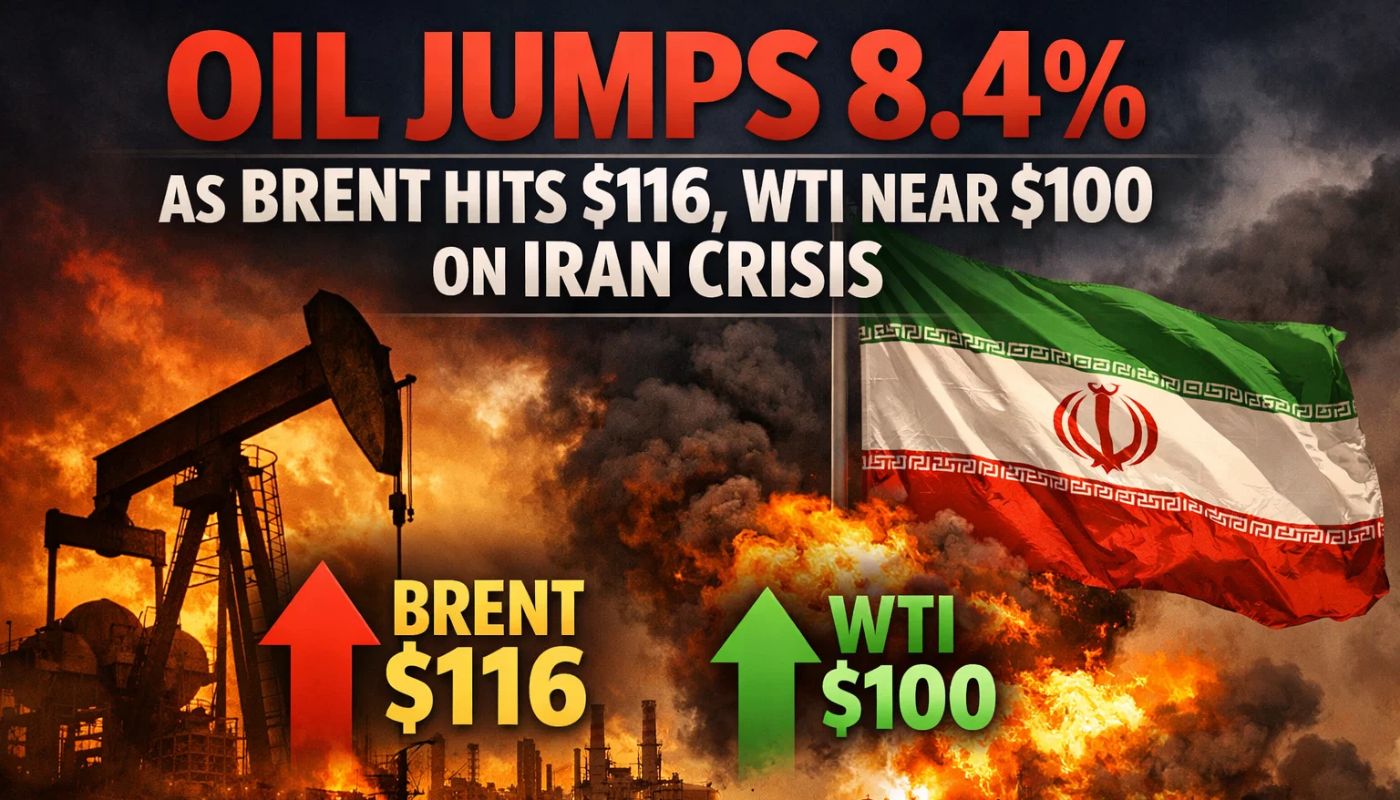
Oil prices surged sharply as tensions in the Middle East intensified, raising concerns about global supply disruptions. Brent crude futures climbed 8.4% to $116.35 per barrel, while U.S. West Texas Intermediate (WTI) rose 1.4% to $97.64, briefly touching $100.02 per barrel.
The rally reflects growing fear that the ongoing U.S.-Israel conflict with Iran could damage key energy infrastructure. Markets reacted quickly as reports highlighted expanding attacks beyond the Strait of Hormuz, one of the world’s most important oil shipping routes.
Adding to the uncertainty, reports suggested the United States may consider deploying thousands of troops to the region. This raised concerns that the conflict could escalate into a broader military operation, further threatening oil supply chains.
For simple understanding: when oil supply looks at risk, prices go up quickly because countries worry about shortages.
Attacks on Energy Sites Intensify
Oil prices extended gains after reports confirmed strikes on major energy facilities. Israel reportedly targeted Iran’s South Pars gas field, the largest natural gas field in the world.
Iran responded by attacking energy infrastructure in several Gulf countries, including Qatar, the United Arab Emirates, and Saudi Arabia. These developments have made investors nervous about how much supply could be lost if the situation worsens.
Iran had earlier warned it could strike key facilities such as Saudi Arabia’s SAMREF and Jubail complexes, the UAE’s Al Hisn gas field, and Qatar’s Ras Laffan refinery.
Key developments driving oil higher:
- Brent crude up 8.4% to $116.35/barrel
- WTI crude near $100 mark, high of $100.02
- Attacks on South Pars gas field
- Retaliation across multiple Gulf energy hubs
- Rising risk of wider regional conflict
These events show how quickly energy markets react when important supply sources are threatened.
Supply Risks Keep Oil Elevated
The biggest concern for markets is the potential for long-term supply disruption. Iran has kept the Strait of Hormuz largely restricted, slowing tanker traffic through a route that handles a significant portion of global oil shipments.
Reports also indicate the U.S. is considering military actions to secure oil transport routes and possibly control key export hubs like Kharg Island, Iran’s major oil terminal.
At the same time, global factors are adding pressure. Strong U.S. inflation data and warnings from the Federal Reserve about rising energy costs suggest interest rates may stay higher for longer. Normally, a strong dollar and high rates limit oil gains, but supply fears are currently dominating the market.
Even attempts to ease pressure—such as restarting oil flows through Turkey’s Ceyhan port and plans by major economies to release emergency reserves—have not stopped the rally.
In simple terms, oil prices are rising because:
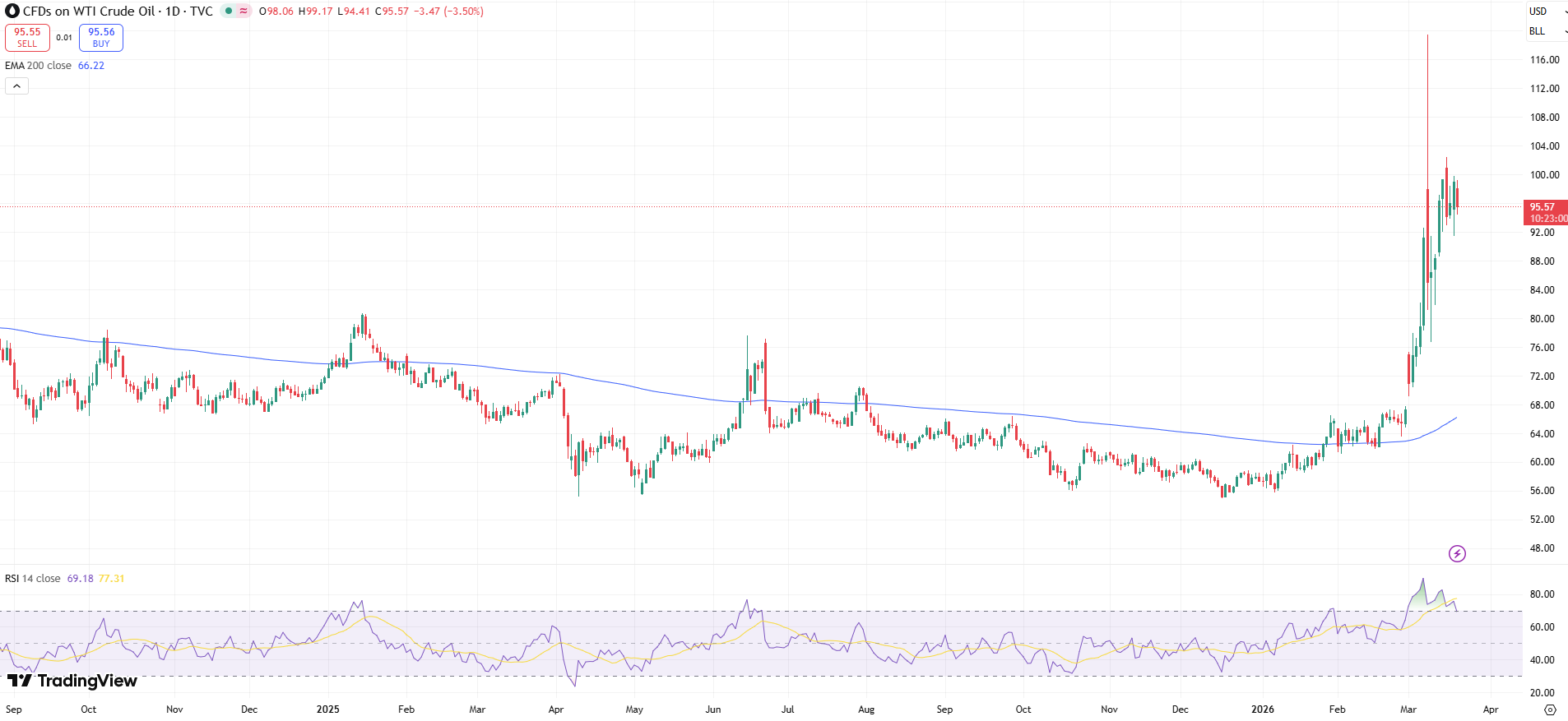
- Supply routes are under threat
- Energy facilities are being attacked
- Shipping is slowing in key regions
- Global demand remains steady
Unless tensions ease, oil prices are likely to stay high as markets brace for further disruptions.

