
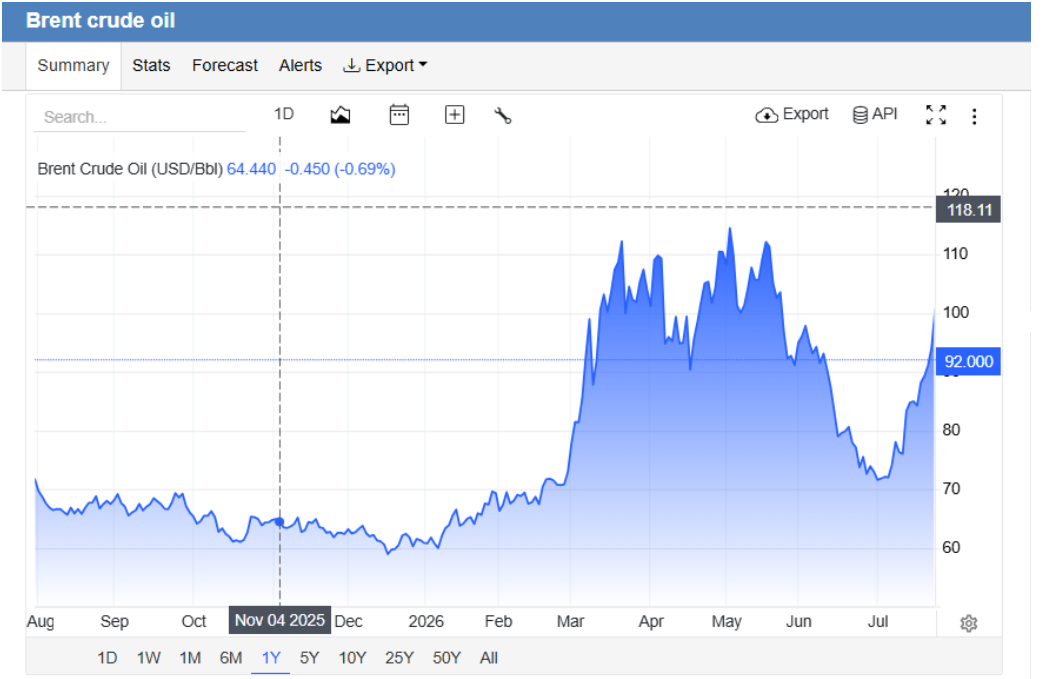
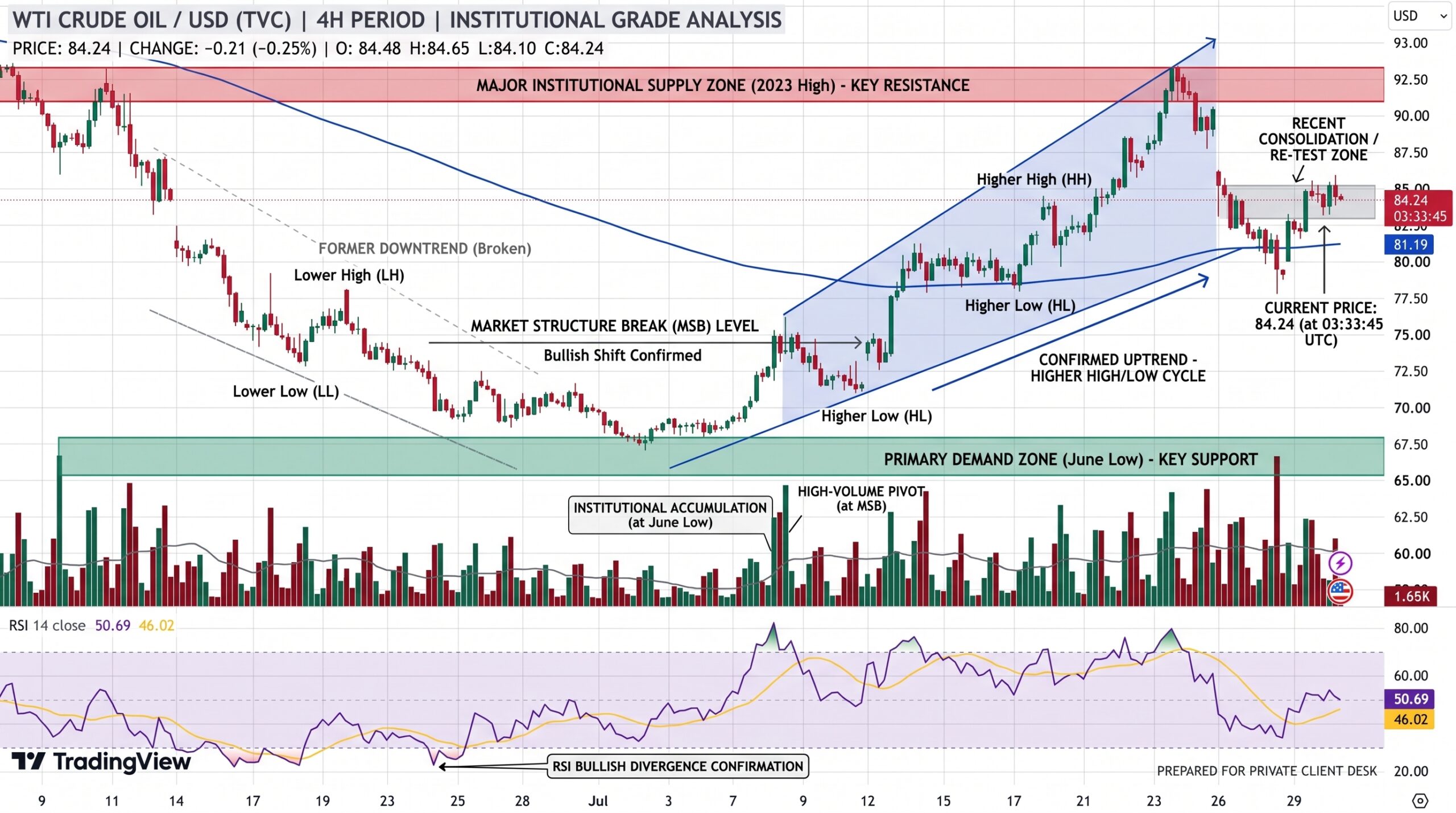
Oil prices extended sharp gains on Thursday, July 30, 2026, reversing early losses as investors weighed the impact of fresh U.S. military strikes on Iranian targets and assessed data showing a sharp drop in U.S. crude stockpiles. As of 03:05 ET (07:05 GMT), Brent crude futures expiring in September climbed 2.6% to $93.10 per barrel, while West Texas Intermediate (WTI) futures rose 1.3% to $85.57 per barrel. Brent had surged nearly 8% on Wednesday, with WTI settling 6.6% higher.
U.S. Strikes 50+ IRGC Targets as Middle East Conflict Escalates
The U.S. military said late Wednesday that it had carried out a heavy wave of strikes against dozens of Islamic Revolutionary Guard Corps (IRGC) targets across Iran. U.S. Central Command (CENTCOM) reported hits on military command centers, missile and drone facilities, coastal surveillance and defense sites, and maritime capabilities. The action followed Iran’s launch of ballistic missiles toward U.S. forces in the Middle East, including targets in Jordan; the missiles were intercepted.
U.S. President Donald Trump had told Fox News that Iran would be hit “very hard” after the missile attack. U.S. and Saudi forces also conducted retaliatory strikes against Iran-backed militias in Iraq linked to attacks on American troops and Saudi energy infrastructure.
The conflict has widened. Egyptian authorities reported drone strikes on two natural gas vessels off the country’s coast. In Yemen, Iran-aligned Houthi forces intensified attacks on commercial shipping and Saudi-linked energy assets around the Red Sea and Bab el-Mandeb Strait, seeking to enforce a naval blockade. The Bab el-Mandeb is a critical chokepoint linking the Red Sea to the Gulf of Aden and normally carries millions of barrels of crude and refined products daily. Traffic through the Strait of Hormuz remains well below normal levels amid the broader conflict.
Supporting prices further, the U.S. Energy Information Administration (EIA) reported that commercial crude inventories fell by 7.2 million barrels (approximately 7.17 million) in the week ended July 24, to 404.5 million barrels—the lowest level since 2018. This defied expectations of a roughly 700,000-barrel rise (or a more modest draw in some forecasts). Crude stocks at the Cushing, Oklahoma, delivery hub fell by about 771,000 barrels. Gasoline inventories were virtually unchanged near 211.3 million barrels despite stronger implied demand, while distillate inventories (diesel and heating oil) rose by about 1.1 million barrels.
Hormuz Handles 20% of Global Oil Trade as Supply Risks Rise
Geopolitical risk premiums returned sharply after hopes of de-escalation faded with the renewed U.S.-Iran exchanges. Disruptions to shipping through the Strait of Hormuz (historically handling about one-fifth of global oil trade) and growing threats in the Red Sea raise concerns over supply availability, higher shipping costs, and insurance premiums. The unexpectedly large U.S. inventory draw reinforced expectations of tighter near-term supplies in the world’s largest oil consumer, adding fundamental support amid elevated refinery runs and export demand linked to Middle East disruptions.
U.S. Crude Stocks Stay Below Five-Year Average Amid Iran Conflict
The current fighting is part of the broader 2026 Iran conflict that began with joint U.S.-Israeli strikes in late February (Operation Epic Fury). A fragile memorandum of understanding earlier in the summer had aimed to ease tensions and reopen the Strait of Hormuz, but repeated Iranian threats and attacks on shipping, followed by U.S. responses, led to renewed escalation in July. Houthi actions in the Red Sea further complicate alternative export routes that Gulf producers have used to bypass Hormuz constraints. U.S. commercial crude stocks had already been running well below the five-year average, and Strategic Petroleum Reserve draws have also reduced overall buffers.
What’s Next: OPEC+, U.S. Inventories, Hormuz in Focus
Markets will watch for further Iranian or proxy responses, any expansion of Houthi attacks on Red Sea shipping, and whether diplomatic channels reopen. Additional U.S. inventory data, OPEC+ production decisions, and physical flows through key chokepoints will shape near-term price direction. Heightened risk of broader supply interruptions continues to support elevated prices relative to pre-escalation levels.
Sources & Methodology
Primary-source standard: Market-moving facts should link to original data releases, regulator notices, company filings or official project announcements whenever available. Secondary reporting is used for additional context, not as a substitute for original evidence.
Page last reviewed: