
OpenAI is expanding its relationship with Samsung Electronics as it develops custom chips and increases enterprise AI adoption in South Korea. Harrison Kim, general manager of OpenAI Korea, said on September 9 that the companies have made significant progress in joint research and production work involving next-generation chips. He did not disclose technical specifications or Samsung’s exact manufacturing role. The cooperation adds another layer to OpenAI’s broader effort to secure the computing infrastructure, memory supply and custom silicon needed to support increasingly demanding AI models.
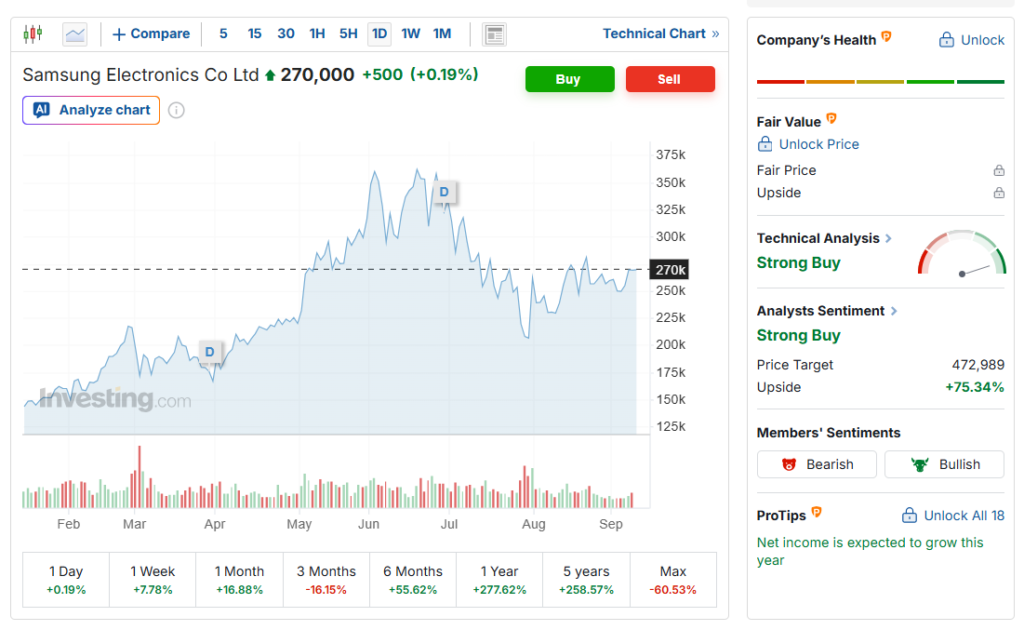
Samsung Ties Extend Into AI Chips
At a press conference in Seoul, Kim identified next-generation chip development as an area where cooperation between OpenAI and Samsung Electronics has advanced substantially. Samsung declined to confirm customer-related details, leaving important questions about manufacturing, packaging and chip architecture unanswered.
The development follows OpenAI’s move into custom AI silicon. In June, the company unveiled Jalapeño, its first custom AI inference chip, developed with Broadcom. OpenAI designed the processor for inference—the computing required when deployed AI models process prompts and generate responses—and selected TSMC to manufacture the chips.
OpenAI has since disclosed that its own AI models assisted engineers during Jalapeño’s development. The company is pursuing custom hardware as AI workloads require increasing amounts of computing capacity and as controlling more of the infrastructure stack could improve performance and costs.
Samsung’s role could extend beyond logic processors. OpenAI’s Stargate partnership with Samsung and SK includes plans to expand supplies of advanced memory chips used in AI infrastructure. Samsung Electronics and SK Hynix are targeting increased DRAM production to support OpenAI’s growing requirements.
Samsung Expands ChatGPT Deployment
The partnership is also developing on the software side. OpenAI said in June that Samsung was making ChatGPT Enterprise and Codex available to all Samsung Electronics employees in South Korea and employees worldwide in its Device eXperience division.
OpenAI described the rollout as one of its largest enterprise deployments. Samsung employees can use the tools across areas including software development, product development, manufacturing and marketing.
South Korea is becoming an increasingly important enterprise market for OpenAI. According to the company, the number of ChatGPT Enterprise users across South Korean businesses and institutions had increased roughly 28-fold year over year by the end of August, although OpenAI did not disclose the absolute number of users.
The company also said South Korea had the largest number of paying ChatGPT subscribers outside the United States as of late 2025.
That adoption could increase following the release of GPT-6 Astra on September 3. OpenAI’s latest model focuses on stronger performance across computer use, software engineering, cybersecurity, science and professional work.

Conclusion
OpenAI’s expanding relationship with Samsung now spans custom chip research, advanced memory supply and enterprise AI deployment. The semiconductor side remains the least defined: OpenAI has confirmed progress with Samsung but has not disclosed what components Samsung will produce or how the work relates to its Broadcom-designed, TSMC-manufactured Jalapeño chip.
What is clear is that OpenAI is building relationships across several layers of the AI supply chain rather than depending on a single hardware partner. Samsung’s semiconductor capabilities and large internal ChatGPT deployment make it an increasingly important part of that strategy as OpenAI scales both computing infrastructure and enterprise adoption.
Sources & Methodology
Primary-source standard: Market-moving facts should link to original data releases, regulator notices, company filings or official project announcements whenever available. Secondary reporting is used for additional context, not as a substitute for original evidence.
Page last reviewed: