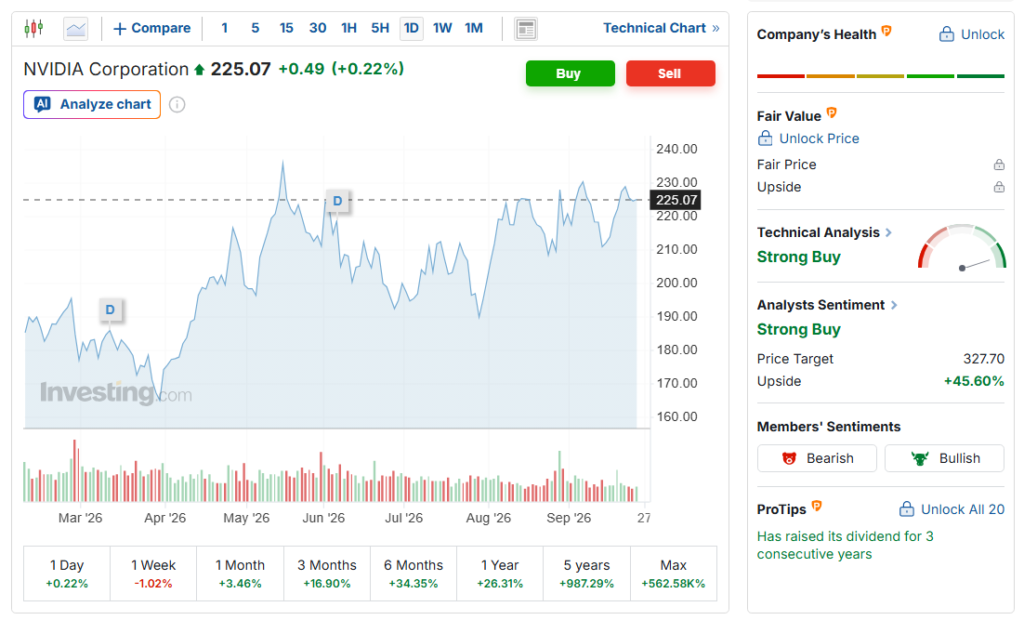
Nvidia has expanded its share-repurchase authorization by $150 billion, raising the remaining capacity of the program to $235 billion. The chipmaker announced the increase alongside a new open platform designed to improve the security of autonomous AI agents. The two decisions address separate priorities: returning capital to shareholders and limiting risks created when AI systems use software tools, access networks or act without continuous human direction. Nvidia shares rose about 1.9% following the announcements.
Buyback Authorization Reaches $235B
Nvidia said its board approved an additional $150 billion for the company’s existing share-repurchase program. The increase is the largest buyback authorization added by the company and lifts its remaining repurchase capacity to $235 billion.
The figure represents authorization, not an obligation to spend the full amount. Nvidia can purchase shares in the open market, through private transactions or under structured trading plans. The timing will depend on its stock price, operating requirements, investment opportunities and broader market conditions.
Key figures behind the program include:
- $150 billion in newly authorized repurchases
- $235 billion in total remaining capacity
- $96.2 billion in second-quarter revenue
- 106% year-over-year quarterly revenue growth
- Approximately $39 billion spent on buybacks during the first half
- A quarterly dividend of $0.25 per share
The company had approximately $99 billion remaining under its previous authorization at the end of the quarter on July 26. Since then, Nvidia has continued buying shares, which explains why the new $150 billion authorization brings the total to $235 billion rather than approximately $249 billion.
A buyback can reduce the number of outstanding shares, increasing earnings per share when profits remain unchanged. However, it creates value only if management repurchases stock at a reasonable price and retains enough capital for operations and expansion.
AI Profits Support Capital Returns
Nvidia’s ability to fund the program reflects rapid growth in sales of graphics processors and networking systems used for artificial-intelligence workloads.
Second-quarter fiscal 2027 revenue reached $96.2 billion, up 18% from the previous quarter and 106% from the same period a year earlier. Nvidia generated enough cash to finance buybacks while continuing to invest in chips, software, data-center partnerships and acquisitions.
The company recently agreed to acquire Hugging Face in a transaction valued at approximately $12.93 billion. Nvidia will pay about $11.9 billion to shareholders and provide up to $1 billion in equity incentives for employees who join the company.
Large repurchases can support a share price by creating additional demand and signaling management’s confidence in future cash generation. They do not guarantee gains, particularly when a company already carries a multitrillion-dollar valuation.
Open Platform Targets Agent Risks
Nvidia also introduced its Open Agent Safety Platform, a software and reference-design system intended to secure autonomous AI agents from testing through deployment.
One component, OpenShell, uses security capabilities built into Nvidia processors to contain agents and restrict the systems, tools and external services they can reach. The platform can inspect tool calls, monitor runtime behavior and establish controls governing access to data and software.
More than 100 companies reportedly support the initiative. Nvidia said similar controls could have prevented the AI-agent incident that affected Hugging Face before the acquisition agreement.
Conclusion
Nvidia’s $235 billion authorization demonstrates the scale of cash generated by demand for AI infrastructure, but investors should distinguish spending authority from completed purchases. The safety-platform launch addresses another part of the company’s strategy: expanding beyond chip sales into the software needed to operate autonomous systems securely. Nvidia is using its financial strength to support its shares while positioning security as a core requirement of the next phase of AI adoption.
Sources & Methodology
Primary-source standard: Market-moving facts should link to original data releases, regulator notices, company filings or official project announcements whenever available. Secondary reporting is used for additional context, not as a substitute for original evidence.
Page last reviewed: