Gold prices edged higher in Asian trading on Wednesday, rising 0.8% to $5,184.55 an ounce after slipping 1.6% a day earlier. U.S. gold futures also advanced 0.5% to $5,203.10 per ounce. The rebound followed four consecutive sessions of gains that had pushed prices toward record territory before profit-taking set in.
Investors are reacting to fresh trade tensions. The United States has begun collecting a temporary 10% global import tariff, with the Trump administration signaling plans to lift that rate to 15%. The policy shift has unsettled global markets, reviving concerns about slower trade, higher costs for businesses, and rising consumer prices.
The tariff move comes after the U.S. Supreme Court struck down earlier sweeping duties introduced under emergency powers. In response, Washington reinstated tariffs using alternative legal authority. For investors, the legal back-and-forth underscores how quickly trade policy can change—and why many are seeking safety in gold.
Gold is often described as a “safe haven” because people buy it during uncertain times. When trade rules shift or political risks increase, investors look for assets they believe will hold value. That dynamic has helped gold stay above the $5,100 level despite recent volatility.
US-Iran Talks Add Tension
Geopolitics is adding another layer of uncertainty. The United States and Iran are scheduled to hold a third round of talks in Geneva on Thursday over Tehran’s nuclear program. Any escalation—or progress—could influence oil markets, inflation expectations, and broader investor sentiment.
While diplomacy continues, markets remain cautious. Even the possibility of disruption in the Middle East can support gold prices, as traders hedge against unexpected shocks.
Key market drivers this week include:
- Spot gold: $5,184.55, up 0.8%
- U.S. gold futures: $5,203.10, up 0.5%
- Temporary U.S. tariff: 10%, potential rise to 15%
- Prior session drop: 1.6%
These figures show how closely gold is tracking political and economic headlines.
Rates and Dollar Cap Gains
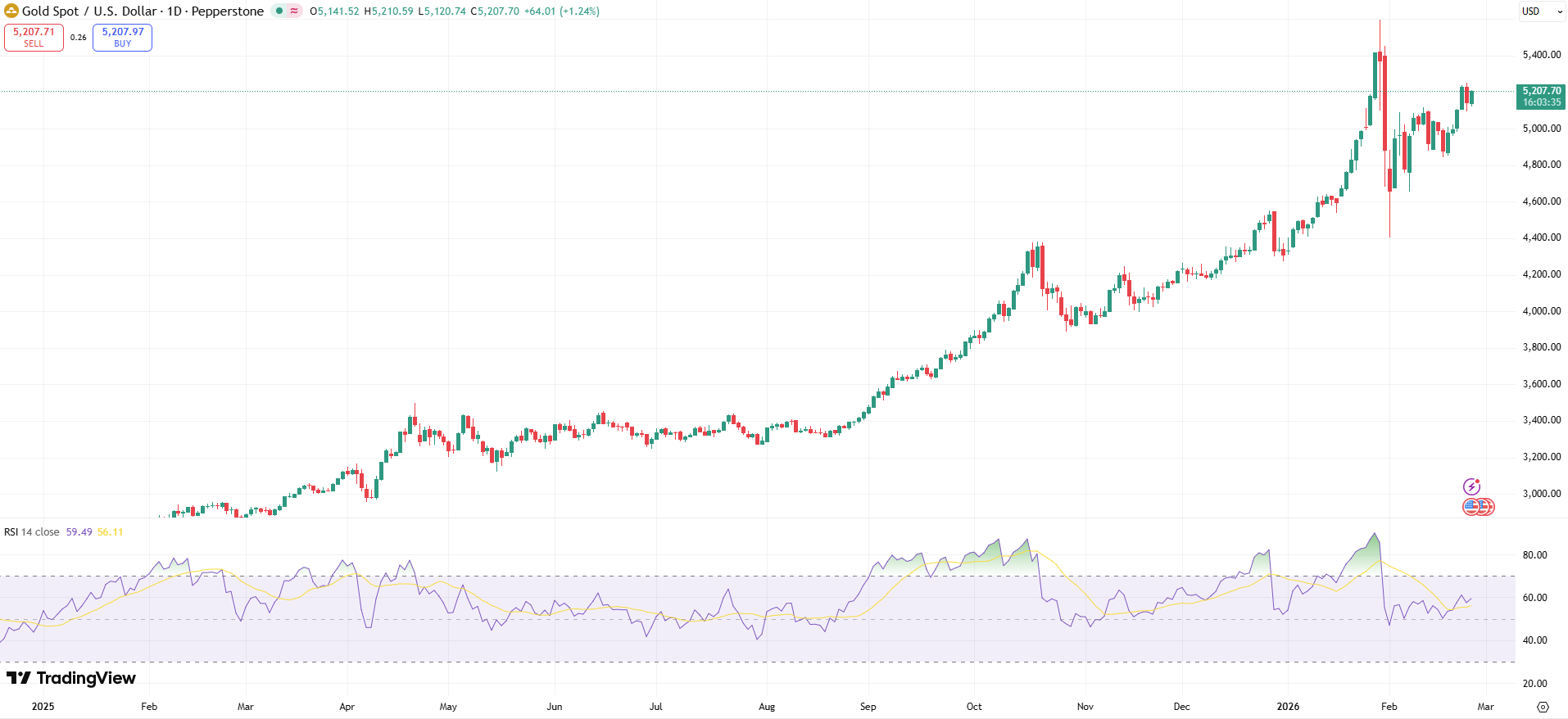
Still, gold’s advance has limits. Two Federal Reserve officials signaled Tuesday that U.S. interest rates are likely to remain elevated for longer. Higher interest rates tend to weigh on gold because the metal does not pay interest. When rates rise, investors can earn more from bonds and savings, reducing gold’s appeal.
The U.S. dollar has also strengthened, with the U.S. Dollar Index edging up 0.1% in the previous session. A stronger dollar makes gold more expensive for buyers using other currencies, which can reduce demand.
Other precious metals moved higher as well. Silver gained 1.6% to $88.59 per ounce, while platinum jumped 2.3% to $2,224.60 per ounce. Their gains suggest broader investor interest in hard assets, even as monetary policy remains tight.
For now, gold sits at the crossroads of trade policy, diplomacy, and central bank decisions. Each headline has the power to move prices—sometimes sharply—making the metal a clear barometer of global uncertainty.
Sources & Methodology
Primary-source standard: Market-moving facts should link to original data releases, regulator notices, company filings or official project announcements whenever available. Secondary reporting is used for additional context, not as a substitute for original evidence.
Page last reviewed: