
Gold prices rose for a fourth straight session on Tuesday as investors reacted to a rapidly widening conflict in the Middle East. Spot gold increased 1.1% to $5,378.55 per ounce during Asian trading, while U.S. gold futures climbed 1.5% to $5,390.06. The metal had already gained 1% in the previous session, signaling steady demand from traders seeking protection against geopolitical shocks.
Gold is often called a “safe-haven” asset. This means people buy it when they feel uncertain or afraid about global events. The latest surge follows heavy military action in West Asia over the weekend, which has unsettled financial markets worldwide.
Regional Strikes Fuel Safe-Haven Demand
The rally intensified after U.S. and Israeli forces carried out large-scale strikes on Iran, reportedly killing Supreme Leader Ayatollah Ali Khamenei and several senior commanders. Iran responded with missile attacks across the region, escalating tensions further.
The conflict has not remained contained within Iran’s borders. Israeli strikes targeted Lebanon after attacks by Hezbollah, and Kuwaiti air defenses reportedly shot down U.S. jets by mistake. U.S. President Donald Trump said military operations could continue for weeks, adding that uncertainty inside Iran’s leadership could prolong instability.
One major concern is Iran’s threat to block the Strait of Hormuz, a narrow waterway that handles a significant portion of global oil shipments. If shipping is disrupted, oil supply could tighten quickly. Oil prices have already surged on fears of shortages, raising inflation expectations and strengthening gold’s appeal as a hedge.
Key market moves include:
- Spot gold: Up 1.1% to $5,378.55
- Gold futures: Up 1.5% to $5,390.06
- U.S. Dollar Index: Up 0.2% in Asia, after a 0.8% surge
- Silver: Up 1.6% to $90.75 per ounce
- Platinum: Up 0.5% to $2,321.06 per ounce
Stronger Dollar Caps Further Gains
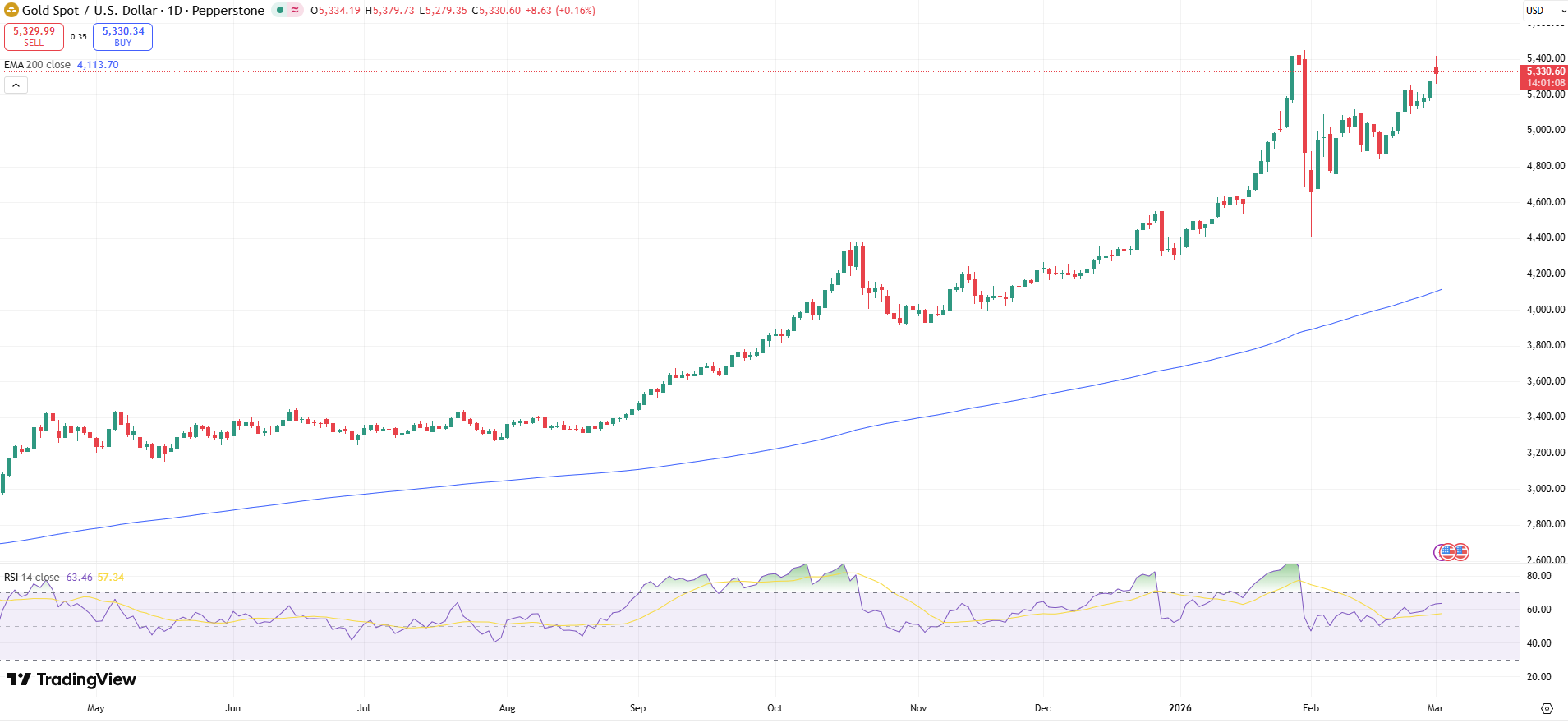
Despite rising tensions, gold’s upside has been limited by a stronger U.S. dollar. The U.S. Dollar Index gained 0.2% during Asian hours after jumping 0.8% to its highest level since late January in the previous session.
A stronger dollar makes gold more expensive for buyers using other currencies. When that happens, some investors hesitate to purchase more gold, which can slow price gains.
In simple terms, two forces are pulling gold in different directions. Fear from war pushes prices up. A stronger dollar pulls prices down. For now, fear is winning—but not by a wide margin.
Investors are watching three things closely: how long the conflict lasts, whether oil supply is disrupted, and how the dollar behaves. If tensions escalate further, gold could extend its rally. If the dollar keeps strengthening, gains may remain limited.
For global markets, the balance between conflict risk and currency strength will determine gold’s next move.
Sources & Methodology
Primary-source standard: Market-moving facts should link to original data releases, regulator notices, company filings or official project announcements whenever available. Secondary reporting is used for additional context, not as a substitute for original evidence.
Page last reviewed: