Gold prices remained mostly steady in Asian trading on Friday after a sharp decline in the previous session. The precious metal struggled to recover because the U.S. dollar stayed strong and U.S. Treasury yields continued to rise. These two factors made gold less attractive to investors, even though geopolitical tensions in the Middle East increased demand for safe-haven assets.
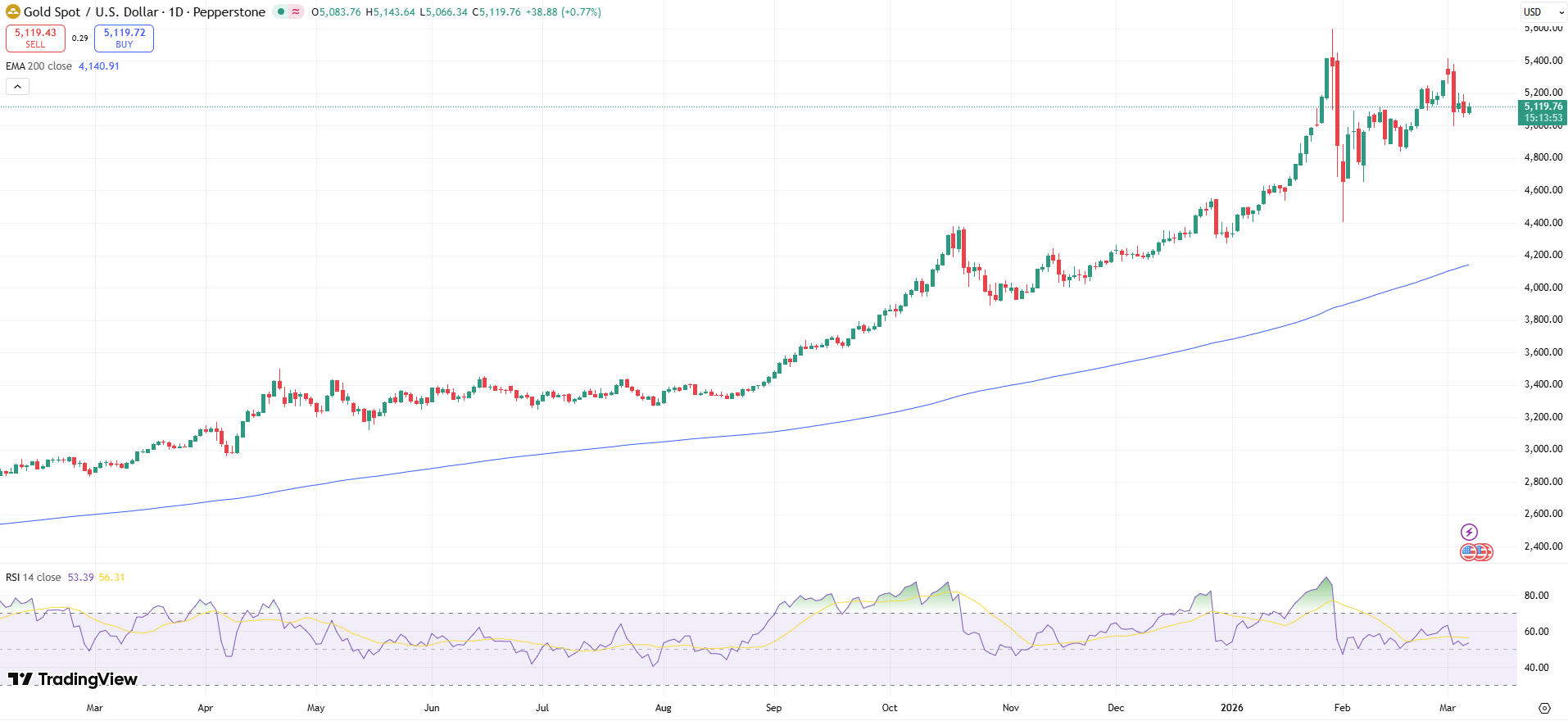
Spot gold traded nearly unchanged at $5,080.37 per ounce by 20:25 ET (01:25 GMT). Meanwhile, U.S. gold futures rose slightly by 0.3% to $5,091.04. Despite this small rebound, the yellow metal remains under heavy pressure for the week.
Gold dropped 1% in the previous trading session and is now on track to record a weekly loss of almost 4%. The decline reflects growing confidence in the U.S. dollar and shifting expectations about interest rates. When the dollar rises, gold often becomes more expensive for international buyers, which can reduce demand.
Another factor hurting gold prices is the reduced expectation of interest rate cuts. Investors increasingly believe that central banks may keep interest rates higher for longer. Since gold does not pay interest, higher rates make other investments like bonds more appealing.
Middle East Conflict Adds Uncertainty
The ongoing conflict in the Middle East has now entered its seventh day, with no clear signs of slowing down. Military tensions between the United States, Israel, and Iran have intensified through missile strikes and retaliatory attacks across the region.
This growing conflict has raised serious concerns about disruptions to global energy supplies, especially in the Gulf region where many important oil shipping routes are located. Political uncertainty also increased after U.S. President Donald Trump stated that he wanted a role in deciding Iran’s leadership once the war ends.
Oil prices reacted strongly to these developments and continued climbing overnight. Rising oil prices often increase global inflation risks because energy costs affect transportation, manufacturing, and everyday goods.
Higher inflation can make central banks cautious about cutting interest rates too quickly. As a result, investors are closely watching economic data to understand the future direction of monetary policy.
Key Data and Precious Metals Outlook
Market attention is now focused on the upcoming U.S. February Nonfarm Payrolls report, which will provide important clues about the strength of the labor market. If job growth comes in stronger than expected, it could further support the U.S. dollar and reduce the chances of near-term rate cuts.
Gold typically performs well during geopolitical crises or when interest rates fall. However, this week the stronger dollar and rising bond yields have limited gold’s gains despite global uncertainty.
Other precious metals also moved slightly higher:
- Silver increased 0.5% to $82.68 per ounce
- Platinum gained 0.7% to $2,134.76 per ounce
- Gold weekly decline: nearly 4%
- Previous session drop: about 1%
Investors now face a complex market environment. Geopolitical tensions are increasing demand for safe assets, but strong economic data and higher interest rates are strengthening the dollar. This push-and-pull dynamic is likely to keep gold prices volatile in the coming days.
Sources & Methodology
Primary-source standard: Market-moving facts should link to original data releases, regulator notices, company filings or official project announcements whenever available. Secondary reporting is used for additional context, not as a substitute for original evidence.
Page last reviewed: