Gold nears $4,400 as Hormuz tensions lift oil and investors await U.S. CPI data. Fed rate expectations, China demand and key resistance levels shape gold’s outlook.
Gold climbed toward $4,400 an ounce on Wednesday as uncertainty surrounding the reopening of the Strait of Hormuz lifted oil prices and kept investors focused on the Federal Reserve’s interest-rate outlook. The combination of geopolitical risk, energy-market volatility and upcoming U.S. inflation data has increased the potential for sharp moves in bullion.
At 22:12 ET (02:12 GMT), spot gold (XAU/USD) gained 0.7% to $4,398.92 an ounce, while gold futures rose 0.4% to $4,458.62. Silver (XAG/USD) advanced 0.6% to $65.07, and platinum (XPT/USD) added 0.5% to $1,750.91.
Hormuz Risk Keeps Gold Supported
Gold remained close to a two-month high as markets assessed conflicting signals over efforts to reopen the Strait of Hormuz, a critical route for global energy shipments. Pakistan’s defense minister said Washington and Tehran were nearing an agreement, while reports pointed to continued diplomatic discussions involving Oman and Iran.
Iran has maintained that the waterway will remain closed until its demands are addressed, including the lifting of restrictions on Iranian ports and compensation for damage linked to U.S. military strikes. The uncertainty has kept oil markets volatile and created an important inflation risk for investors. Higher energy costs can push consumer prices higher, potentially giving the Federal Reserve less room to reduce interest rates.
For gold, that creates a complicated backdrop. Higher rates generally increase the opportunity cost of holding bullion because gold does not generate interest income.
- Spot gold: $4,398.92, up 0.7%
- Gold futures: $4,458.62, up 0.4%
- Silver: $65.07, up 0.6%
CPI Becomes the Next Market Catalyst
The next major test for gold comes from U.S. inflation data. Investors are awaiting Wednesday’s Consumer Price Index, followed by the Producer Price Index on Thursday. A softer CPI reading could strengthen expectations for easier Federal Reserve policy, while stronger inflation could revive concerns about prolonged restrictive rates.
Markets have remained cautious ahead of the release, with swaps indicating roughly a 50-50 probability of a quarter-point Federal Reserve rate hike in September. That uncertainty has limited aggressive positioning and increased the potential for a strong reaction when the inflation figures arrive.
China Demand Supports Longer-Term Outlook
Central-bank demand is providing another source of support for gold. The People’s Bank of China increased its gold reserves for a 21st consecutive month in July, adding roughly 640,000 troy ounces and taking total holdings to 76.08 million ounces. Chinese gold-backed exchange-traded funds have also continued attracting buyers, highlighting persistent institutional interest in the metal.
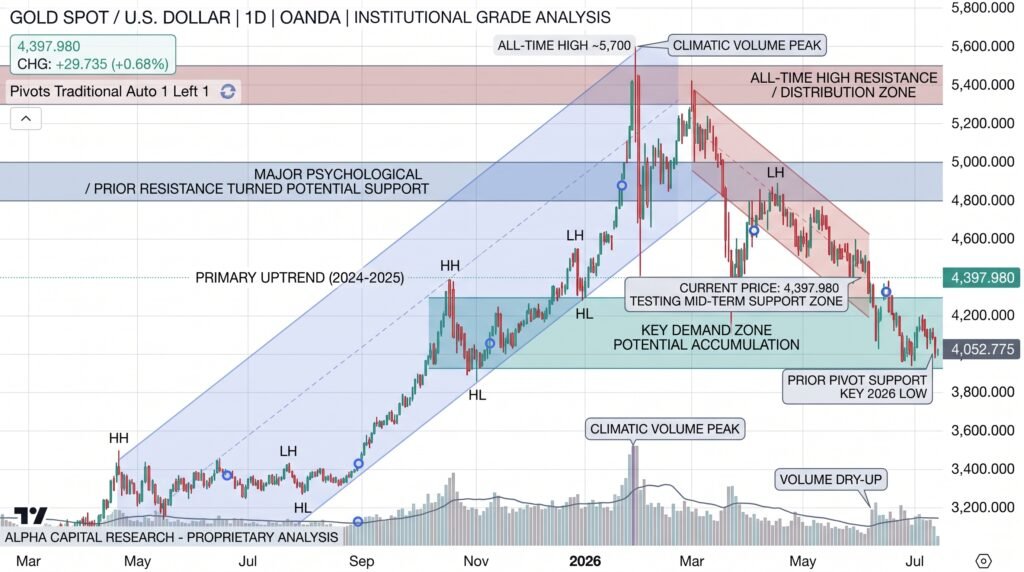
IG senior market analyst Tony Sycamore said gold’s retreat from $4,435 appeared linked to profit-taking, hawkish Federal Reserve commentary and stronger energy prices. He identified resistance near $4,460, followed by the 200-day moving average around $4,495.
A sustained move above both levels could strengthen the bullish outlook and potentially put $5,000 back in focus. Until then, gold traders are likely to watch CPI, oil prices and developments around Hormuz for the next major directional signal.
Sources & Methodology
Primary-source standard: Market-moving facts should link to original data releases, regulator notices, company filings or official project announcements whenever available. Secondary reporting is used for additional context, not as a substitute for original evidence.
Page last reviewed: