
The EUR/USD pair remained under pressure near 1.1165 on Tuesday as concerns about France’s public finances weighed on the euro ahead of major central bank decisions. Investors are preparing for the Federal Reserve announcement on October 28 and the European Central Bank (ECB) decision on October 29. Both institutions are widely expected to keep rates unchanged this month, leaving traders focused on policymakers’ guidance and the outlook for inflation. Recent market reporting also points to weak eurozone growth, elevated energy prices and renewed French bond-market stress as factors limiting demand for the single currency.
French Fiscal Risks Weigh on Euro
France’s budget uncertainty has increased investor concern about the eurozone’s fiscal stability. Rising borrowing costs on French government debt relative to German Bunds can signal a higher perceived risk premium, putting additional pressure on the euro. Analysts at ING have highlighted French budget tensions and the comparatively firm US growth outlook as risks for EUR/USD.
The Fed is expected to maintain its federal funds target range at 3.75%–4.00% at its October meeting. A Reuters poll published on October 20 found that 94 of 100 economists expected a hold, while all 100 anticipated a December rate increase. These are survey expectations, not a guaranteed policy outcome.
The ECB is also expected to hold rates this week. However, if inflation remains persistent, markets may continue assessing the possibility of a later increase. The direction of EUR/USD will depend partly on how the two central banks’ guidance changes the expected interest-rate gap between the United States and the eurozone.
Investors should also monitor crude oil prices. Higher energy costs can weigh on Europe’s growth outlook while complicating the inflation outlook on both sides of the Atlantic. The US economic calendar and ECB monetary policy updates offer useful reference points for the coming sessions.
EUR/USD Technical Levels to Watch
On the daily chart, the supplied technical setup maintains a bearish near-term bias, with EUR/USD trading below the 100-day Simple Moving Average (SMA) and the middle line of the Bollinger Bands. The Relative Strength Index (RSI) stands at 33.6, close to the conventional oversold threshold of 30. This indicates persistent selling pressure, although it does not by itself confirm that a rebound is imminent.
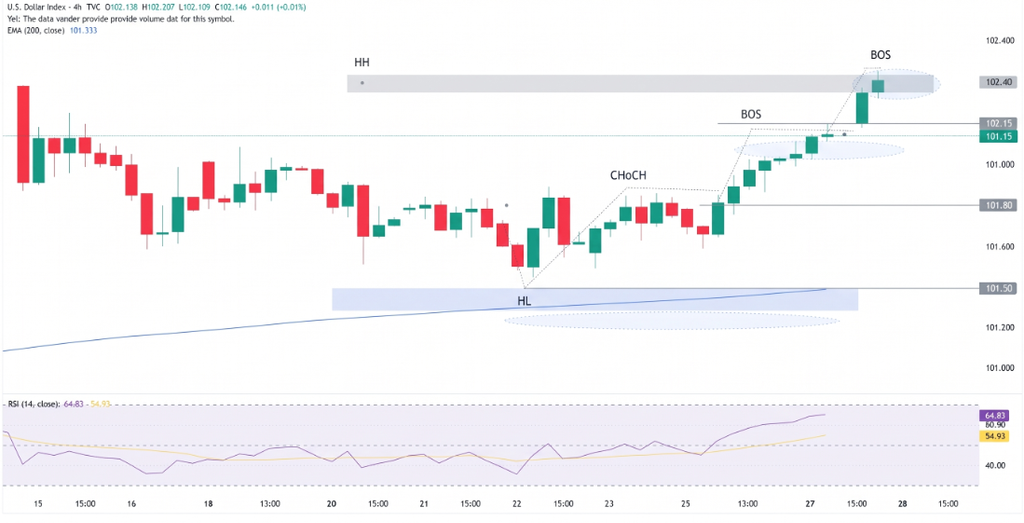
Key levels in the supplied chart analysis include:
- Immediate support: 1.1140, near the lower Bollinger Band.
- Psychological support: 1.1100.
- Deeper downside level: 1.0951, the cited May 12, 2025 low.
- Initial resistance: 1.1215, near the Bollinger middle band.
- Further resistance: 1.1295, near the upper band.
- Longer-term resistance: 1.1445, near the 100-day SMA.
A sustained break below 1.1140 would expose 1.1100, followed by 1.0951. Conversely, a move above 1.1215 could allow a recovery toward 1.1295, although the broader bearish structure would remain a concern below the 100-day SMA.
Conclusion
EUR/USD faces competing monetary-policy signals, French fiscal uncertainty and elevated energy costs. The pair’s technical outlook remains bearish while it trades below key moving-average resistance. A break under 1.1140 could extend losses, while a sustained recovery above 1.1215 would ease immediate selling pressure. Traders will watch the Fed and ECB decisions for fresh direction, with subsequent price action likely to depend on whether policy guidance strengthens the dollar or offers relief to the euro.
Sources & Methodology
Primary-source standard: Market-moving facts should link to original data releases, regulator notices, company filings or official project announcements whenever available. Secondary reporting is used for additional context, not as a substitute for original evidence.
Page last reviewed: