Gold prices edged higher on Wednesday, recovering above $4,040 an ounce after a steep decline in the previous session. The modest rebound came as investors assessed the impact of stronger-than-expected US inflation and increasingly hawkish Federal Reserve commentary. Although buying helped bullion recover some ground, expectations of higher borrowing costs continued to weigh on the metal. Markets are now pricing in a December rate increase, while debate over a potentially larger move has added uncertainty to the outlook for precious metals.
Gold Recovers After 2.6% Selloff
Spot gold rose 0.22% to $4,041.67 an ounce, while US gold futures advanced 0.48% to $4,049.52 in the reported trading session. The recovery followed a decline of approximately 2.6% in the previous session, as investors reacted to the latest US inflation figures.
Other precious metals also moved higher. Spot silver gained 1.6% to $52.3730 an ounce, while spot platinum climbed 1.7% to $1,566.42. Spot palladium advanced 1.7% to $1,044.25, and palladium futures added 1.5% to $1,039.25.
The US Dollar Index edged up 0.02% to 102.27, reflecting continued demand for the greenback as markets reassessed the Federal Reserve‘s policy outlook.
The October Consumer Price Index (CPI) increased 0.4% month over month, following a 0.6% rise in September. The result exceeded economists’ 0.3% forecast. Core CPI , which excludes food and energy, increased 0.3%, also above the 0.2% expectation.
These figures indicate that inflationary pressures remain persistent, complicating the Fed’s efforts to bring price growth back toward its 2% target.
Fed Rate Bets Keep Bullion Under Pressure
The inflation report strengthened expectations for another interest-rate increase in December. Markets moved to fully price in at least a 25-basis-point rate hike, while investors also considered the possibility of a larger adjustment.
Higher interest rates generally create an unfavorable environment for gold because the metal does not pay interest or dividends. When yields on cash and government bonds rise, investors have a greater incentive to hold interest-bearing assets instead of bullion. A stronger dollar can also make gold more expensive for buyers using other currencies.
Federal Reserve officials have reinforced the hawkish outlook. Dallas Fed President Lorie Logan said policymakers need at least two additional quarter-percentage-point increases and suggested that tightening could proceed more quickly during the winter.
Fed Governor Christopher Waller also indicated support for a December increase. He said a 50-basis-point move should be considered if core inflation remains around 0.3% or higher, highlighting the risk of a more aggressive response to persistent price pressures.
Dollar Strength and Yields Shape Outlook
The combination of rising US Treasury yields and a firm dollar remains a major obstacle for gold. Investors are closely monitoring whether inflation begins to moderate enough to reduce pressure on the Federal Reserve.
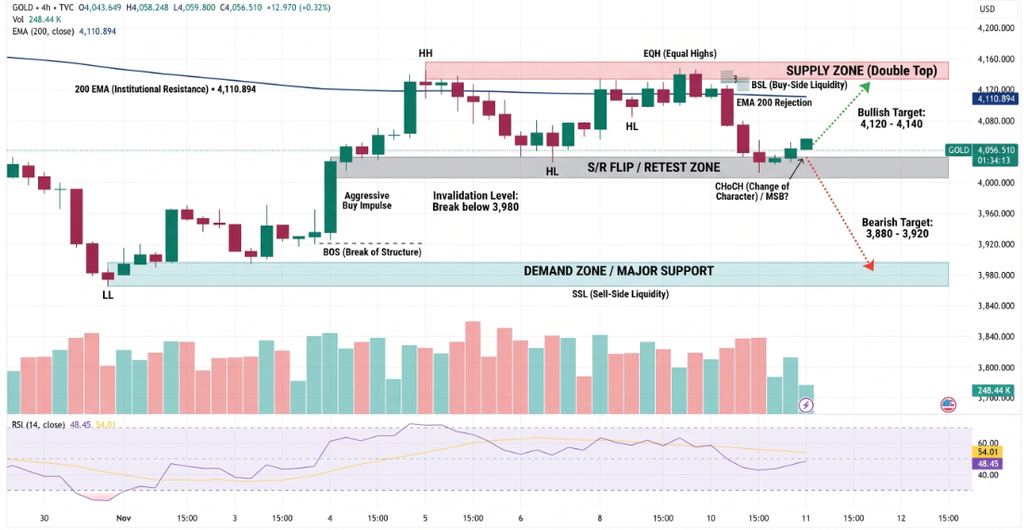
Key developments influencing bullion include:
- October headline CPI: Increased 0.4% monthly, above the 0.3% forecast.
- Core CPI: Rose 0.3%, exceeding expectations of 0.2%.
- December policy outlook: Markets fully price in a 25-basis-point rate increase.
- Fed commentary: Logan sees at least two further quarter-point increases, while Waller has raised the possibility of a 50-basis-point move under certain inflation conditions.
Conclusion
Gold’s recovery above $4,040 reflects some buying after the previous session’s sharp decline, but the broader outlook remains challenged by persistent US inflation and expectations of tighter monetary policy. Further gains may prove difficult if Treasury yields and the dollar continue rising. Conversely, signs of easing inflation or a retreat in rate expectations could help bullion regain momentum. The December Fed meeting and incoming US economic data are likely to remain central to gold’s near-term direction.
Sources & Methodology
Primary-source standard: Market-moving facts should link to original data releases, regulator notices, company filings or official project announcements whenever available. Secondary reporting is used for additional context, not as a substitute for original evidence.
Page last reviewed: