
Bitcoin fell 2.4% to $81,291.40 on Thursday, extending losses after hotter-than-expected US inflation strengthened expectations of another Federal Reserve interest-rate increase this year. The decline pushed the largest cryptocurrency close to its weakest level since September 20, while major altcoins also retreated. Investors reduced exposure to risk-sensitive assets as rising inflation threatened to keep borrowing costs elevated. Outflows from spot Bitcoin exchange-traded funds and nearly $1 billion in cryptocurrency liquidations added to the selling pressure, highlighting fragile market sentiment.
US Inflation Raises Bitcoin Rate Risks
The September Consumer Price Index (CPI) report showed US consumer prices rising 0.6% month over month and 3.7% year over year, accelerating from 3.4% annual inflation in August. Core CPI, which excludes food and energy, increased 2.6% annually and 0.3% monthly. Gasoline prices jumped 9.1% in September, accounting for more than half of the monthly increase in headline inflation.
The figures complicated the outlook for the Federal Reserve, which must weigh persistent price pressures against economic growth. According to the market data cited in the supplied report, traders assigned roughly a 70% probability to another 25-basis-point rate increase in December, while expectations for an October hold remained intact.
Higher interest rates can weigh on Bitcoin because they make interest-bearing assets more attractive relative to speculative investments. The inflation surprise also triggered selling in global technology and artificial-intelligence stocks, spreading risk aversion across financial markets.
Demand for investment products weakened as well. Data from SoSoValue showed $261.5 million in net outflows from spot Bitcoin ETFs on Wednesday. Meanwhile, CoinGlass data cited in the report indicated that approximately $966.2 million in cryptocurrency positions were liquidated over 24 hours, with long positions accounting for most of the total.
Bitcoin Falls as Altcoins Extend Losses
The broader cryptocurrency market followed Bitcoin lower on Thursday. Ether, the second-largest cryptocurrency, dropped 5.1% to $2,370.53 in the supplied report, while XRP declined 3.6%. Solana fell 3.4%, Cardano lost more than 5%, and BNB declined 2.6%.
Meme coins also weakened, with Dogecoin falling 5% and $TRUMP losing 4.1%. These declines show how quickly selling pressure can spread across digital assets when investors become less willing to take risk.
For traders, the key question is whether Bitcoin can stabilise near the $81,000 area or whether further liquidations will intensify the downturn. ETF flows and expectations for Federal Reserve policy may offer important clues about demand.
Bitcoin Price Forecast: What Comes Next?
Bitcoin’s immediate outlook remains vulnerable while inflation concerns and risk aversion dominate trading. A sustained recovery would require renewed buying interest, while additional ETF outflows could signal continued caution among institutional investors.
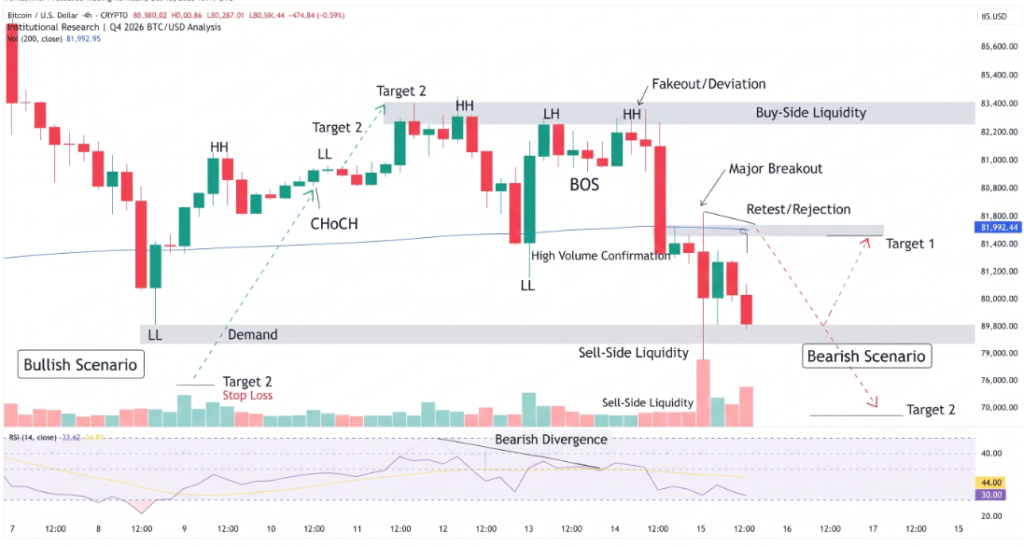
Key factors to monitor include:
- Price: Bitcoin traded at $81,291.40, down 2.4% at 05:31 ET.
- ETF flows: Wednesday’s $261.5 million net outflow indicates weaker demand for spot Bitcoin funds.
- Liquidations: Nearly $966.2 million in crypto positions were liquidated over 24 hours, amplifying volatility.
Conclusion:
Bitcoin’s slide toward $81,000 reflects a combination of persistent US inflation, higher rate expectations and weakening risk appetite. If selling continues, the market could test fresh short-term lows. A sustained recovery will likely depend on stabilising ETF flows and whether upcoming economic data changes expectations for Federal Reserve policy.
Sources & Methodology
Primary-source standard: Market-moving facts should link to original data releases, regulator notices, company filings or official project announcements whenever available. Secondary reporting is used for additional context, not as a substitute for original evidence.
Page last reviewed: