
Gold prices held near $4,160 early Wednesday as recovering Middle East oil flows and declining Treasury yields reduced pressure on the Federal Reserve to raise interest rates this month. Spot gold had gained 0.6% in the previous session, but the metal remained below several key moving averages as a stronger dollar limited upside.
At 20:46 ET (00:46 GMT), XAU/USD fell 0.1% to $4,160.49 an ounce, while gold futures rose 0.03% to $4,188.22. Silver was little changed at $61.36, platinum slipped 0.2% to $1,708.06 and the U.S. Dollar Index gained 0.1% to 101.95.
Middle East Oil Flows Reduce Pressure
Oil supply conditions have improved despite continued disruption around the Strait of Hormuz. Bloomberg reported that Middle East oil flows had recovered to about 80% of pre-conflict levels, while Kpler data showed regional crude exports reached or exceeded pre-war levels on several days in late September.
The recovery has helped reduce fears of a prolonged supply shortage and moderated some of the inflation concerns that could force central banks to maintain tighter policy.
However, the improvement remains fragile. Tanker attacks have increased, with shipping data showing heightened risks for vessels crossing Hormuz. The waterway normally handles a significant share of global oil and gas trade, making renewed disruptions a major risk for energy prices and inflation.
Key market developments include:
- Middle East oil exports recently reached pre-war levels on several days.
- Treasury yields retreated after reaching multi-decade highs.
- The dollar remained elevated near 101.95.
Fed Hike Bets Fall as Yields Ease
Lower Treasury yields have provided some support for gold because bullion does not pay interest. When bond yields rise, investors face a greater opportunity cost for holding gold; when yields decline, that disadvantage becomes smaller.
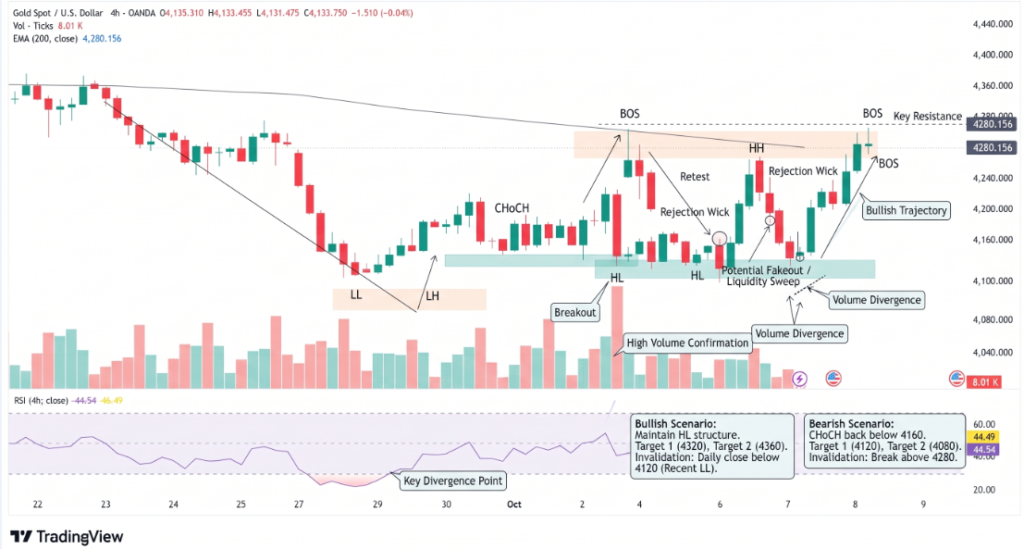
GOLD Price Chart – Source: Tradingview
Markets have also sharply reduced expectations for an October rate increase. The latest pricing points to roughly an 18% probability of a hike this month, down from about 70% previously, according to recent market data.
The Federal Reserve’s September meeting minutes are due Wednesday and could provide additional details on policymakers’ views about inflation, employment and future rate increases. The central bank’s calendar confirms the minutes are scheduled for October 7, with the next FOMC meeting set for October 27-28.
Gold nevertheless faces a difficult technical backdrop. Spot prices remain below several closely watched averages, while the metal has fallen more than 20% since the U.S.-Iran conflict began in late February.
Conclusion:
Gold’s near-term direction will depend heavily on the Fed minutes, Treasury yields, the dollar and developments around Hormuz. Softer yields and reduced October hike expectations can support bullion, but persistent geopolitical risks and elevated energy prices could revive inflation concerns. With gold near $4,160 and below key technical averages, traders have limited evidence of a sustained recovery. The Fed’s policy signal and the durability of Middle East oil flows are likely to determine whether gold stabilizes or resumes its broader decline.
Sources & Methodology
Primary-source standard: Market-moving facts should link to original data releases, regulator notices, company filings or official project announcements whenever available. Secondary reporting is used for additional context, not as a substitute for original evidence.
Page last reviewed: