
Gold prices remained close to $4,140 as investors balanced weaker expectations for another Federal Reserve rate increase against renewed pressure from the U.S. dollar and elevated Treasury yields.
At 20:44 ET, XAU/USD was down 0.1% at $4,138.09 an ounce, while Gold Futures gained 0.2% to $4,165.15. Silver slipped 0.1% to $60.998, while platinum fell 0.2% to $1,721.37. The U.S. Dollar Index was little changed at 102.17.
The immediate backdrop remains challenging for bullion. A stronger dollar raises the cost of gold for buyers using other currencies, while higher bond yields increase the opportunity cost of holding a non-interest-bearing asset.
Dollar and Yields Keep Pressure High
European fiscal concerns have added another layer of support for the dollar. The euro recently fell to a 17-month low as investors focused on France’s fiscal position and rising borrowing costs.
The pressure is not limited to Europe. U.S. Treasury yields have also climbed sharply, with the 10-year yield reaching levels not seen since the early 2000s. That move has strengthened the case for higher-for-longer interest rates and limited gold’s recovery.
At the same time, inflation signals remain important. The September ISM Services PMI showed activity remained in expansion at 54.9, while its prices-paid index rose to 74, the highest level since July 2022.
Key market signals include:
- Gold fell more than 6% in September.
- October Fed hike odds have dropped to about 22%.
- Markets still assign a high probability to a December hike.
- September payroll growth was only 29,000.
Weak Jobs Data Changes Fed Expectations
The sharp deterioration in U.S. employment data has changed the near-term rate outlook. Nonfarm payrolls increased by just 29,000 in September, while unemployment rose to 4.2%, giving investors less reason to expect an immediate October rate increase.
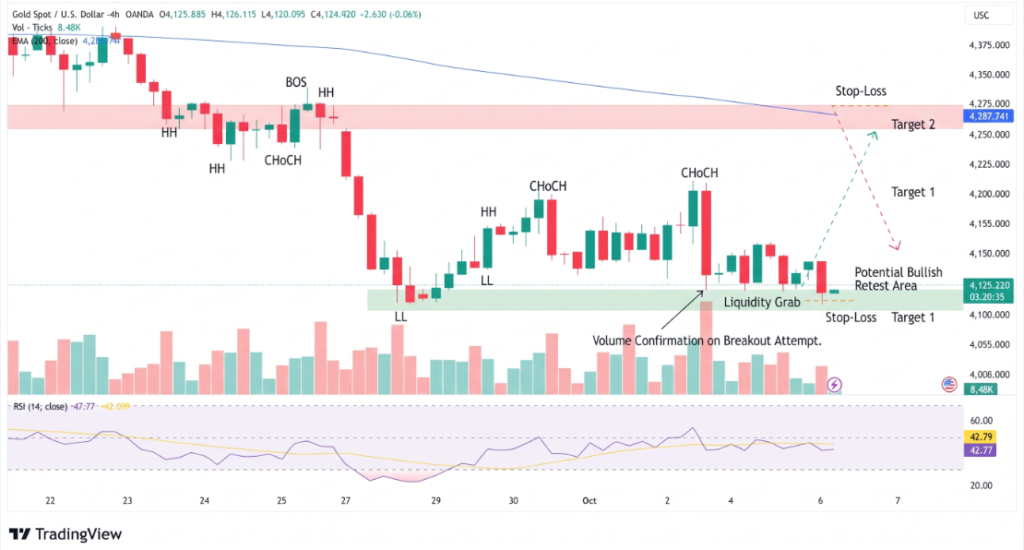
That shift has provided some support for gold after its steep September decline. Futures markets had priced roughly a 70% probability of an October hike a week before the employment report, but that probability has since fallen to around 22%.
The next major catalyst is the Federal Reserve meeting minutes, due Wednesday. Investors will examine the discussion for evidence of how policymakers are weighing weaker employment against persistent inflation and elevated financial conditions.
Conclusion
Gold’s recovery remains constrained near $4,140 because falling October rate-hike expectations are competing with a stronger dollar and unusually high Treasury yields. The balance could shift if the Fed minutes signal less willingness to tighten policy or if bond yields retreat. For now, gold remains caught between softer labor-market data and persistent inflation pressure, leaving the next decisive move dependent on the dollar, yields and the Fed’s policy guidance.
Sources & Methodology
Primary-source standard: Market-moving facts should link to original data releases, regulator notices, company filings or official project announcements whenever available. Secondary reporting is used for additional context, not as a substitute for original evidence.
Page last reviewed: