Gold prices recovered modestly on Tuesday after suffering their steepest one-day decline in months, but bullion remained close to a seven-week low as higher oil prices and rising U.S. Treasury yields strengthened expectations for another Federal Reserve rate increase. Spot gold rose 0.4% to $4,131.10 an ounce, while gold futures slipped 0.2% to $4,162.32. The move followed Monday’s roughly 4% drop, when spot gold touched $4,110.55.
Hormuz Tensions Lift Oil and Yields
The latest pressure on bullion is coming from energy markets rather than a reduction in geopolitical risk. The standoff between the U.S. and Iran has kept uncertainty around the Strait of Hormuz elevated, pushing oil prices higher and increasing concerns that prolonged energy disruptions could keep inflation above the Federal Reserve’s comfort zone.
Brent crude rose sharply Monday after President Donald Trump rejected an Iranian proposal linked to reopening the strategic waterway. The move added to concerns about energy supplies and pushed the U.S. 10-year Treasury yield to its highest level since 2007.
Higher yields generally increase the opportunity cost of holding gold because bullion does not pay interest. A stronger U.S. dollar can also weigh on demand because gold becomes more expensive for buyers using other currencies.
At 00:13 ET, the Dollar Index was up 0.1% at 101.27, while silver fell 0.3% to $60.45 and platinum declined 1% to $1,700.17.
Gold Down 7% in September
Gold has lost about 7% this month, reversing part of its earlier advance toward $4,510. Monday’s decline pushed spot prices to their lowest level since early August, while futures settled at $4,168.40.
The selloff has coincided with a sharp repricing of Federal Reserve policy. The Fed raised its benchmark rate by 25 basis points earlier this month to 3.75%-4.00%, its first increase since 2023, and markets are now pricing a substantial probability of another hike in October.
Several factors are reinforcing that view:
- Higher oil prices are increasing inflation risks.
- Treasury yields have climbed to multi-year highs.
- The dollar has strengthened as rate expectations rise.
- Gold remains exposed to higher real and nominal borrowing costs.
Cleveland Fed President Beth Hammack has pointed to stronger growth, government-debt concerns and expectations for additional rate increases as factors behind higher long-term yields.
PCE Inflation and Jobs Data Ahead
Attention now shifts to U.S. economic data that could influence the next Federal Reserve decision. The Personal Consumption Expenditures price index, the Fed’s preferred inflation gauge, is due Wednesday, followed by the September nonfarm payrolls report on Friday.
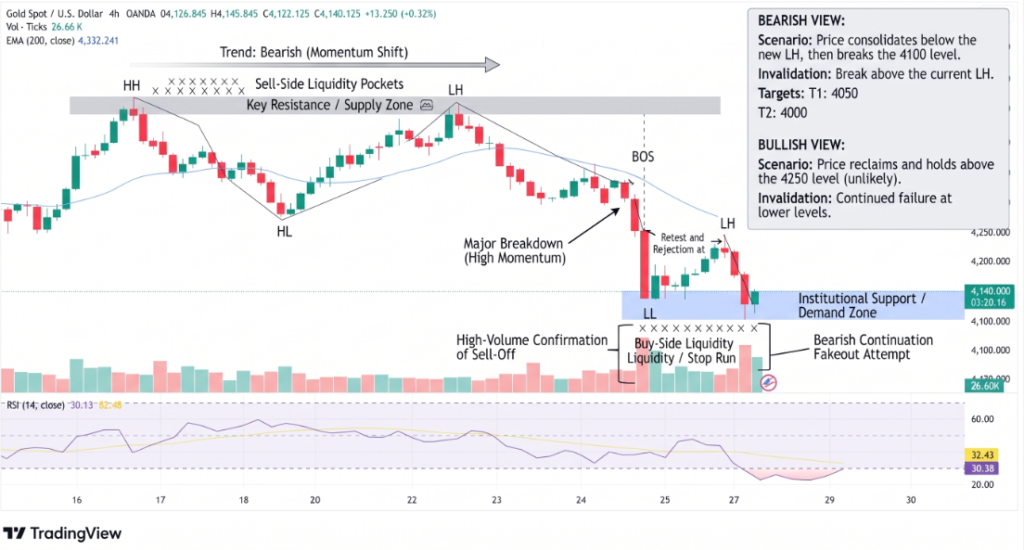
The data arrive as markets reassess whether persistent inflation and elevated energy costs could keep monetary policy restrictive for longer. For gold, the combination of Treasury yields, the dollar, oil prices and Fed expectations remains central to near-term trading.
Conclusion
Gold’s rebound on Tuesday has done little to reverse the damage from Monday’s 4% plunge. With spot prices near $4,130, Treasury yields at multi-year highs and markets pricing further Fed tightening, bullion remains under pressure. The next major catalysts are the PCE inflation report and September employment data, which could provide fresh evidence on whether higher energy costs are becoming a broader inflation problem.
Sources & Methodology
Primary-source standard: Market-moving facts should link to original data releases, regulator notices, company filings or official project announcements whenever available. Secondary reporting is used for additional context, not as a substitute for original evidence.
Page last reviewed: