Gold prices surged nearly 3% on Friday, recovering from a more than one-year low as easing concerns over artificial intelligence stocks and a pause in the US dollar’s rally encouraged buying. Spot gold climbed to $3,670.69 an ounce by 0835 GMT, while US gold futures advanced 3.9% to $3,669.30. The rebound followed a sharp selloff that pushed bullion below $3,500 earlier in the week. However, expectations of further Federal Reserve interest-rate increases continue to threaten the recovery.
Gold rebounds as selling pressure eases
Friday’s rally followed a turbulent week for precious metals. Gold had fallen sharply as investors sold assets to raise cash and cover losses linked to volatility in technology and artificial-intelligence stocks. As equity markets stabilised, some of that selling pressure eased, allowing bargain hunters to return.
The US dollar also retreated after reaching a 22-month high. Because gold is priced in dollars, a weaker greenback makes bullion less expensive for investors holding other currencies, potentially supporting international demand.
Other precious metals recorded strong gains alongside gold. According to Reuters, Friday’s market snapshot showed:
- Spot silver gained 6.6% to $44.2755 an ounce.
- Platinum advanced approximately 5.4% to $1,360.82.
- Palladium climbed around 4.6% to $913.07.
Despite Friday’s recovery, gold remained well below its record high earlier in the year. The sharp decline has also highlighted how quickly bullion can come under pressure when investors reduce exposure to riskier assets or reassess interest-rate expectations.
Inflation strengthens Fed rate expectations
The latest US inflation figures have reinforced expectations that the Federal Reserve may continue tightening monetary policy. The Personal Consumption Expenditures price index, the central bank’s preferred inflation measure, showed core prices rising 3.3% year over year in October. Headline PCE inflation increased 3.8% annually.
Both readings remain above the Fed’s 2% inflation target, strengthening the case for maintaining restrictive monetary conditions.
Interest-rate futures indicated approximately a 96% probability of a 25-basis-point increase at the Fed’s December 9 meeting. Traders were also positioning for another possible increase early in 2027, although market-implied probabilities are not confirmed policy decisions.
Higher interest rates generally weigh on gold because the metal does not pay interest or dividends. When government bond yields and returns on cash increase, investors may prefer interest-bearing assets over bullion.
Gold outlook depends on Fed policy
Gold’s immediate direction will depend partly on whether the dollar resumes its advance and Treasury yields continue climbing. Persistent inflation could reinforce expectations of additional rate increases, limiting the metal’s ability to extend Friday’s recovery.
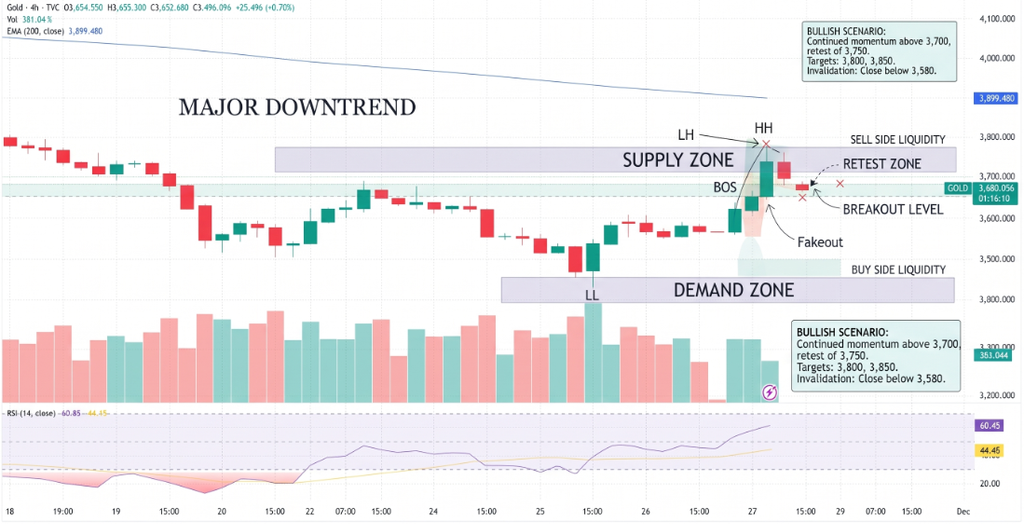
Conversely, easing financial-market volatility, a weaker dollar and renewed physical demand could help stabilise prices. Buying interest in Asian markets has provided another source of support, although it may not be sufficient to offset sustained pressure from higher interest rates.
Conclusion
Gold’s nearly 3% rebound to around $3,672 marks a significant recovery from its recent low, but it does not yet confirm a lasting change in trend. Investors remain focused on inflation, Federal Reserve policy and movements in the US dollar. Unless expectations for further rate increases begin to ease, bullion could struggle to regain its previous momentum. Friday’s advance therefore represents an important recovery attempt, with the next major test coming from the Fed’s December policy decision.
Sources & Methodology
Primary-source standard: Market-moving facts should link to original data releases, regulator notices, company filings or official project announcements whenever available. Secondary reporting is used for additional context, not as a substitute for original evidence.
Page last reviewed: