
Gold prices edged lower on Tuesday as investors took profits after a strong rebound, while expectations of another Federal Reserve interest-rate increase limited demand for the non-yielding metal. Spot bullion retreated from an intraday recovery toward $3,670 an ounce, even as Chinese buying and bargain hunting offered support. Markets are also watching upcoming U.S. inflation data for clues about the Fed’s next policy move. The latest pullback follows a steep sell-off last week that pushed gold to its weakest level in more than a year.
Gold retreats after 2.7% rebound
Spot gold fell 0.3% to $3,625.88 an ounce at 23:32 ET (04:32 GMT) on Tuesday. U.S. gold futures declined 0.7% to $3,624.90. The retreat followed a rebound that lifted bullion as much as 1% toward $3,670, after prices had advanced 2.7% in the previous session.
The recovery has partly offset last week’s nearly 9% decline. Gold had also dropped below the $4,000 threshold earlier in the month, underscoring the scale of the recent reversal.
Other precious metals weakened alongside bullion. Spot silver lost 1.3% to $42.5855 an ounce, while platinum fell 1.8% to $1,304.92. Palladium declined 0.9% to $889.97, and palladium futures slipped 1% to $884.75. The U.S. Dollar Index edged down 0.04% to 104.30.
The previous session’s recovery followed a broader improvement in equity-market sentiment after Nvidia reinstated Jensen Huang as its chief executive. The technology-stock rebound helped lift Wall Street, although stronger equities can compete with gold for investment flows.
Fed rate outlook limits bullion demand
Monetary policy remains a major obstacle for gold. New York Fed President John Williams said Monday that policymakers still had work to do to bring inflation under control. His comments reinforced concerns that interest rates could remain restrictive or rise further.
Markets were pricing in another Fed rate increase at the December meeting, according to the supplied market commentary. Such expectations can weigh on gold because bullion pays no interest. When yields on cash and government bonds rise, investors may demand a higher return from holding the metal.
The dollar’s direction also matters. A stronger dollar generally makes gold more expensive for buyers using other currencies, potentially limiting international demand. Although the index slipped slightly in the latest session, its elevated level remains relevant to bullion trading.
Key factors shaping the near-term outlook include:
- U.S. inflation data and its impact on Fed rate expectations.
- Treasury yields and movements in the dollar.
- Profit-taking after gold’s sharp two-session rebound.
- Physical demand from China and purchases of gold-backed funds.
China buying provides price support
Demand from China has offered a counterweight to monetary-policy pressure. The supplied report puts the value of Chinese gold imports at a record $209 billion so far this year. Strong purchases, alongside bargain hunting, have helped support prices during the recent decline.
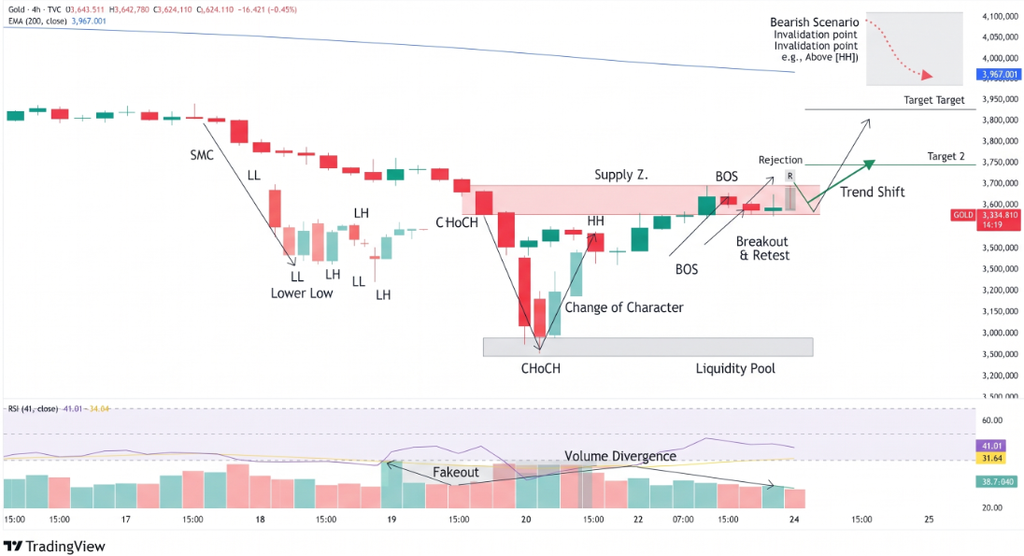
ANZ analysts said gold had risen as much as 4.3% during the broader improvement in risk appetite. They also highlighted lower energy prices, which could ease inflation concerns and reduce pressure on the Fed to tighten policy. Reports of crowded gold retailers in Shenzhen over the weekend pointed to renewed buying interest, while gold-backed exchange-traded fund holdings remained robust.
Conclusion
Gold’s rebound faces a test as investors balance bargain buying against the prospect of higher U.S. interest rates. Inflation figures, Treasury yields and the dollar will be crucial in determining whether bullion can extend its recovery or resume its decline. Continued Chinese demand may cushion losses, but it may not fully offset a more hawkish Fed outlook.
Sources & Methodology
Primary-source standard: Market-moving facts should link to original data releases, regulator notices, company filings or official project announcements whenever available. Secondary reporting is used for additional context, not as a substitute for original evidence.
Page last reviewed: