Gold prices recovered on Thursday after stronger-than-expected US inflation triggered a sharp selloff and increased concerns that the Federal Reserve could raise interest rates again. Spot gold climbed 1% to $4,146.48 an ounce, while US gold futures advanced 1.5% to $4,167.75. The rebound followed a decline that briefly pushed prices more than 1.6% lower, highlighting how quickly expectations for monetary policy can influence precious metals.
Hot US Inflation Revives Fed Fears
The US Consumer Price Index rose 0.6% in September, its fastest monthly increase since April, after gaining 0.4% in August. Annual headline inflation accelerated to 3.7% from 3.4%, while core inflation, which excludes food and energy, increased 2.6% over the year.
Energy costs were a major driver. Gasoline prices rose 9.1% during September, accounting for more than half of the monthly increase in the overall index. The figures complicate the Federal Reserve’s policy outlook, as policymakers seek to return inflation to their 2% target without placing unnecessary pressure on economic activity.
Market expectations for another rate increase at the Fed’s October 27–28 meeting strengthened after the report. Reuters reported that San Francisco Fed President Mary Daly viewed further tightening as likely to be needed eventually, though not necessarily urgently.
Higher interest rates can weigh on gold because the metal pays no interest, making interest-bearing assets more attractive. The reaction also depends on currency movements, Treasury yields and demand for protection against economic or geopolitical risks.
Gold Leads a Precious-Metals Rebound
At 00:59 ET, spot gold was up 1% at $4,146.48, while gold futures gained 1.5% to $4,167.75. Other metals also recovered:
- Silver: Up 1% to $56.1965 an ounce.
- Platinum: Rose 0.8% to $1,615.52.
- Palladium: Advanced 1.3% to $1,110.52.
- US dollar index: Fell 0.5% to 102.09.
The dollar’s retreat helped support dollar-priced commodities by making them less expensive for buyers using other currencies. Nevertheless, the rebound came after heavy selling, and it does not by itself establish that gold has found a durable price floor.
Gold Outlook Depends on Fed Signals
Investors are watching Federal Reserve Chair Kevin Warsh’s scheduled appearance at the International Monetary Fund meetings in Bangkok for clues about the policy outlook. The event comes before the Fed’s pre-meeting communications blackout and could influence expectations for the October decision.
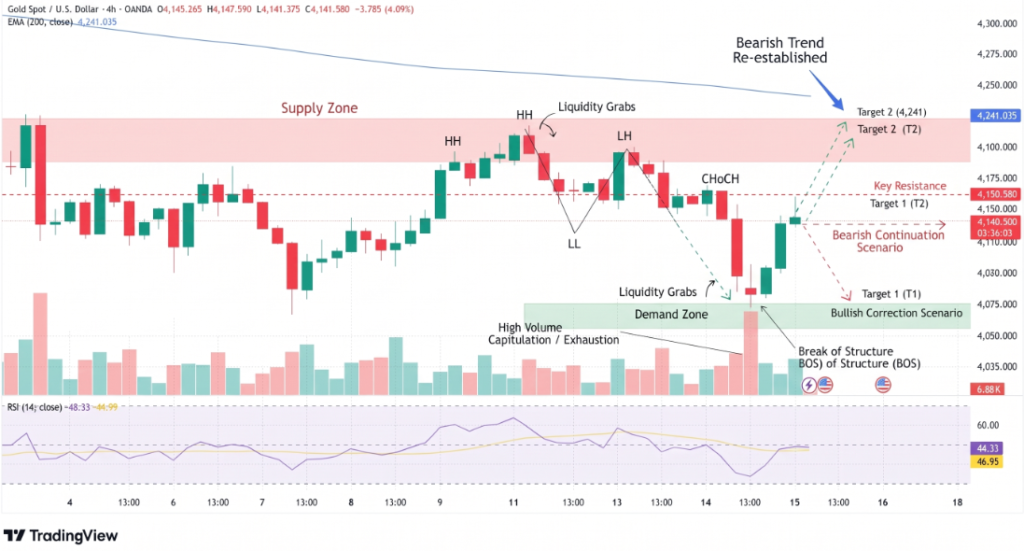
Gold’s longer-term direction will also depend on central-bank purchases, the dollar, real interest rates and demand for safe-haven assets. Market participants should distinguish a short-term rebound from a sustained recovery, particularly while inflation remains above the Fed’s target.
Conclusion:
Gold’s 1% recovery shows that buyers returned after the inflation-driven selloff, but the outlook remains sensitive to interest-rate expectations. A softer dollar and sustained safe-haven demand could support prices, while further Fed tightening could renew pressure. The next move will depend on incoming economic data and whether policymakers signal that higher rates are still necessary.
Sources & Methodology
Primary-source standard: Market-moving facts should link to original data releases, regulator notices, company filings or official project announcements whenever available. Secondary reporting is used for additional context, not as a substitute for original evidence.
Page last reviewed: