
Ethereum Prepares for Its Biggest Upgrade
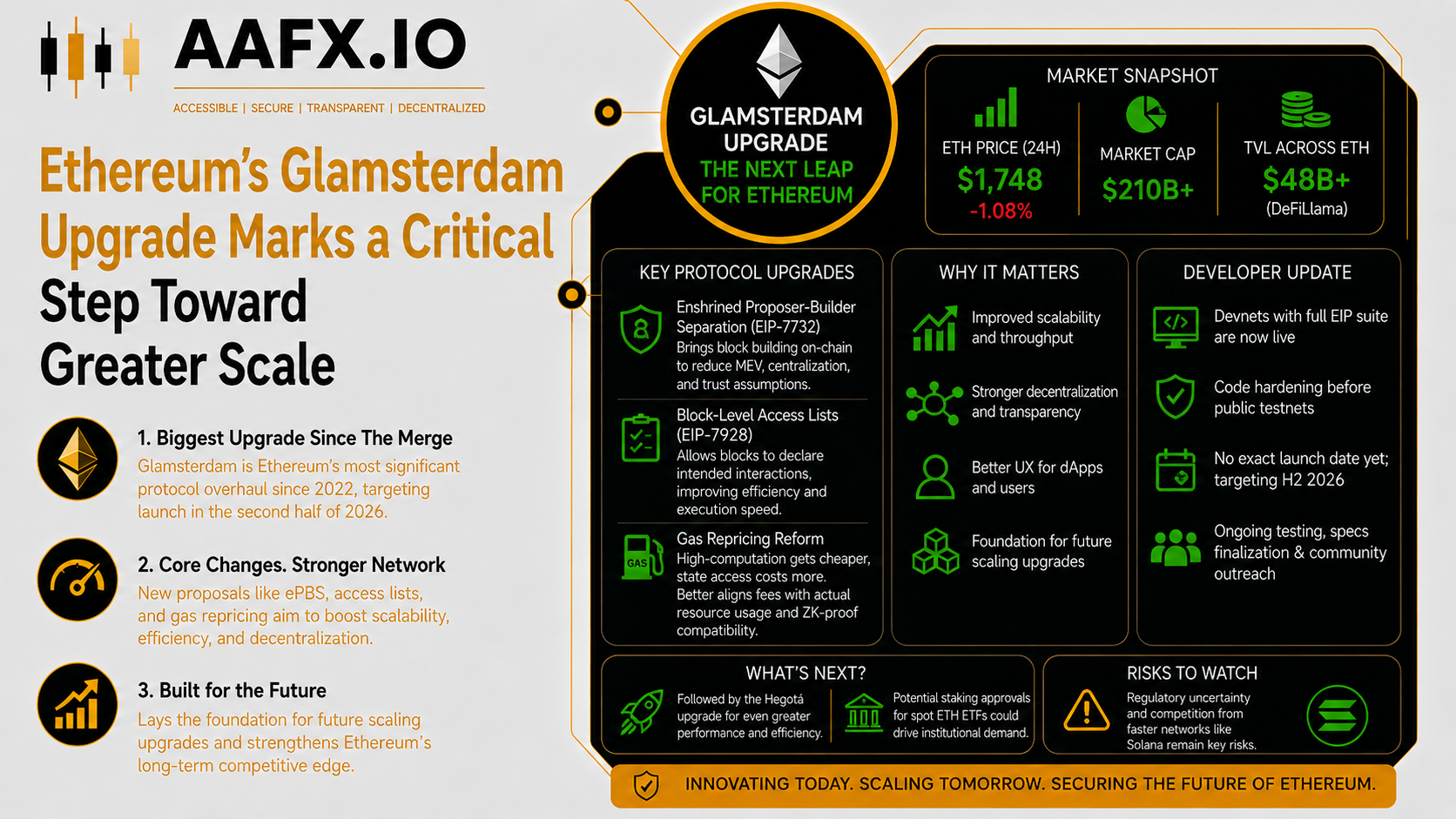
Ethereum developers are entering the final phase of preparations for Glamsterdam, a highly anticipated protocol upgrade widely viewed as the network’s most significant technical overhaul since the historic Merge in 2022.
Development teams are currently testing the complete package of Ethereum Improvement Proposals (EIPs) through dedicated developer networks before moving toward public testnets and eventual deployment.
While a definitive launch date has not been announced, the upgrade is expected to arrive during the second half of 2026. Core developers describe the initiative as a transformative update that could reshape how Ethereum processes transactions, builds blocks, and manages network resources.
The importance of Glamsterdam extends beyond routine maintenance. Ethereum remains the largest smart contract blockchain by total value secured, supporting decentralized finance, NFTs, tokenized assets, and thousands of decentralized applications.
As competition intensifies from newer networks promising faster execution and lower fees, Ethereum’s ability to scale efficiently has become increasingly important.
The upgrade aims to strengthen the network’s foundation while creating a pathway for future growth.
Three Innovations Driving Change
One of the most discussed proposals is Enshrined Proposer-Builder Separation (ePBS), introduced through EIP-7732. Today, block construction largely occurs through off-chain arrangements. Glamsterdam seeks to bring this process directly into Ethereum’s protocol.
Developers believe this change could:
- Reduce trust assumptions within block production.
- Limit centralization risks across the ecosystem.
- Decrease opportunities for manipulation linked to maximal extractable value (MEV).
- Improve transparency throughout transaction ordering.
Another significant feature is Block-Level Access Lists (EIP-7928). This mechanism allows blocks to specify expected account and smart contract interactions before execution begins. By enabling clients to preload information, Ethereum can improve processing efficiency and reduce execution bottlenecks.
The upgrade also introduces a substantial revision to Ethereum’s gas fee model. High-computation operations are expected to become less expensive, while state access costs will increase. This adjustment aims to align fees more closely with actual resource usage and enhance compatibility with emerging zero-knowledge proof technologies.
Together, these changes represent one of the most ambitious redesigns of Ethereum’s operational framework since the network transitioned to Proof-of-Stake.
Why Investors Are Watching Closely
Beyond technical improvements, Glamsterdam carries important implications for Ethereum’s long-term investment outlook. Many analysts view the upgrade as a key catalyst that could improve transaction efficiency, support scaling efforts, and reinforce Ethereum’s position as the leading smart contract platform.
Several factors are driving market attention:
- Potential improvements in network throughput.
- Enhanced compatibility with zero-knowledge technologies.
- Reduced centralization concerns.
- Better resource allocation through gas repricing.
- Stronger infrastructure for future scaling upgrades.
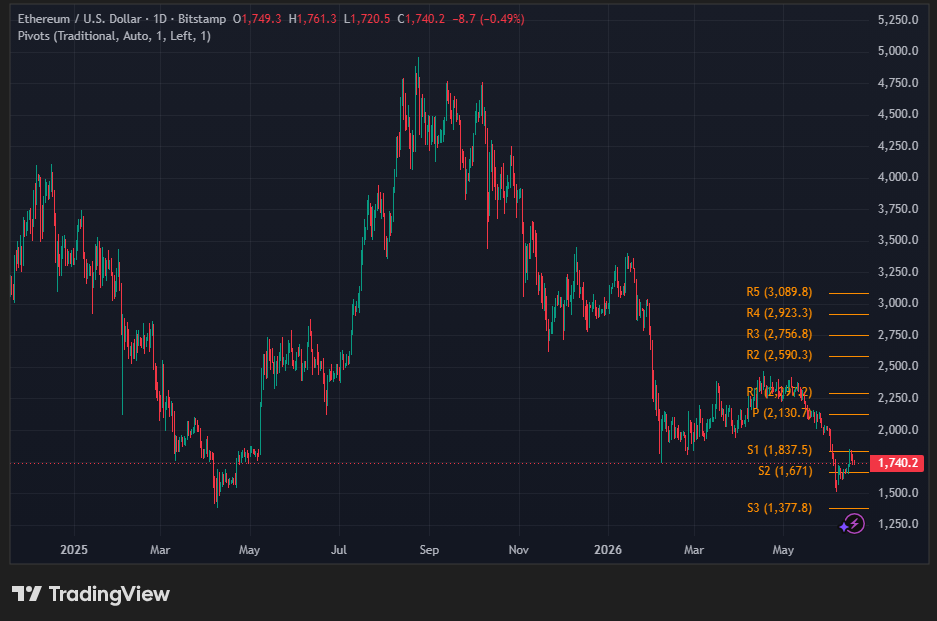
At the time of reporting, Ether traded near $1,748, reflecting modest short-term weakness. However, investor focus remains fixed on whether Glamsterdam and the subsequent Hegotá upgrade can deliver measurable gains in speed, efficiency, and user experience.
Institutional demand could also receive a boost if regulators eventually approve staking features for spot Ethereum exchange-traded funds. Such a development would create additional avenues for capital inflows into the ecosystem.
Nevertheless, challenges remain. Regulatory uncertainty continues to influence digital asset markets, while competing networks such as Solana are attracting users with lower costs and faster transaction speeds.
For Ethereum, Glamsterdam is more than an upgrade. It is a strategic effort to strengthen the network’s competitive position and establish the technical foundation required for the next phase of blockchain adoption.
